You see a photo of yourself and notice one tooth sitting out of line, or your teenager’s dentist mentions crowding at a checkup. Either way, two questions follow: what are Invisalign aligners, and would clear aligners work on your own teeth? The answer starts with what these trays physically are.
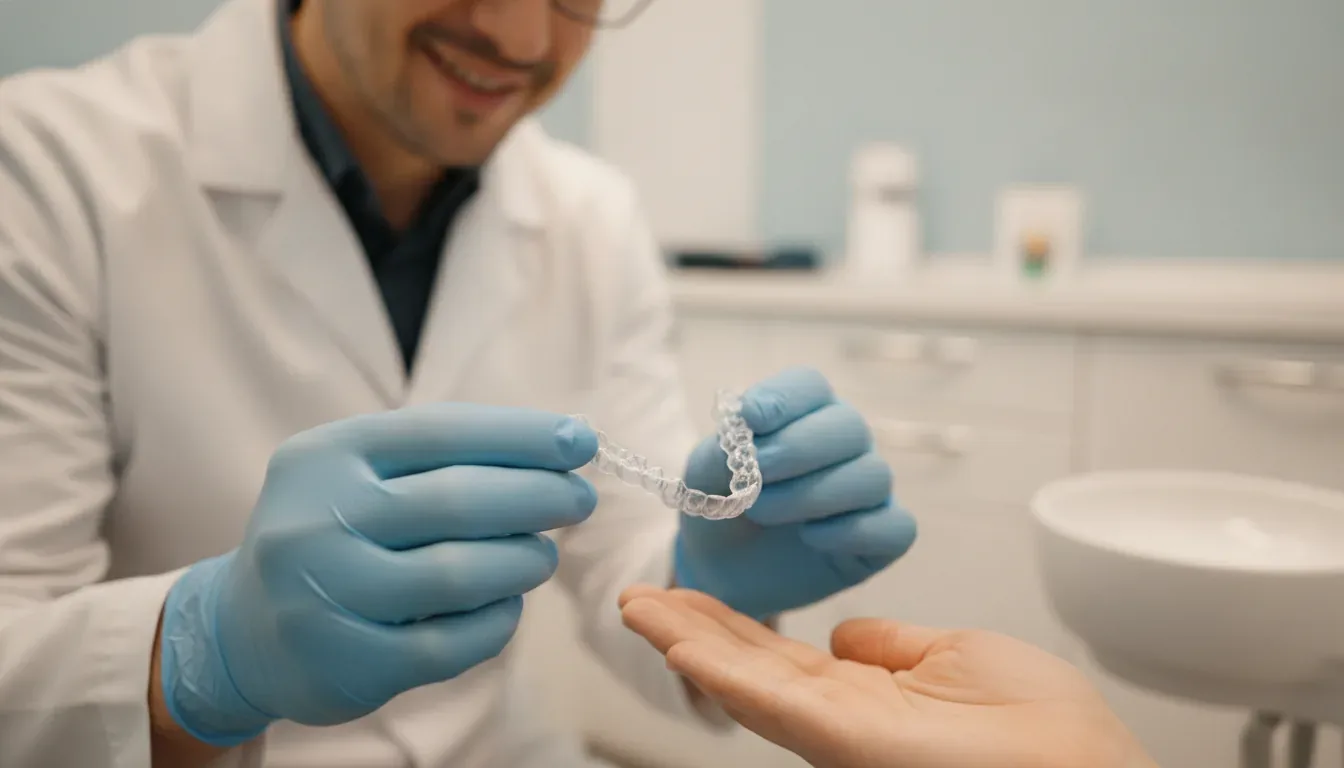
Invisalign aligners are custom-made clear plastic trays from Align Technology, worn over the teeth to move them a small amount at a time. Clear aligners treat many types of crowding, gaps and bite problems in orthodontics, but the American Association of Orthodontists says they are not right for everyone. The trays work only when worn at least 22 hours a day, and what one tray does to one tooth is what decides your fit and your dental cost.
What this guide covers
What are Invisalign aligners
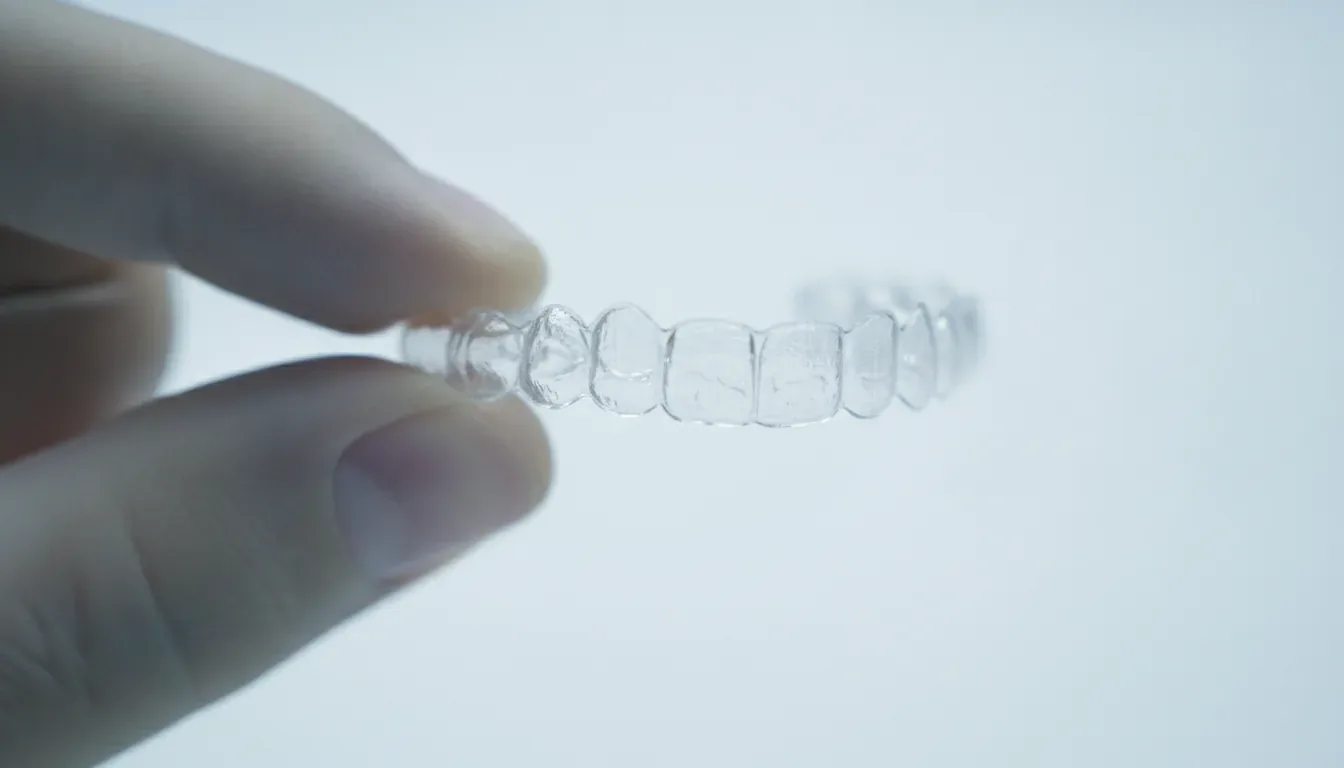
Invisalign is a brand of clear aligner made by Align Technology, and the treatment is a set of custom trays that straighten teeth without brackets or wires. The American Association of Orthodontists describes them as thin, near-invisible plastic shells that sit over the teeth and press them into a new position.
Invisalign is one brand inside the clear aligner category, not the category itself. Other companies make clear aligners as well. The difference is worth holding on to once you start comparing types of treatment and types of price. Align Technology makes its own trays from a thermoplastic material it calls SmartTrack.
Clear aligners and braces both belong to orthodontics, a dental specialty. The American Dental Association names braces and aligners as the two appliances orthodontists most commonly use to guide teeth into position. Braces are fixed to your teeth. Aligners come out whenever you eat.
Treatment is never a single tray. Invisalign works through a sequence of them, each shaped a little differently from the one before it.
How do Invisalign aligners work
Each Invisalign aligner is shaped slightly differently from the shape of your teeth today. That difference is what applies the pressure that moves a tooth.
Treatment starts with a digital scan. From that scan your clinician builds a 3D plan that maps every tooth movement from start to finish. The plan becomes a series of trays, and you work through them in order.
Forbes Health reported in December 2023 that a new set goes in every one to two weeks, with the exact interval set by the treating clinician. Each tray moves teeth a fraction of a millimeter at a time, according to the American Association of Orthodontists. Forbes Health puts that at about 0.25 mm per aligner.
The trays only push while they are in your mouth. That is why the American Association of Orthodontists sets the target at least 22 hours a day. A tooth needs steady pressure to move through bone, and when the pressure stops the tooth begins drifting back toward where it came from. The mechanism is ordinary orthodontics: small, planned movement delivered by a different tool.
Some teeth need more grip than a smooth tray can give. For those, small tooth-colored shapes called attachments are bonded to the tooth, so the tray can hold it and turn it. Different types of movement call for different attachment shapes.
This mechanism has limits. Clear aligners cannot do every movement a tooth might need.
What can Invisalign aligners fix, and what can they not
Clear aligners move teeth through tipping and controlled pressure. That covers most crowding, gaps and common bite problems, but not every case.
The American Association of Orthodontists lists what clear aligners treat: gapped teeth, crowded teeth, crooked teeth, and the bite problems known as overbite, underbite, open bite and crossbite. Several of these are types of malocclusion, the clinical term for a bad bite.
The limits are shorter than the fix list, and they are real. Forbes Health reported in December 2023 that a tooth rotated beyond about 20 degrees generally needs braces. Braces are brackets, wires and bands fixed to the teeth, and that fixed grip can turn a tooth in a way a removable tray cannot.
Past that published ceiling, no public list of disqualifying cases exists. The American Association of Orthodontists states only that clear aligners are not right for everyone. Where your own case falls is settled at an examination, not from a list on a page. Invisalign is the aligner brand most people have heard of, and the same limits apply to it.
Both tools sit inside orthodontics, which the American Dental Association defines as the dental specialty that diagnoses, prevents, intercepts, guides and corrects bad bites.
Your teeth are one half of the question. The other half is you.
Who do Invisalign aligners suit
Clear aligners suit people whose case sits inside the range above, and who can keep the trays in for most of the day. Those two conditions matter more than a birthday.
Two types of reader ask this question. The adult who thinks it is too late, and the parent of a teenager. The answer runs in both directions. The American Dental Association states that orthodontists can help people of any age, and that many adults seek orthodontic treatment to correct long-standing problems. At the younger end, Forbes Health reported in December 2023 that Invisalign has been used with patients as young as six. That is a published figure about the system, not a description of what any one practice offers.
Valley View Dental treats children, teens and adults with orthodontics.
The trait that predicts finishing is not age. It is whether you will keep the trays in at least 22 hours a day, which is the target the American Association of Orthodontists sets. Braces are fixed to the teeth, so they do not depend on your memory. Aligners do. If you graze through the day, that is the honest thing to weigh before you spend anything.
One point of confusion is worth clearing. Valley View Dental lists retainers as a separate orthodontic treatment from Invisalign and clear aligners. A retainer and an aligner are different tools, and the question here is about the aligners.
Which leaves the part nobody asks about until they are in it. What those 22 hours are like.
What does wearing Invisalign aligners actually feel like
A new Invisalign tray fits tightly, because it is shaped ahead of where your teeth are now. So the first day or two with each set usually feels tight or sore. That pressure eases as the teeth move toward the shape of the tray.
The routine itself is simple to describe. The American Association of Orthodontists says clear aligners come out when you eat or drink, and when you brush and floss. Water is the exception. Everything else means the trays come out first, then go back in straight away.
That last part is what surprises people. Every coffee, every snack and every meal turns into a small dental routine of its own.
Valley View Dental describes clear aligners as moving teeth without the discomfort or appearance of braces. That is a comparison with braces. It does not mean you will feel nothing.
You will also see your clinician periodically. A published clear aligner treatment guide puts the typical check-up interval at roughly 8 to 12 weeks. That is a general figure for the treatment, not a Valley View Dental schedule. Your own interval is set by the clinician running your case.
Described that way, the routine sounds manageable. Lived day after day, it is where treatment either holds or comes apart.
Why do some people quit Invisalign
Most people who stop Invisalign treatment stop for a reason connected to wear time rather than a failure of the trays. Clear aligners apply pressure only while they are in your mouth, which is why the American Association of Orthodontists sets the target at least 22 hours a day.
The frictions that eat into those hours are ordinary ones:
- Taking the trays out for every snack and every drink that is not water
- Brushing before they go back in, several times a day
- Speech feeling different for the first few days with a new set
- Losing a tray
None of these is dramatic on its own. Together, on a busy day, they pull the daily total below the target. Once the teeth fall behind the plan, the next tray does not seat the way it should, and that is the moment people describe as it stopping working. This is the part of orthodontics no tray design solves. It runs on habit.
What do Invisalign aligners cost, and how do people pay for them
The cost of Invisalign treatment depends on how far your teeth have to move and how many trays that takes. That is why a quote comes after an examination, not before one.
A case needing a handful of small corrections is not the same case as one needing a long series of trays. Orthodontics is priced by the case, so clear aligners are billed for the plan rather than for the product.
Valley View Dental does not publish a treatment fee for Invisalign.
What the practice does publish is a monthly payment route. Invisalign at Valley View Dental starts from $132 a month through Cherry, the practice’s featured monthly payment partner, on approved credit.
Monthly payment amounts shown are estimates based on typical approved credit terms through Cherry financing. Actual monthly amounts will vary depending on approved terms, loan amount, and repayment period. 0% APR is available on select Cherry plans for qualified applicants.
On insurance, coverage varies by plan. Valley View Dental accepts most major PPO plans, so your own orthodontic benefit is worth checking against your policy before treatment starts.
A written figure comes from a person. Which person, and what they answer for, is the last thing worth knowing.
Why does it matter who supervises your aligner treatment
Clear aligners move real bone and roots, not just the visible crown of a tooth. That is why the American Dental Association holds that a licensed dentist should be responsible for the treatment. On 12 December 2023 the ADA reaffirmed its policy opposing direct-to-consumer dentistry.
The ADA’s stated concern is specific. Moving teeth without knowing the full condition of the mouth can cost bone, cost teeth, pull the gums back, and leave the bite or the jaw hurting.
Direct-to-consumer aligner services move teeth without a dentist examining the mouth first. That is the arrangement the ADA opposes. The American Association of Orthodontists holds that an orthodontist is the clinician qualified to decide between braces and clear aligners in the first place. Orthodontics is a supervised specialty for exactly this reason.
At Valley View Dental, that clinician is Dr. Chirag Parikh, DMD, the orthodontist. He works in house, alongside the general dentists. The person planning your Invisalign treatment and the people watching your dental health sit in the same building.
Common questions about Invisalign aligners
What is the 30 minute rule with Invisalign?
No dental body publishes a 30 minute rule. What matters is the total time your Invisalign aligners spend out of your mouth across a whole day, because the American Association of Orthodontists puts the wear target at least 22 hours. That leaves a short window each day for eating, drinking and brushing, and your treating clinician sets how it is used.
Is 35 too old for Invisalign?
No. The American Dental Association states that orthodontists can help people of any age, and that many adults seek orthodontic treatment to correct long-standing problems. What decides your fit is the case in your mouth, not the number on your birthday.
What is the downside to Invisalign?
The downside is discipline. Invisalign aligners come out for all food and every drink except water, they go back in straight away, and they only move teeth for the hours they are in. Some cases also sit outside what a tray can do, and Forbes Health reported in December 2023 that a tooth rotated beyond about 20 degrees generally needs braces.
Does my insurance cover Invisalign?
Coverage varies by plan. Valley View Dental accepts most major PPO plans, so your own orthodontic benefit is worth checking against your policy.
Are clear aligners and Invisalign the same thing?
Not quite. Clear aligners are the category, and Invisalign is one brand inside it, made by Align Technology. Other companies make clear aligners too, so the two terms are not interchangeable.
What age should you get Invisalign?
There is no set age. In orthodontics, timing follows the case rather than the birthday, and the American Dental Association states that orthodontists treat people of any age. Forbes Health reported in December 2023 that Invisalign has been used with patients as young as six.