Zirconia or porcelain crown – which should you pick
Zirconia and porcelain crowns each win at a different job. Zirconia is stronger and usually lasts longer, so it suits back teeth (molars) and people who grind. Porcelain is more translucent, so it looks the most natural on front teeth. The right choice depends on the tooth, your bite, and the look you want, and a dentist confirms it.
The two are easy to mix up, so it helps to know what each one actually is.
On this page
What are zirconia crowns and porcelain crowns, exactly
A zirconia crown is milled from a solid ceramic called zirconium dioxide, which makes it very strong. It can be a solid crown (called monolithic zirconia) or a strong core with a porcelain layer on top.
A porcelain crown is made from a glass-ceramic, and it is known for a natural, translucent look. When a crown has no metal in it, it is called an all-ceramic crown. One common type is lithium disilicate, sold under the brand name e.max.
You may also hear about a porcelain-fused-to-metal (PFM) crown. This is an older middle option: a metal core under a porcelain surface. It is named here only to clear up the mix-up, since the word porcelain can mean a few different things.
Because the materials vary by case, a dentist matches the crown material to your tooth. Once you know the types, the next question is usually which one lasts longer.
Which crown lasts longer, zirconia or porcelain
Zirconia crowns are stronger than porcelain crowns and usually last longer. That strength is why dentists reach for zirconia on the teeth that take the most force.
Here is what the numbers look like, as general ranges reported across dental sources:
- Flexural strength, meaning how much bending force the material takes: zirconia is about 900 to 1,200 MPa; porcelain is about 350 to 500 MPa.
- Typical lifespan with good care: zirconia is about 15 to 20 years or more; porcelain is about 10 to 15 years.
- For comparison, molars can bite with about 200 to 250 lbs of force.
Grinding your teeth at night (bruxism) puts extra load on a crown, and heavy chewing does the same. On a molar or for a grinder, the higher strength of zirconia makes it a long-lasting choice. How long any crown lasts still depends on the fit and how you care for it. Strength is only half the question, though. The other half is how the crown looks.
Which crown looks more natural, zirconia or porcelain
Porcelain crowns reflect light the way real teeth do, so they look the most natural, especially on front teeth. Porcelain is translucent, which lets light pass through the way it does in natural enamel. That is why it is the usual pick for a tooth that shows when you smile.
Zirconia crowns used to look more opaque, or solid, by comparison. Newer multi-layered zirconia has closed much of that gap and now looks far more lifelike than older solid zirconia.
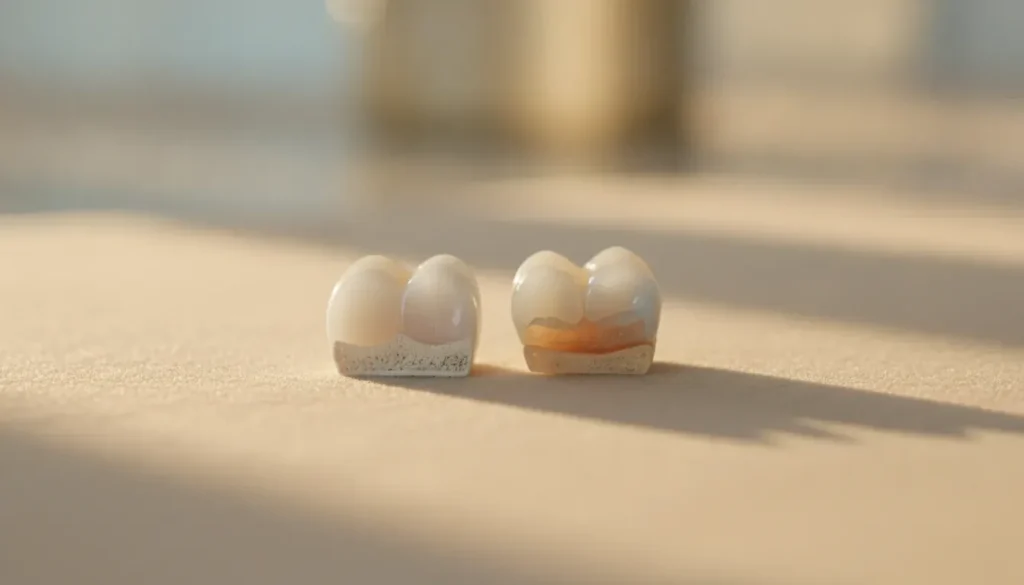
For a visible tooth, the goal is to match the color and translucency of the teeth next to it. A dentist checks the shade and the light play against your other teeth before deciding. Looks and strength both matter, so it helps to see the two crowns side by side.
Zirconia vs porcelain crowns, side by side
Here is how zirconia and porcelain crowns compare on the things that decide it.
| What matters | Zirconia crown | Porcelain crown |
| Strength | Highest (about 900 to 1,200 MPa) | Lower (about 350 to 500 MPa) |
| Looks | Good; layered options look natural | Most translucent, most natural |
| Typical lifespan (how long it lasts) | About 15 to 20 years or more | About 10 to 15 years |
| Best for | Molars, bridges, and grinders (bruxism) | Visible front teeth |
| Chipping risk | Low | Higher under a heavy bite |
| Cost | Varies; ask for a written quote | Varies; ask for a written quote |
| Same-day option | Ask whether a same-day CEREC crown fits your case | Ask whether a same-day CEREC crown fits your case |
The short version: zirconia wins on strength and lifespan, porcelain wins on a natural look, and the right crown is the one that matches your tooth. Strength and lifespan figures are reported ranges, and no crown price is listed here on purpose. A written quote at a consult is the only honest number. Specs aside, it helps to know when each crown is the right call.
When is zirconia the better call, and when is porcelain
Zirconia is usually the better call when the tooth takes a lot of force. That means a back molar, a dental bridge that has to span a gap, or any case where you grind or clench your teeth (bruxism). The strength holds up where a weaker crown might chip.
Porcelain is usually the better call for a visible front tooth, where the natural look matters most. On a tooth people see when you smile, the translucency of porcelain is worth more than extra strength.
Many people end up with a mix: zirconia on the back teeth and porcelain on the front teeth. A dentist maps this tooth by tooth, so you get strength where you chew and a natural look where it shows. Every material also has trade-offs, so it is worth knowing the downsides of each.
What are the downsides and risks of each crown
Zirconia’s main downside is appearance, plus a wear question that dentists still discuss. Older solid zirconia can look more opaque than a natural tooth. And because zirconia is very hard, some dentists watch whether it causes enamel wear on the opposing tooth over time. This is discussed, not settled, and a dentist manages it by checking your bite and polishing the crown.
Porcelain’s main downside is chipping. Under a heavy bite, porcelain is more likely to chip or crack than zirconia, which is why it is a weaker fit for back teeth and grinders.
One risk applies to any crown, of either material. The tooth underneath can still decay if plaque builds up at the crown margin, the line where the crown meets the tooth. That decay, not the crown itself, is often why a crowned tooth can start to hurt years later. Good brushing, flossing, and regular checkups keep the margin clean and lower the chance the tooth will rot.
Cost is the next thing most people want to pin down.
What do zirconia and porcelain crowns cost
A crown’s cost is driven by the material, the lab work, the condition of the tooth, and your insurance. Because those change from case to case, the honest answer is that a firm price comes from a written quote at a consult, not from a number on a web page.
A few things to know:
- A zirconia crown and a porcelain crown can differ in price, since the materials and lab work differ.
- What you pay out of pocket also depends on your dental insurance. If you are paying without insurance, ask for the full written quote up front.
- Valley View Dental accepts most major PPO plans, and financing is available through Cherry and CareCredit if you want to spread the cost.
Once cost is clear, the last piece is how a dentist actually chooses the crown for your tooth.
How does a dentist decide which crown fits your tooth
Your dentist weighs a few things to decide which crown fits your tooth: the tooth’s position, your bite, whether you grind, the gum line, and the look you want. A front tooth that shows leans one way; a molar that does the heavy chewing leans another. A prosthodontist, a dentist who specializes in crowns and other tooth replacements, plans this in detail.
At Valley View Dental, the approach is to explain the options first, then let you decide. If you already have a treatment plan from another office and you are not sure about it, you can get a free second opinion before you commit.
For suitable cases, a crown can often be made and placed in one visit with a CEREC same-day crown. Whether that fits depends on your tooth, so ask at a consult.
Still weighing a few specifics? The questions below cover what most people ask next.
Zirconia vs porcelain crowns – common questions
What is the healthiest crown for teeth?
Metal-free all-ceramic crowns, including porcelain and zirconia, are biocompatible and suit people who want no metal in their mouth. The healthiest option is the one that fits your tooth and gums well and keeps the margin clean, not one single material for everyone.
How many years does a zirconia crown last?
A zirconia crown lasts about 15 to 20 years or more with good care. How long it lasts depends on your bite and your daily cleaning.
What is the average cost of a zirconia crown?
The cost of a zirconia crown varies by material, lab, and your insurance, so there is no single price. Ask for a written quote at a consult.
Will a tooth rot under a crown?
Yes, a tooth can still decay or rot under a crown if plaque builds up at the margin. Good brushing, flossing, and regular checkups are what prevent it.
Can a dentist remove a crown without breaking it?
Sometimes, but crowns are often cut off and replaced rather than saved. A dentist decides based on the crown and the tooth underneath during crown removal.
Can you fill a cavity under a crown?
A small cavity can sometimes be filled, but a larger one usually means replacing the crown. A dentist checks with an exam and an X-ray before deciding.