You have seen the veneers before and after smiles online and wondered what is realistic for your own teeth. This guide gives you the honest version: what results really look like, the options you can choose from, and what veneers actually cost, without the hype and without a surprise bill. Valley View Dental writes your estimate down before any work starts, so you know the number in advance. Here is the short answer first.
On this page
What do veneers change, and what do they cost
Veneers are thin shells that cover the front of your teeth to improve color, shape, chips, and small gaps. Porcelain veneers typically cost about $900 to $2,500 per tooth, about $1,100 to $2,200 in the Chicago area. Composite veneers cost less, about $250 to $1,500 per tooth.
Cost ranges, 2026: AI Overview data, Arden Dental, and Veneers Authority Chicago for porcelain; Real Dental Costs and NewMouth for composite. These are typical market ranges, not Valley View Dental’s price.
The rest of this guide shows what a real before and after looks like and how to pick between the two options.
What do veneers before and after results actually look like
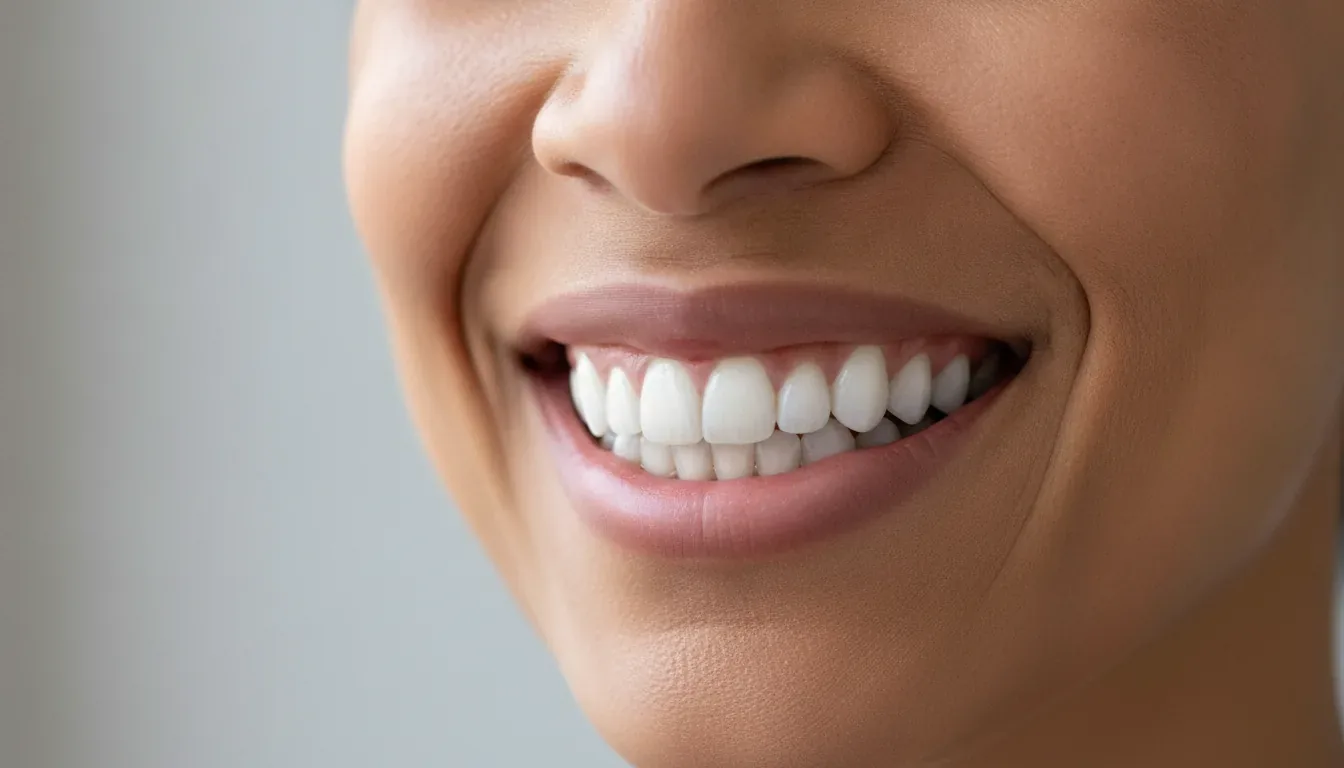
A veneers before and after usually shows a brighter, more even smile that still looks natural and like your own teeth. The color looks whiter. The shape looks evened out, small gaps close, and chipped or worn edges look repaired. Most people see the change over about two to three visits, not overnight.
Rank My Dentist; Dr. Loren Grossman (results described in as few as two to three appointments).
At Valley View Dental, porcelain veneers are planned as part of a smile makeover, so the final look is matched to your face, not copied from a celebrity photo. That look only holds when veneers are the right fix for your teeth, which is the next thing to sort out.
What can veneers fix, and what can they not fix
Veneers are built to fix cosmetic surface issues: stains, chips, worn edges, small gaps, and minor alignment. They do not fix everything. Veneers cannot treat active tooth decay, gum disease, a misaligned bite, or missing teeth. Those problems are treated first, before any veneer goes on.
For very minor chips, dental bonding may be all you need. Because Valley View Dental has general, restorative, and gum care under one roof, a problem tooth can be handled before your veneers, not referred out. Knowing what veneers can and cannot fix keeps your options realistic and the result natural.
Do veneers look natural, or can people tell
Well-made veneers look natural, matched to your face, so most people cannot tell you are wearing them. When done well, they blend with your other teeth and still look like you, just brighter and more even. Veneers look fake when the shade is too white or the teeth are made too large for the face.
That over-white, oversized look is what you see on some celebrity smiles, and it is not the goal for a real before and after. At Valley View Dental, your porcelain veneers are shade-matched with you at the planning visit. Getting that natural result partly depends on which type of veneer you choose.
Porcelain vs composite veneers – which option is right for you
Porcelain veneers cost more, last longer, and usually take two or more visits, while composite veneers cost less and can be shaped in a single visit. The main trade-offs are cost, lifespan, and how many visits you want. Here is how the two options compare.
| Feature | Porcelain veneers | Composite veneers |
| Typical cost per tooth | About $900 to $2,500 | About $250 to $1,500 |
| How long they last (lifespan) | About 10 to 15 years, longer with good care | About 5 to 10 years |
| Visits needed | Lab-made, usually 2 or more visits | Often shaped in one visit |
| How much tooth is changed | A thin layer of enamel is removed | Less tooth is changed |
| Look | Stain-resistant, looks natural | Looks natural, may stain over time |
Porcelain suits a longer-lasting smile makeover. Composite, or dental bonding, suits a smaller budget or a quick fix. Valley View Dental offers porcelain veneers and dental bonding.

If even composite feels like more than you need, there are cheaper alternatives worth knowing.
What are the alternatives to veneers
Dental bonding is a faster, lower-cost fix for minor chips, cracks, and gaps, done in a single visit with tooth-colored resin. It is often the cheaper option when the problem is small. Composite veneers sit between bonding and porcelain on cost. Teeth whitening is the low-cost choice when the only issue is color, not shape, and Valley View Dental uses Opalescence whitening. When the real issue is crooked teeth, Invisalign moves them into place, which veneers cannot do, and Valley View Dental has an in-house orthodontist for that.
Picking the right option also means knowing the honest downside of veneers and how long they last.
Are veneers permanent, and how long do they really last
Veneers last a long time, but they are not lifelong. Porcelain veneers last about 10 to 15 years, longer with good care, and composite veneers last about 5 to 10 years. Here is the honest part most galleries skip. Preparing a tooth for a veneer removes a thin layer of enamel, and that step cannot be undone. Once the enamel is shaped, the tooth will always need a covering. So the veneers themselves are long-lasting, but the change to the tooth is irreversible, and the veneers will need replacing over time.
Knowing they will need replacing helps you weigh what all of this costs.
How much do veneers cost, with and without insurance
Without insurance, porcelain veneers typically cost about $900 to $2,500 per tooth, about $1,100 to $2,200 in the Chicago area, and composite veneers run about $250 to $1,500 per tooth. A full set of veneers costs more: a full porcelain smile of 6 to 10 teeth usually totals about $6,000 to $20,000, and around $11,000 to $22,000 for 10 teeth in the Chicago area. These are typical market ranges, not Valley View Dental’s price.
With insurance, the answer is usually simple. Veneers are considered cosmetic, so most plans do not cover them. The rare exception is when a veneer restores a tooth after trauma or decay, where some plans may cover roughly half with pre-authorization. Valley View Dental accepts most major PPO plans (Preferred Provider Organization) and checks your benefits for you, so you know before you commit. Whether a plan pays depends on your specific PPO, and in-network versus out-of-network status changes your share.
If insurance will not pay, you still have ways to spread the cost.
How can you pay for veneers
Valley View Dental offers several financing options for veneers: Cherry, CareCredit, Lending Club, and in-house payment plans. Cherry lets you split the cost into monthly payments on approved credit. CareCredit and Lending Club are health-care financing options, and in-house payment plans let you arrange terms directly with the office. There is also a senior discount for patients without insurance. The point is that cost does not have to be paid all at once.
Cherry: payments shown are estimates on approved credit via Cherry. Subject to terms.
Once the money side is clear, here is what the smile-makeover process looks like.
What to expect – the smile-makeover process, visit by visit
Your first visit is a consultation and smile plan, where the dentist checks your teeth, listens to what you want, and maps the shade and shape with you. Then the process runs in a few steps:
1. Consultation and smile plan. Your teeth are checked and the look is planned with you.
2. Tooth preparation and impressions. A thin layer of enamel is shaped, and impressions are taken for the lab.
3. Temporary veneers. You wear temporaries while the lab makes the final veneers.
4. Final placement. The finished veneers are bonded and adjusted.
Most cases take about two to three visits. At Valley View Dental, a smile makeover with veneers is planned by the in-house prosthodontist, Dr. Tarik Patel. If your case only needs small fixes, dental bonding can often be done in one visit instead. The care is gentle and judgment-free at every step. That is the path from your before to your after.
The one thing that removes the guesswork is knowing the cost before any of this starts.
How Valley View Dental prices veneers – a written estimate before we start
Valley View Dental gives you a written estimate at a free consultation, before any work starts. You see the plan and the number in writing first, so there is no surprise bill later. It is the clearest way to learn what your veneers will cost. The consultation is with an in-house prosthodontist, Dr. Tarik Patel, and a full team under one roof, so your case is handled in-house, not referred out. The practice has served Romeoville, Naperville, and Montgomery for more than 20 years.
Patients rate the practice 4.9 stars.
Common questions
A few more real questions come up about veneers, their cost, how long they last, and the cheaper options.
Q. What is the downside of veneers?
The tooth prep removes a thin layer of enamel and cannot be undone, veneers can chip under heavy force, and they will eventually need replacing.
Q. How long do veneers really last?
Porcelain veneers last about 10 to 15 years, longer with good care, and composite veneers last about 5 to 10 years. They are long-lasting, not lifelong.
Q. What is a cheaper option than veneers?
Dental bonding for minor chips and gaps, or teeth whitening when the issue is only color. Both cost less than veneers.
Q. Can I bite into an apple with veneers?
Usually yes, with care. It is better not to use your front veneers to bite very hard items.
Q. How do teeth not rot under veneers?
A well-fitted veneer plus daily brushing, flossing, and regular checkups keeps the tooth underneath healthy. Decay starts only if hygiene slips or the veneer margin fails.
Q. What is the 4-8-10 rule for veneers?
It is a common guideline for how many veneers make a balanced smile, around 4, 8, or 10 teeth, depending on how wide your smile shows when you talk and laugh.