Choosing a dentist is a decision you live with for years. In Naperville, the right choice protects your teeth and your budget. Being sent to three offices, or watching a quote grow, makes it harder. Here is what to look for before you choose a dentist, wherever the name came from: Google, Yelp or a neighbor. Most of it is a few checks you can run yourself, before you trust anyone.
How do you choose a dentist
To choose a dentist, check a few things before you book: a current license, recent reviews, hours and a location that work for you, whether the office is in your insurance network, which specialists work in the practice, and a written plan with cost before treatment starts. Then call or visit first, ask your questions, and walk away from pressure.
In this guide
What should you look for in a dentist
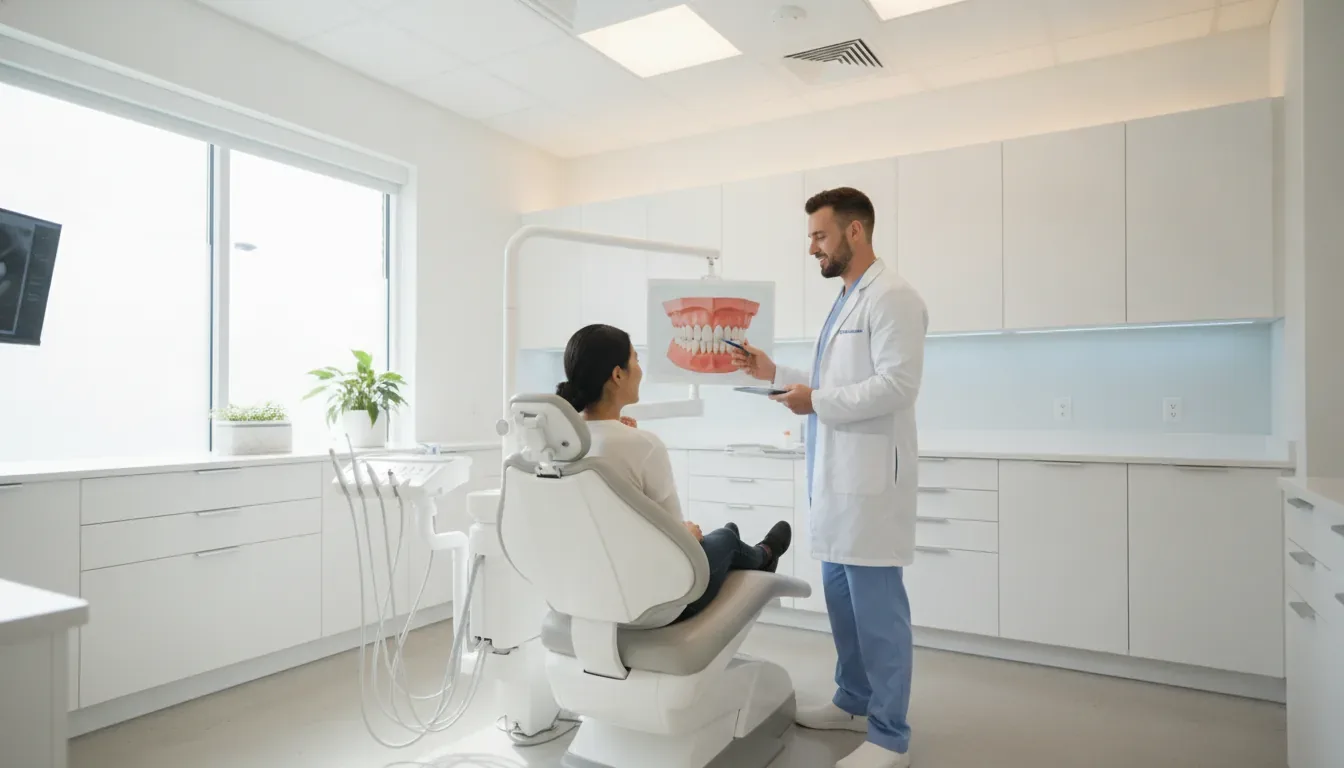
A good dentist meets a short set of practical and quality checks. The office is easy to reach, it is in your insurance network, the dentist explains things clearly, and the care is up to date.
Here is what to look for:
- Start with location and hours. Can you get there from home or work, and do the hours fit your week? The American Dental Association (ADA) says to begin with those basics, plus a practice that is in your network.
- Check the insurance side before you book. Ask whether the office is in-network with your plan, by plan name.
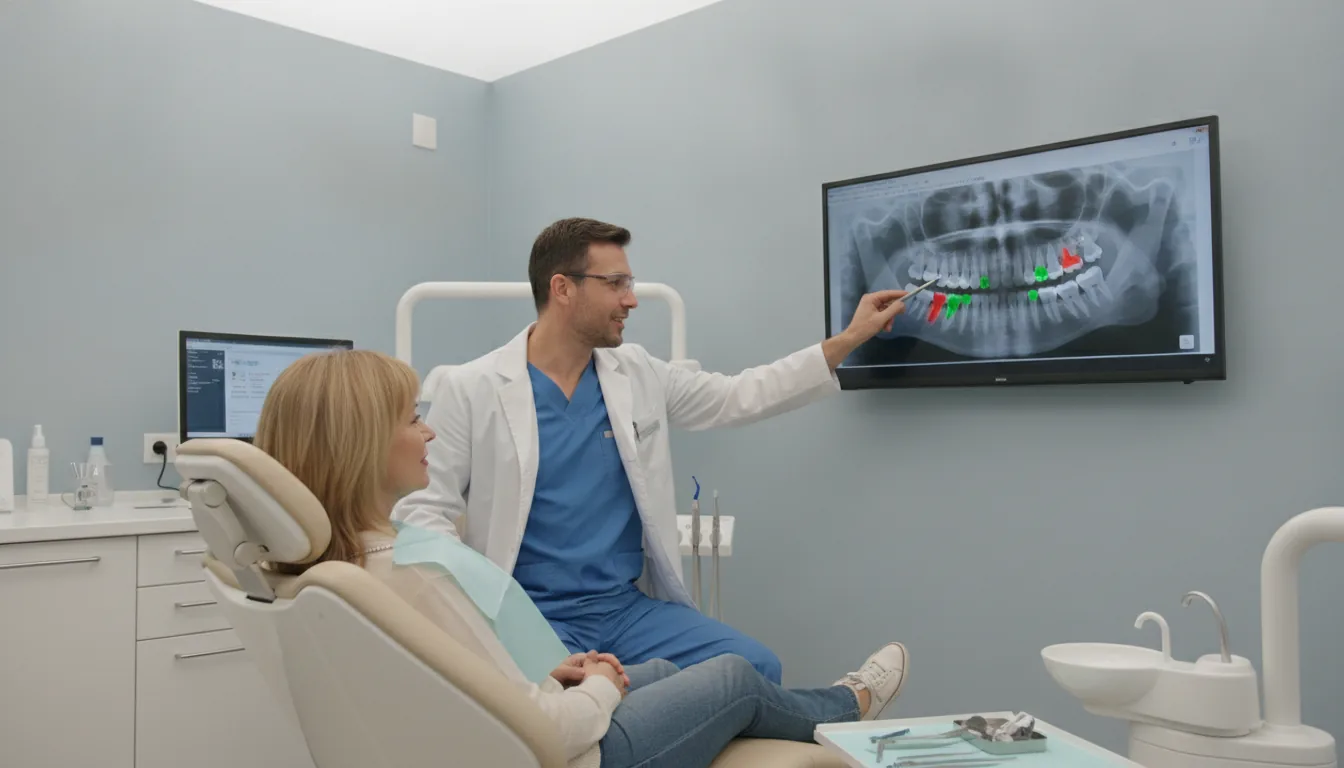
- Listen to how they explain. A dentist who shows you the X-ray and talks through your options is easier to trust.
- Ask how much care happens in one place. A practice that handles cleanings, crowns, root canals and surgery in one group saves you from starting over somewhere new.
- Look at the technology. An office using digital X-rays gives you a clear record with less guesswork.
- Membership is worth a look. ADA members agree to follow the association’s ethical and professional standards.
One local example. Valley View Dental’s Naperville office sits at 3103 111th St, Suite 131, with Saturday hours and evening hours on Tuesdays and Wednesdays.
Convenience is one half of the choice. Whether the dentist is any good is the other.
How can you tell if a dentist is good
A good dentist leaves a record you can check. Look for a valid license, a steady run of recent reviews, and clear answers when you ask questions.
Start with the credentials. DDS and DMD are two names for the same general dentistry degree, so neither one outranks the other.
Then read the reviews properly. Recent reviews matter more than old ones, and volume tells you whether a pattern is real. Read the low ratings too, and look for the complaint behind them. One bad review is one person’s day. Ten that describe the same problem is a pattern. The ADA also notes that every person’s dental health needs and experiences are their own, so judge the pattern rather than one story.
You can tell if a dentist is good before you ever sit in the chair. Call the office. Does someone answer your cost question directly? Do they offer to check your insurance? Will they book you a short visit to meet the dentist first? Those answers say more about trust than any slogan on a website.
For scale, Valley View Dental has more than 2,200 Google reviews across our three offices, including Naperville.
One check costs nothing and almost nobody runs it: the state license.
How do you check a dentist’s license in Illinois
In Illinois, a dentist’s license is public and searchable. You can look it up free on the Illinois Department of Financial and Professional Regulation (IDFPR) website, at idfpr.illinois.gov/checklicense.html.
Three steps:
- Open the IDFPR Check License page, the State of Illinois online license lookup.
- Search by the dentist’s last name or license number.
- Confirm the status says active, and look for any discipline on the record. Expired, probation, suspended or revoked are warning signs, and the disciplinary documents behind them can be reviewed.

This is the fastest background check you can run on any dentist, and it takes about a minute. Illinois licenses Dentist, Dental Hygienist and Specialty in Dentistry separately, so a specialty license can be checked the same way. Once the license checks out, the next question is who handles the harder work.
Should your dentist have specialists in-house, or refer you out
A practice with specialists on staff handles complex work inside one practice. That means fewer new offices for you, your records stay in one place, and one team owns your plan from start to finish. It also keeps more of your care under one roof.
Being referred out is normal. Some cases belong with a specialist, and a general dentist who refers you for those is doing the right thing. The question is how often it happens, and where you end up.
So ask two things. Which treatments are done in-house, and which get referred out? And if a specialist is in the group, which office does that specialist work from, and on which days? A group with several offices may book you somewhere other than the one you chose.
The specialists you may hear about:
- An endodontist does root canals (endodontic therapy).
- A prosthodontist handles implants, crowns and replacement teeth.
- An oral surgeon does extractions and surgery.
- An orthodontist straightens teeth with braces or aligners.
At Valley View Dental, a prosthodontist, a board-certified oral surgeon, an endodontist and an orthodontist work within Valley View Dental’s three offices. Referrals, records and insurance coordination stay inside the group.
Once you know who does the work, the next step is what to ask before you book.
What questions should you ask a new dentist before you book
Before you book, a few questions settle most doubts. Ask about your insurance, costs in writing, after-hours emergencies, and who does the specialist work.
The questions to ask a new dentist:
- Are you in-network with my plan? Ask by plan name, not just by carrier.
- Will I get a written treatment plan and a written estimate before any work starts?
- What does a new patient visit include, and what will it cost me?
- Which treatments do you do in-house, and which do you refer out?
- How do you handle an after-hours emergency?
- Does your staff know my benefit plan, and what payment options do you offer?
- Will you show me my X-rays and explain what you see?
- Do you keep my history and records on file?
- I have dental anxiety. How do you work with that?
Several of these come from the ADA. It suggests asking how emergencies outside office hours are handled. It also suggests asking whether the staff know your benefit plan and offer payment options, whether you get guidance on preventing problems, and whether your history is kept on file. The ADA says to tell the office about past experiences and worries up front. A good office takes that at face value and keeps things gentle and judgment-free.
The answers matter. So does the way they are given, which is where the warning signs show up.
What are the warning signs of a bad dentist
The warning signs of a bad dentist show up in how they sell and how they explain. Watch for pressure to start costly work fast, X-rays that are never shown, and no other options on the table.
The red flags:
- A large treatment plan on the first visit, after a rushed exam.
- Urgency built on fear rather than on what the X-ray shows.
- X-rays and findings that are not shown to you or explained.
- No written plan, and no cost, before work starts.
- Your concerns brushed off, and your questions half answered.
- Treatment areas that look unclean or disorganized.
- An office that is hard to reach by phone, with staff who seem to change every visit.
- Referrals out for nearly everything, so you never finish anywhere.
Not every urgent recommendation is unnecessary. Some treatment really is time-sensitive, and an infection or a cracked tooth will not wait. The difference is that a good dentist explains why, shows you what they are looking at, and gives you time to decide. A second opinion is always open to you.
If you see these signs, slow down. Most of the worry underneath them comes back to one thing: the bill.
How do you avoid a surprise bill at a new dentist
The way to avoid a surprise bill comes down to three checks before any work starts. Confirm the office is in-network with your plan. Get a written treatment plan with costs on it. Then ask your insurer for an estimate of what it will pay.
In-network means the office has agreed to set rates with your plan. Staying in network can lower what you pay out of pocket. An out-of-network office is free to charge its own fee, and the difference lands on you.
A PPO (preferred provider organization) plan lets you see any dentist, and pays more when that dentist is in the network.
If insurance does not cover everything, ask what else is on offer. A payment plan, monthly financing and discounts for patients without insurance are all common. The office should tell you the cost before you agree to anything.
Valley View Dental is in-network with most major PPO plans. Those include Delta Dental, Cigna, Aetna and Blue Cross Blue Shield. For the rest, there is financing through Cherry, CareCredit and Lending Club. There are also in-house payment plans for qualified patients, and a senior discount for patients without insurance. Larger treatment gets a custom quote at a free consult rather than a price on a page. The number depends on what your mouth needs.
If a plan or a quote still feels wrong after all that, get a second opinion.
When should you get a second opinion or switch dentists
A second opinion is a normal step before large or costly treatment. Take your X-rays and your written treatment plan to another dentist and compare what you hear.
Worth a second opinion:
- A big plan from an office you have only just met.
- A quote that keeps changing.
- Answers that do not add up, or that change when you ask again.
- Any of the warning signs above.
You can switch dentists at any time, and it is simpler than most people expect. Ask your old office to send your dental records and X-rays to the new one. They are your records, and the request is routine.
Once you have picked someone, the first visit tells you the rest.
What should you expect at your first visit to a new dentist
Your first visit is mostly a check-up and a conversation. Expect a new patient exam, X-rays, often a cleaning, and a plan explained in plain words. What to expect after that depends on what the exam finds.
What to bring:
- Your insurance card.
- Past dental records and X-rays, if another office holds them.
- A list of the medicines you take.
What to watch while you are there. Is the office clean and organized? Does the dentist explain what the X-ray shows and answer your questions? Are the staff kind to the person ahead of you? Are fees and payment plans discussed up front, before any work is scheduled?
A new patient visit at Valley View Dental covers a checkup, digital X-rays and a cleaning. Valley View Dental uses digital X-rays and 3D panoramic imaging.
A few questions tend to come up after all this.
Choosing a dentist in Naperville – more questions
Why is it so hard to find a good dentist?
Finding a good dentist feels hard because the signals are difficult to read from outside. Marketing looks the same everywhere, and you cannot see the work. Three things narrow the list fast. The Illinois license lookup, the pattern in recent reviews, and one phone call with your real questions about insurance, cost and specialists.
How do you find a dentist that takes your insurance?
To find a dentist that takes your insurance, check two places. Start with your insurer’s provider directory, then call the office and confirm your plan by name, not just the carrier. Plans within one carrier differ. Valley View Dental is in-network with most major PPO plans.
How often does the average person actually go to the dentist?
About two in three US adults see a dentist in a given year, according to America’s Health Rankings. There is no single schedule that fits everyone. Your dentist sets the right interval for your own risk, and the ADA points to regular visits rather than one fixed gap.
How can I get dental work if I can’t afford it?
If money is tight, ask about payment options before you skip care. Many offices offer financing, in-house payment plans, or a senior discount for patients without insurance. Valley View Dental offers all three, with financing through Cherry and CareCredit among others. The ADA also points to dental schools and local health departments as lower-cost routes.