A salt water rinse is the first home step most people try for a toothache, and it only helps if you do it right. Almost every toothache page lists it, yet no two agree on how much salt goes in the warm water. The dental groups behind the advice do not all agree either, so here is the short version first.
How do you use a salt water rinse for a toothache
A salt water rinse for a toothache is about half a teaspoon of salt in 8 ounces of warm water, swished gently for 30 seconds, then spit out. The American Dental Association (ADA) lists warm water alone as its toothache rinse, with no salt. See a dentist if pain lasts more than two days, or sooner for swelling or fever.
That recipe matches what Cleveland Clinic and the NHS publish, and Aspen Dental uses the same amounts. The ADA’s MouthHealthy page puts its own advice this way: “For toothaches, rinse your mouth with warm water to clean it out.” The NHS and Cleveland Clinic both put the stop line at two days.
The groups behind this advice do not all say the same thing, so start with who says what.
In this guide
What do dental and health groups actually say about salt water for a toothache
Four groups publish toothache first aid, yet only two of them mention salt water, and those two disagree about children. The American Academy of Pediatric Dentistry (AAPD) and the NHS include a salt water rinse. The American Dental Association says warm water, and the Canadian Dental Association says an ice pack.
| Group | What it says for a toothache | Salt? |
|---|---|---|
| American Dental Association (MouthHealthy) | Rinse with warm water, floss gently, no aspirin on the gum, call if pain persists | No |
| American Academy of Pediatric Dentistry | For a child: rinse the area with warm salt water, cold compress if swollen, see a dentist soon | Yes |
| NHS (UK) | Half a teaspoon of salt in a glass of warm water, spit it out; childr..en should not try it | Yes, adults only |
| Canadian Dental Association | Call your dentist, ice pack on the face, never heat on the jaw | No |
The American Dental Association’s MouthHealthy page reads: “For toothaches, rinse your mouth with warm water to clean it out.” It also says to floss gently to remove food caught between your teeth. Do not put aspirin on the tooth or gums. If the pain persists, contact your dentist. The word salt does not appear on the page.
The American Academy of Pediatric Dentistry writes for parents. Its advice is to rinse the irritated area with warm salt water and put a cold compress on a swollen face. Then see a dentist as soon as possible.
The NHS gives the fullest recipe. Dissolve half a teaspoon of salt in a glass of warm water, rinse, then spit it out. It adds that children should not try it, in case they swallow it.
The Canadian Dental Association does not mention salt water. It says to call your dentist and hold an ice pack against your face at the sore tooth. Never use a heating pad or any other heat on your jaw.
If you do use salt, as the AAPD and the NHS allow, the next question is how much.
How much salt and how much water do you need
Half a teaspoon of salt is the amount the NHS, Cleveland Clinic and Aspen Dental all give, dissolved in about 8 ounces (one glass) of warm water. Some sources use up to 1 teaspoon in the same 8 ounces. If the rinse stings, use less salt.
Cleveland Clinic’s line is: “Mix 1/2 teaspoon of salt into 8 ounces of warm water.” The NHS says to dissolve half a teaspoon in a glass of warm water. Healthline notes that most recipes call for 1 teaspoon. It suggests 1/2 teaspoon for the first day or two if your mouth is tender.
If you are unsure how much salt to use, go with half a teaspoon. It is the figure all three sources share for a salt water rinse. Stir until the salt dissolves.
As for what kind of salt to use, Aspen Dental says table salt, sea salt or kosher salt all work. Iodized is fine. Healthline says to use any salt you have.
The water matters as much as the salt, starting with how warm it should be.
Should the water be warm, hot or cold
Warm water is the temperature every source behind this guide uses: warm enough to drink comfortably, and not hot. Aspen Dental says to skip the hot water. Colgate warns that hot or cold water in your mouth may shock an already sensitive tooth.
Warm water also helps the salt dissolve, which is the reason the NHS gives for using it. While the tooth hurts, the NHS also says to avoid foods that are very hot or very cold.
A warm rinse inside the mouth is one thing. Heat on the outside of the jaw is another. The Canadian Dental Association says to hold an ice pack against your face at the sore tooth. It adds: “Never use a heating pad, hot water bottle or any other source of heat on your jaw. Heat will make things worse instead of better.”
Once the water is warm and the salt has dissolved, the next step is the swish itself.
How do you swish, and should you brush before or after
Swish the salt water gently around the sore side for about 30 seconds, then spit it out, and do not swallow it. Brushing can come before or after the rinse; the sources differ, and both positions are below.
Cleveland Clinic’s instruction is short: “Mix 1/2 teaspoon of salt into 8 ounces of warm water. Swish for 30 seconds, and then spit it out.”
The steps, in order:
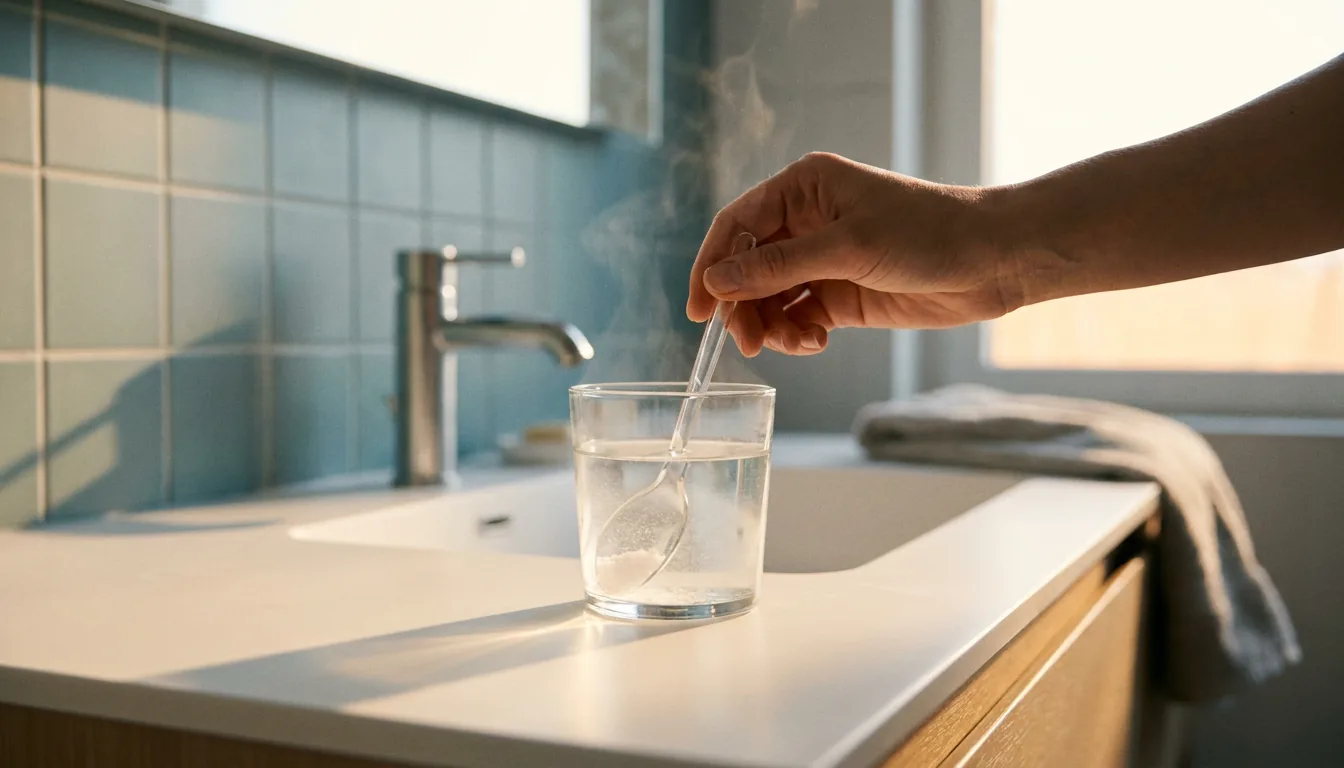
- Stir the salt into the warm water until it dissolves.
- Check that the water feels warm, not hot.
- Take a mouthful and swish it gently around the sore tooth for about 30 seconds.
- Spit it out. Do not swallow it. The NHS and Aspen Dental both say so.
On brushing, Aspen Dental says to rinse after you brush, because brushing loosens plaque and food first. Healthline says before or after both work. The American Dental Association does not set an order.
Go easy around the sore tooth with your toothbrush. The NHS says to use a soft toothbrush and to avoid flossing around the sore tooth. The ADA says to floss gently if food is caught between your teeth. So floss gently only if something is stuck, and otherwise go easy around the tooth.
That is one rinse. How many times a day to repeat it, and for how many days, comes next.
How often should you rinse, and for how many days
Most dental sources suggest rinsing 2 to 4 times a day. The NHS says you can repeat it as often as you like. Aspen Dental gives two to four times a day for most adults. Healthline warns that overuse can irritate gums and lead to further bleeding.
How often you rinse matters less than how long you keep waiting. If the toothache lasts more than 2 days, see a dentist. The NHS and Cleveland Clinic both set the line there.
Some pages say to keep rinsing for 7 to 10 days before you see anyone. That number comes from a general rinse guide, not from toothache advice. For a toothache, the health bodies say 2 days.

Those are the adult rules. Parents have one more question before handing a child the glass.
Can children use a salt water rinse
It depends on whether your child can spit it out, and that is why the advice differs. The American Academy of Pediatric Dentistry (AAPD) tells parents to rinse the irritated area with warm salt water. The NHS says children should not try it, in case they swallow it.
The AAPD parent FAQ says: “First, rinse the irritated area with warm salt water and place a cold compress on the face if it is swollen.” The NHS toothache page says: “Children should not try rinsing their mouth with salt water in case they swallow it.”
No source behind this guide names an age. The NHS’s concern is swallowing. The practical test is whether your child can swish and spit without swallowing any of it.
If your child cannot do that reliably, use plain warm water instead, which is the ADA’s own toothache rinse. Hold a cold compress on the cheek if the face is swollen, and call your child’s dentist. Valley View Dental provides general and family care for all ages.
Children are not the only ones who should hold off. Some adults should skip the rinse too.
When should you skip a salt water rinse or stop using it
Skip the rinse in the first day after a tooth is pulled. The American Dental Association says not to rinse your mouth vigorously after a tooth extraction. For the first few days, if you must rinse, rinse gently.
Side effects from salt water are few, and most come down to timing or amount. Stop, or do not start, in these cases:
- You just had a tooth pulled. While the blood clot forms in the socket, the ADA says no vigorous rinsing. Aspen Dental and Colgate both say to wait 24 hours before a salt rinse. Your own dentist’s written aftercare comes first.
- You have high blood pressure or follow a low-sodium plan. One dental practice notes that some sodium can be absorbed through the tissues in your mouth, even when you spit. Ask your doctor before you start.
- It stings, or your gums bleed more. Healthline says overuse can irritate gums and lead to further bleeding. Use less salt, or rinse less often.
- The rinse makes the tooth hurt worse. Stop rinsing and call a dentist.
The ADA’s extraction page says: “Don’t smoke or rinse your mouth vigorously,” and “Avoid drinking through a straw for 24 hours.”
Even done right, a rinse has limits, and they matter before you count on it.
What can a salt water rinse not do for a toothache
A salt water rinse reaches the gum and the area around the tooth. It cannot reach a tooth infection or a cavity inside the tooth. Aspen Dental states the limit directly: a rinse cannot eliminate an active infection, close or reverse a cavity, or treat an abscess.
Cleveland Clinic says that with a cavity or abscess, “the pain may come and go somewhat, but it won’t go away completely.” Any relief is temporary, and the cause still needs a dentist.
Some signs mean the wait is over today, not after two days.
When is a rinse not enough, and you need to be seen today
Stop rinsing and call a dentist today if the toothache has lasted more than 2 days, your cheek or jaw is swollen, you have a fever, it hurts to bite, or the pain wakes you at night. Go to an emergency room if swelling reaches your eye or neck, if it is hard to breathe, swallow or speak, if your fever is over 101 F, or if bleeding will not stop with pressure.
The NHS list for seeing a dentist starts with a toothache that lasts more than 2 days, pain that does not ease with pain medicine, or a high temperature. It also lists pain when you bite, red gums or a bad taste in your mouth, and a swollen cheek or jaw.
For the emergency room, Cleveland Clinic names swelling below your eye or a knot on your jaw. It also names a fever over 101 F and bleeding that will not stop with pressure. The NHS adds swelling around your eye or neck, and any swelling in your mouth or neck that makes it hard to breathe, swallow or speak.
Valley View Dental’s own emergency list includes a severe toothache, above all one that wakes you up or comes with swelling. It also includes a gum or mouth infection with a painful bump, pus or spreading swelling. Valley View Dental provides same day emergency dental care whenever possible, with offices in Romeoville, Naperville and Montgomery.
A few shorter questions come up alongside these, and they are answered below.
Questions about salt water rinses for a toothache
Does rinsing mouth with salt water help toothache?
Rinsing your mouth with salt water can clean the area and ease sore gums for a short time. It does not fix the cause, and Aspen Dental says a rinse cannot treat an infection, a cavity or an abscess. Cleveland Clinic says pain from those causes may come and go, but it will not go away completely.
I have extreme tooth pain and can’t sleep. What can I do to relieve the pain and sleep?
Extreme tooth pain that keeps you awake is on Valley View Dental’s emergency list, so call a dentist as soon as you can. For tonight, the NHS suggests soft foods, no chewing on that side, and nothing very hot, very cold or sweet. The Canadian Dental Association says an ice pack on the face and no heat on the jaw. A pharmacist can tell you which pain medicine fits you.
What to do about tooth pain?
Tooth pain, by the American Dental Association’s steps, calls for a warm water rinse and gentle flossing to clear trapped food. Keep aspirin off the tooth or gums, and call your dentist if the pain persists. If it lasts more than two days, the NHS and Cleveland Clinic both say to see a dentist.
How long does it take for salt water to heal inflamed gums?
Inflamed gums have no published healing time from salt water in any source behind this guide. Healthline warns that rinsing too often can irritate gums and lead to further bleeding. If your gums stay sore or inflamed, see a dentist.