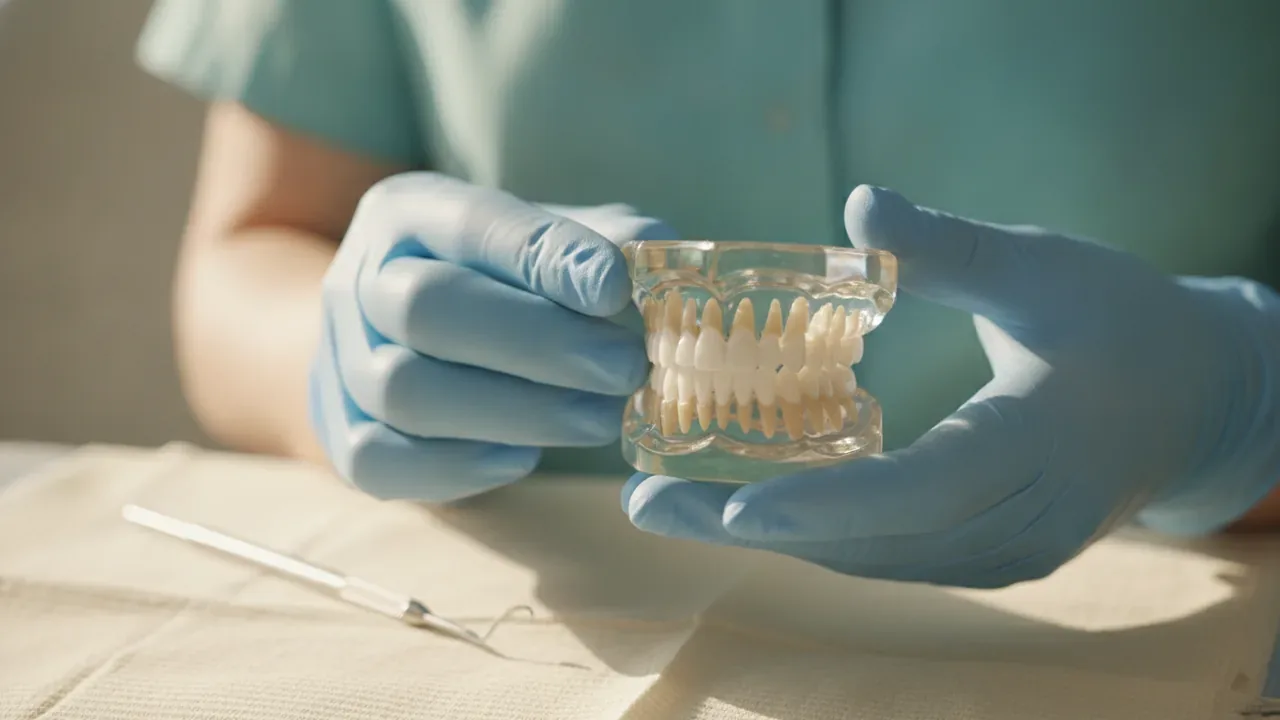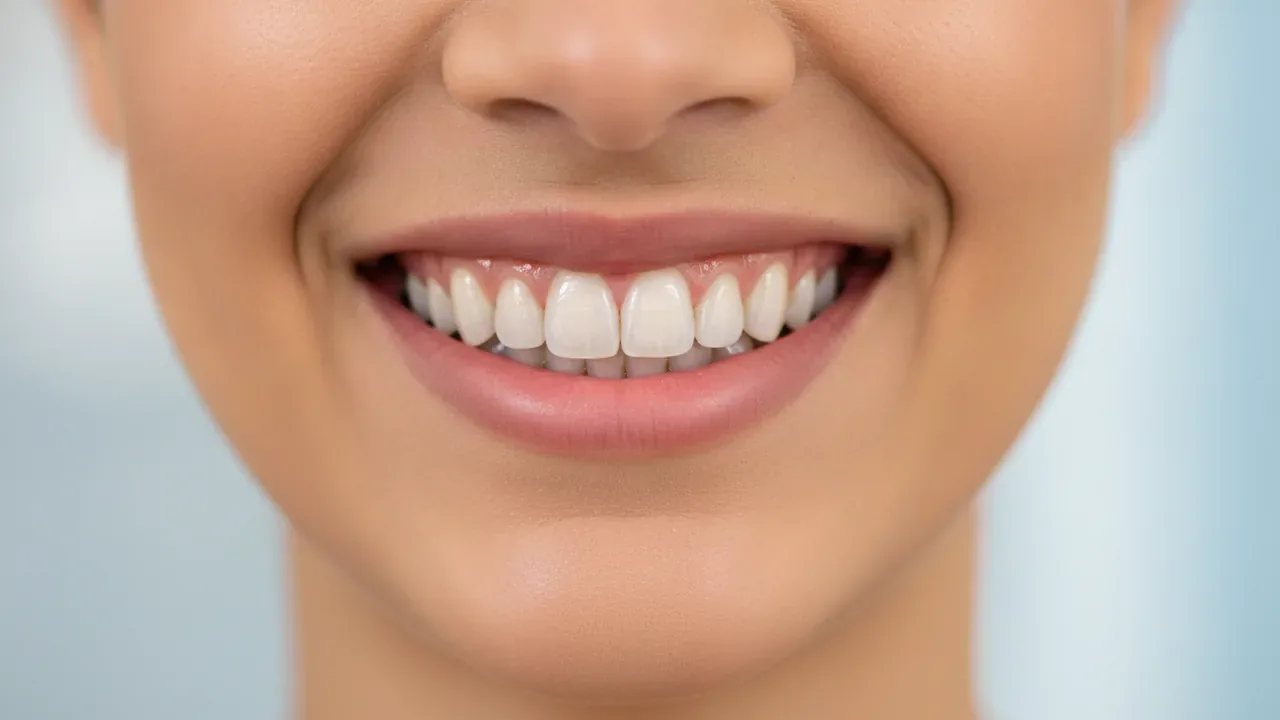
Dental veneers are thin covers bonded to the front of your teeth, and they change how your smile looks. If you typed “what are veneers” and landed here, this guide is about veneers for teeth, not the wood veneers used in furniture. Underneath that search is usually a bigger question: will veneers actually work for me? Maybe you worry you are too old, or that the cost will not be worth it. This guide gives you a plain answer on what veneers are, what they can fix, what they cannot, and when it is smarter to see a dentist first. Valley View Dental has cared for local families for more than 20 years, so you get the honest version, not a sales pitch. Here is the plain answer, starting with what dental veneers actually are.
Table of Contents
What are dental veneers
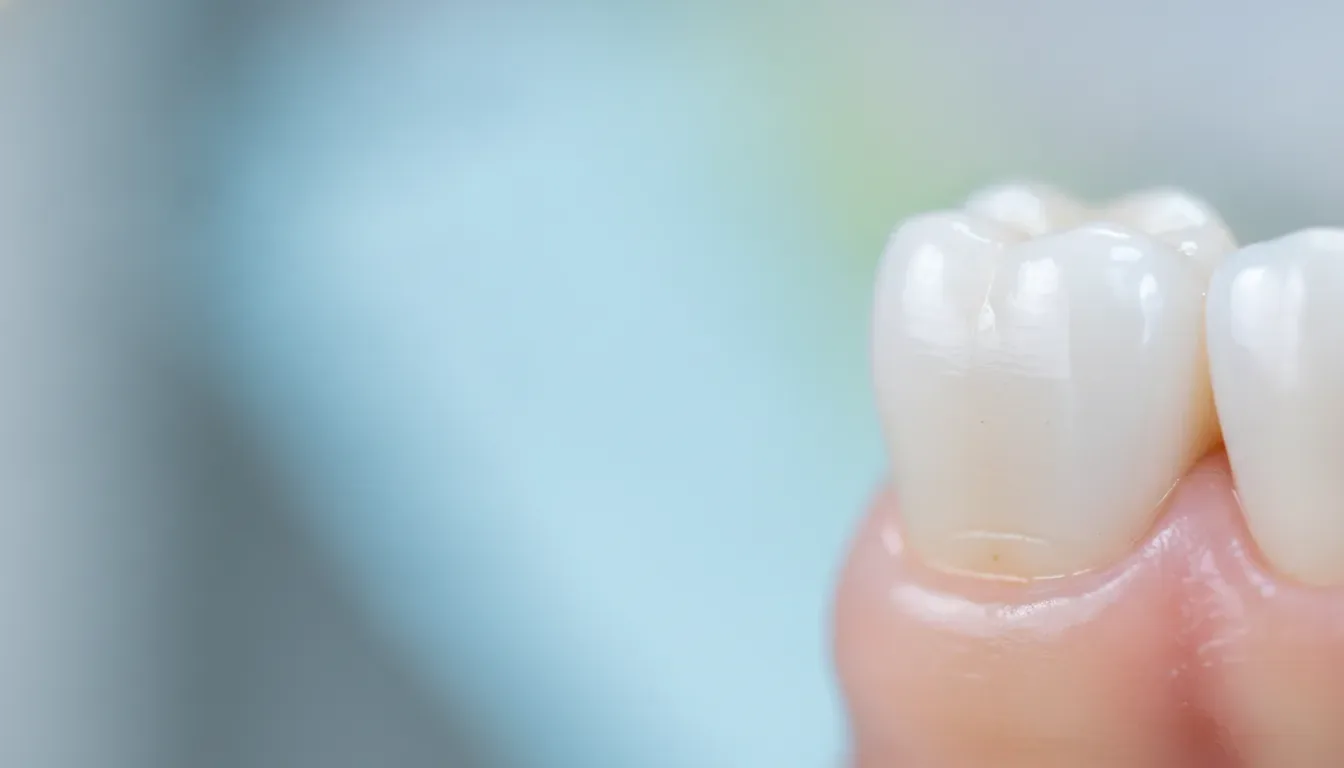
Dental veneers are custom-made covers for the front surface of a tooth, and they hide chips, stains, gaps, and small shape problems. The American Dental Association describes them as “custom-made, natural-looking coverings for your teeth” that “cover only the front surface of a tooth” (ADA MouthHealthy, 2026). They do not wrap the whole tooth, and placing one usually means removing a small amount of tooth enamel. Veneers come in two materials, porcelain and composite, and both are bonded to your teeth to improve their color, shape, and alignment. Which material fits you is the next thing to sort out.
Porcelain or composite: what are the two types of veneers
Porcelain veneers are thin lab-made shells, and they are strong, stain-resistant, and natural-looking. The ADA calls porcelain “strong, long-lasting and natural-looking,” though it usually costs more (ADA MouthHealthy, 2026). Composite veneers are made from composite resin bonded to the tooth, and they need less tooth enamel removed and fewer visits. The trade is durability: the ADA notes composite is “not as stain- or wear-resistant” as porcelain. So porcelain lasts longer and resists stains, while composite costs less and is faster. Valley View Dental offers porcelain veneers and dental bonding with tooth-colored resin, so a dentist can match the material to your teeth. What these materials actually correct is the next question.
What can veneers fix
Veneers are a cosmetic fix for the front teeth, and they cover chips, stains, gaps, and mild crookedness. The ADA says veneers can improve teeth that are “chipped or broken,” “stained,” or “crooked or misshapen,” and can “mask the gaps in your smile” (ADA MouthHealthy, 2026).
Veneers can help with:
- Chipped or broken front teeth
- Stained teeth that whitening did not fix
- Gaps between teeth
- Teeth that look crooked or the wrong shape
Because a thin layer of tooth enamel is shaped first, a veneer sits flush and looks like a natural tooth. Valley View Dental uses veneers to improve the shape, color, and alignment of the front teeth. Veneers are cosmetic only, though, which is exactly why the next section matters.
What can’t veneers fix
Veneers are a cosmetic cover, not a repair for disease, so they cannot fix tooth decay, gum disease, a missing tooth, or a bad bite. They sit on the front of a healthy tooth. They do not treat what is happening underneath or inside it.
Veneers can’t fix:
- Active tooth decay or gum disease. These are treated first, because enamel is removed to place a veneer and the tooth needs to be healthy. The ADA notes “tooth enamel is removed to place a veneer” and “Treatment is not reversible” (ADA MouthHealthy, 2026).
- A missing tooth. Replacing one is the job of a dental implant or a bridge, not a veneer.
- A heavily damaged or broken-down tooth. That often needs a dental crown, which covers the whole tooth.
- A bad bite or major crowding. Correcting alignment usually needs orthodontics, such as braces or Invisalign.
So if your real issue is decay, gum disease, a missing tooth, or your bite, see a dentist first. Veneers may still be part of the plan later, once the tooth is healthy. Knowing the limits makes the next part, how veneers are actually placed, easier to picture.
How are veneers put on, step by step
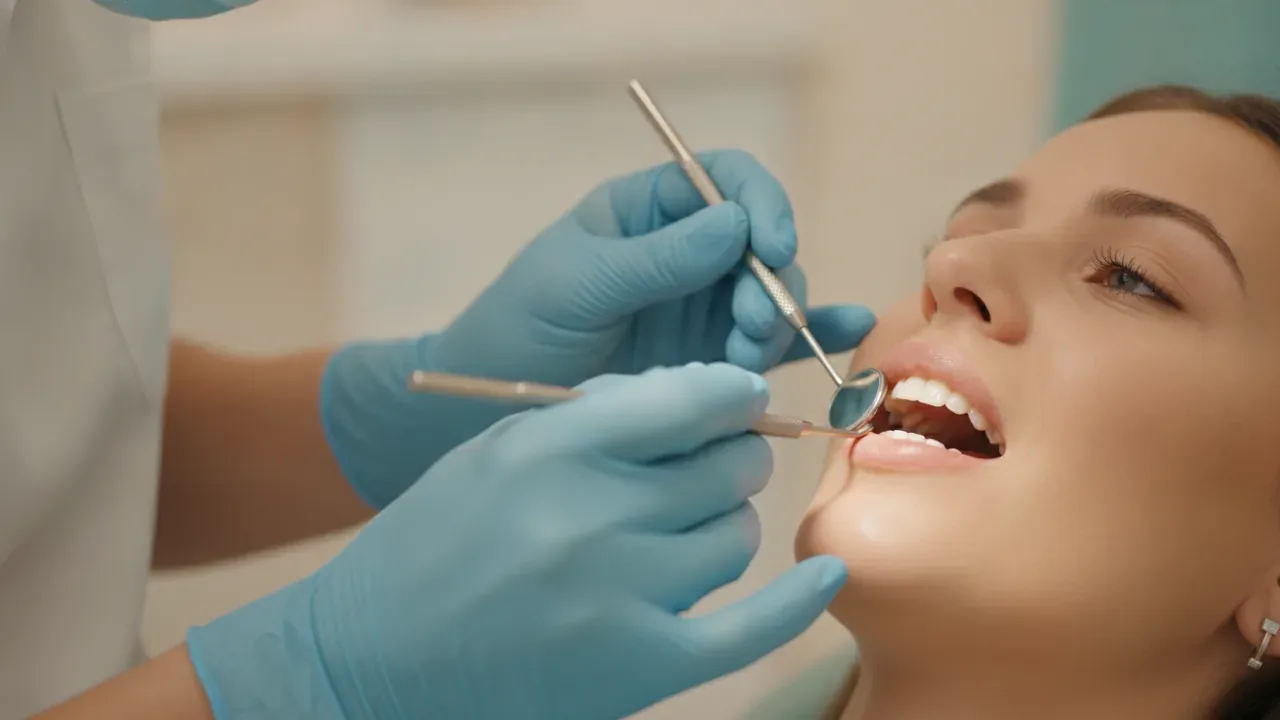
Getting veneers takes a few steps across one or two visits, moving from preparing the tooth, to an impression or scan, to bonding the veneer in place. The exact path depends on whether you choose porcelain or composite.
Porcelain veneers usually take two visits:
- The dentist prepares the tooth by removing a small amount of tooth enamel.
- They take a dental impression or a 3D scan of your teeth.
- A lab custom-makes your veneers to fit.
- On the second visit, the veneers are bonded to your teeth and polished.
Composite veneers are often done in one visit:
- The dentist prepares the tooth surface.
- Composite resin is bonded and sculpted onto the tooth by hand, the same dental bonding technique used for small repairs.
- A curing light hardens the resin.
- The dentist trims and polishes it to match your teeth.
Care is meant to be gentle and judgment-free, and your dentist will talk you through each step. Once you know how veneers go on, the fair question is whether you are a good candidate for them.
Who is a good candidate for veneers, and what disqualifies you
A good veneer candidate has healthy teeth and gums and enough enamel, and veneers suit adults of most ages. Age itself does not disqualify you. What matters is the health of your mouth, not the number on your birthday.
A few things can delay veneers or rule them out for now:
- Active tooth decay or gum disease, which is treated first.
- Too little tooth enamel to bond to, since enamel is removed to place a veneer and the treatment is not reversible (ADA MouthHealthy, 2026).
- Heavy teeth grinding, also called bruxism, without a night guard to protect the veneers.
None of these has to be a lasting barrier. Most can be treated, and then veneers may be back on the table. A dentist confirms whether you are a candidate at a visit. Once you qualify, the next thing people weigh is whether veneers are reversible and how long they last.
Are veneers reversible, and how long do they last
Veneers need a little tooth enamel removed to place them, and that makes them a long-lasting but not reversible choice. Once the enamel is gone, the tooth will always need a covering. The ADA states plainly that “Treatment is not reversible” (ADA MouthHealthy, 2026).
Long-lasting is not the same as forever. The ADA notes veneers “may chip, crack, wear down or loosen over time” (ADA MouthHealthy, 2026). When that happens, a veneer can often be re-bonded, repaired, or replaced. Porcelain veneers tend to last longer than composite veneers, though both wear eventually.
[FACT-GAP: typical veneer lifespan range in years; source or defer to the sibling guide; do not invent a number here.]
So if you are asking whether veneers last forever, the honest answer is that they are long-lasting and will need replacement down the road. That naturally raises the cost question.
How much do veneers cost
Veneer cost depends on the material and how many teeth you treat. Composite veneers usually cost less than porcelain veneers, because composite needs fewer visits and less lab work. If you want a cheaper option than porcelain, composite veneers or dental bonding are the usual routes, though they are not as stain- or wear-resistant as porcelain (ADA MouthHealthy, 2026).
A public price range helps set expectations: Prices vary a lot by case, so a single quoted number online is rarely what you pay.
Valley View Dental does not post a set veneer price, because the right number depends on your teeth and your goals. You get a custom quote at a consultation, so you see real figures for your smile. Financing is available through Cherry, which can spread the cost into monthly payments. With the money question framed, here are the quick answers people ask most.
Frequently Asked Questions
What disqualifies you for veneers?
Active tooth decay, gum disease, too little enamel, or heavy grinding without a night guard can disqualify you for veneers, at least until they are treated. Veneers need a healthy tooth to bond to, because enamel is removed and the treatment is not reversible (ADA MouthHealthy, 2026). Once the problem is fixed, veneers may be an option again.
What’s a cheaper option than veneers?
Dental bonding, or composite veneers, is usually the cheaper option than porcelain veneers. Both cost less because they need fewer visits and no separate lab work. The trade is durability: the ADA notes composite is “not as stain- or wear-resistant” as porcelain (ADA MouthHealthy, 2026).
Do veneers last forever?
Veneers are long-lasting, not forever. Placing them removes a small amount of tooth enamel, so they are not reversible, and over time they can chip, wear, or loosen and need replacement (ADA MouthHealthy, 2026). Think of them as a durable covering you maintain, not a one-time fix.
What’s the average cost of a full set of veneers?
The average cost of a full set of veneers varies by material and the number of teeth treated. Because every smile is different, the honest way to get your number is a consultation, where you receive a custom quote. Valley View Dental does not post a set price for this reason.
Do veneers damage your natural teeth?
Veneers require removing a small amount of tooth enamel from the front of the tooth. That is why the choice is not reversible and why the tooth needs to be healthy first. It is also why a careful exam matters before you commit (ADA MouthHealthy, 2026).
Dental veneers, in short
Now you have the plain answer on dental veneers: custom-made covers bonded to the front of your teeth that hide chips, stains, gaps, and small shape problems. Porcelain lasts longer and resists stains, while composite costs less and is often done in a single visit. Veneers are a cosmetic fix, not a repair, so they cannot treat decay, gum disease, a missing tooth, or a bad bite. Those come first. And because a little enamel is removed to place them, veneers are long-lasting but not reversible.
If your teeth and gums are healthy, age is no barrier, what matters is the health of your mouth, not the number on your birthday. That is where we come in. Valley View Dental matches the material to your teeth, treats any underlying problem first, and gives you a custom quote at a consultation, with financing through Cherry if you want to spread the cost. Call (630) 509-7933 or book a free consult to see whether dental veneers are the right fit for your smile.