You want whiter teeth, and you have three ways to get there. You can buy a drugstore box of whitening strips, wear a dentist-made take-home whitening tray, or book an in-office whitening visit. This guide shows how each teeth whitening route works, how long each result lasts, and the one thing none of them can change. All three whiten your teeth with the same chemistry, so that is where it starts.
How do you whiten your teeth
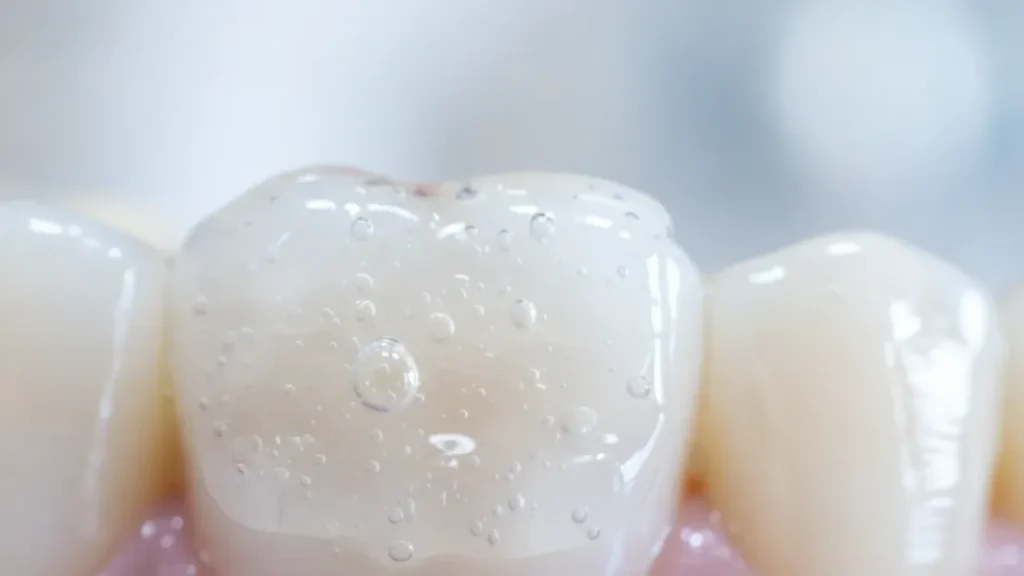
How Teeth Whitening Works by holding a peroxide gel against the enamel, where it releases oxygen that lifts the colored compounds staining the tooth (ADA, viewed 15 August 2026). The three routes, drugstore whitening strips, dentist-made take-home whitening trays, and in-office whitening, share one chemistry and differ only in gel strength and contact time; only natural teeth whiten, not tooth-colored restorations.
That gel carries hydrogen peroxide or carbamide peroxide, the two active ingredients behind every whitening product. Here is the short how-to:
- Pick your route: a drugstore product for a small change, a dentist-made take-home tray for more, or an in-office visit for the most gel strength.
- Clean and dry your teeth, then apply the gel or strip exactly as the label says.
- Wear it only for the time stated, then remove it and rinse.
- Repeat for the full course, and see a dentist if your gums sting or your teeth stay sensitive.
To see why strength and time matter, it helps to know how the gel reaches the stain in the first place.
Table of Contents
How does teeth whitening actually work
Whitening gel carries hydrogen peroxide or carbamide peroxide, and that peroxide releases oxygen that breaks apart the colored compounds trapped inside the tooth. So whitening does not scrub the surface; it reaches into the enamel and dentin and changes the color there. The American Dental Association describes the bleaching process this way: reactive oxygen molecules from hydrogen peroxide react with the organic chromophores, the colored compounds, within enamel and dentin through chemical oxidation (ADA, viewed 15 August 2026).
Carbamide peroxide releases about one-third of its content as hydrogen peroxide, so a carbamide gel acts slower than a hydrogen peroxide gel of the same number. This is why strength and contact time decide how much your teeth actually whiten. A stronger gel gives more oxygen. A longer hold gives that oxygen more time to work. The same peroxide reaches the pulp inside the tooth within about 15 minutes of contact, which is also why sensitivity can follow.
One more difference matters. Whitening changes the colored compounds inside natural enamel and dentin. Surface stain sitting on a crown or filling is a polishing problem, not a bleaching one, so a gel will not shift it.
What are your three whitening options, and how do they differ
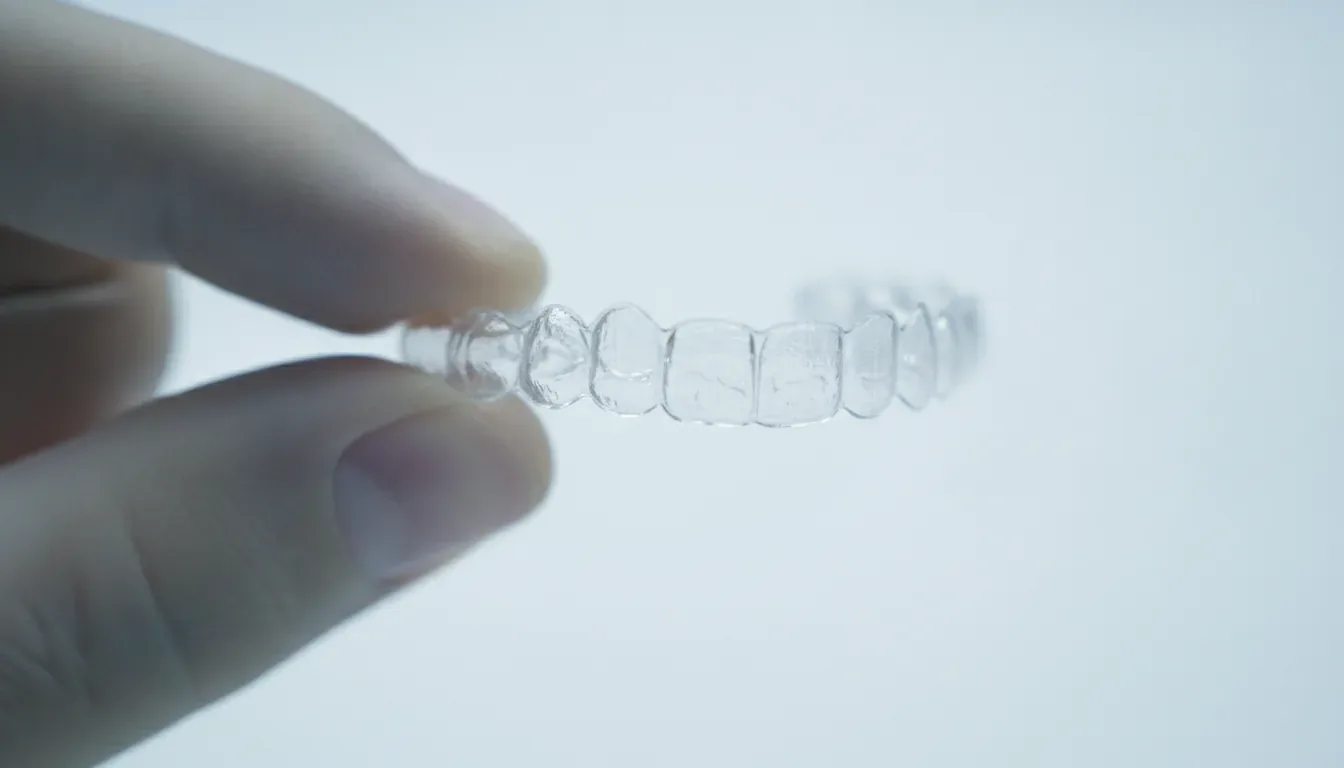
Your three whitening routes differ by peroxide strength and how long the gel stays on the teeth. Dentist-dispensed take-home trays run about 10% to 38% carbamide peroxide (ADA), stronger than a drugstore box and gentler than an in-office gel.
| Route | Typical peroxide | How long each session | How long a course runs | Who supplies it |
|---|---|---|---|---|
| Over-the-counter (whitening strips, whitening toothpaste, kits) | Carbamide or hydrogen peroxide at lower concentrations than in-office or dentist-prescribed at-home techniques (ADA); no fixed number | 5 to 45 minutes, depending on product strength (Crest) | About a week, and some up to a month (Crest) | The manufacturer |
| Dentist-dispensed take-home trays | 10% to 38% carbamide peroxide (ADA) | 2 to 10 hours daily (ADA) | 6 to 28 days (ADA) | Your dentist, in trays made for your mouth |
| In-office | Concentrated hydrogen peroxide (ADA) | Up to 30 minutes of gel contact (ADA) | One visit | Applied by the dental team |
All three routes whiten the same way; only the strength and timing change. For the take-home route, Valley View Dental supplies Opalescence custom trays and Opalescence Go pre-loaded trays at 10% or 15% hydrogen peroxide (vvdental.com, viewed 15 August 2026).
One way to judge a drugstore box: look for the ADA Seal of Acceptance. The ADA grants that Seal to toothpastes and whitening strips, and says professional products are not eligible for it, so a dentist kit without the Seal can still work well.
Most people start with route one, the drugstore box, and that is where the small mistakes happen. Doing it correctly is what separates an even result from a patchy one.
How do you use whitening strips, step by step
Whitening strips are thin, flexible strips coated with peroxide gel, and they work only where the gel touches the tooth, so placement decides your result. Line the gel up with the gum line, press it flat, and wear it only for the time on the packet.
Strips are among the most common whitening products in the drugstore aisle. That is the whole how-to for strips:
- Do not brush right before you apply. The common mistake is brushing first, which the manufacturer advises against (Crest, viewed 15 August 2026).
- Dry your teeth before placing the strip. The common mistake is applying over wet teeth, so the strip slides.
- Peel the strip from its liner and place the gel side against your teeth, lined up with the gum line. The common mistake is covering the gums, which is where irritation starts (Crest; ADA on gum inflammation, viewed 15 August 2026).
- Press firmly along the whole strip for full contact. The common mistake is leaving air pockets, which is why some people get patchy results.
- Fold the rest of the strip behind your teeth. The common mistake is skipping the fold, so the strip lifts.
- Wear it only for the time the packet states, then remove it. The common mistake is leaving it on longer to get more; the manufacturer says plainly not to leave the strips in place longer than the recommended period (Crest).
The gel sits on the enamel; keeping it off the gums keeps the irritation down. A safety note: this is not dosing advice, and whitening does not replace a checkup. Stop and call a dentist if your gums whiten, sting, or bleed. Whitening strips are recommended for adolescents and adults 12 years and older (Crest).
Strips are one option among many, which raises the next question: which whitening products are worth buying at all?
Which teeth whitening products actually work
Whitening products work when they carry enough peroxide, held long enough, to reach the stain. Peroxide strips and dentist-supplied gel change the color of the tooth itself; whitening toothpaste mostly removes surface stain, so look for the ADA Seal of Acceptance when you shop. The goal is whiter teeth, not a scrubbed surface.
People search for the best whitening products and for the ones that actually work, so here is how they sort out by evidence. Peroxide products use hydrogen peroxide or carbamide peroxide, and the American Dental Association (ADA) is the body to check them against.
- Whitening strips carry peroxide and can carry the ADA Seal of Acceptance (ADA, viewed 15 August 2026).
- Whitening toothpaste can carry the ADA Seal and works on surface stain; Healthline records results visible in 2 to 6 weeks (ADA; Healthline, viewed 15 August 2026).
- Dentist-dispensed take-home gel is the strongest at-home option, at 10% to 38% carbamide peroxide (ADA).
- Baking soda is abrasive; on a crown it dulls the glaze (getsmile.net, viewed 15 August 2026).
- Charcoal toothpaste is abrasive too, with the same damage pattern as baking soda.
- Lemon juice and vinegar are acidic, and they etch the glaze on porcelain and ceramic.
How to judge a box: look for the ADA Seal of Acceptance. The ADA grants it to toothpastes and whitening strips, and says professional products are not eligible, so a dentist-supplied kit without a Seal is not a strike against it.
Once you have picked a product that works, the next question is how much change to expect, and how long it holds.
How white will you get, and how long does it last
Whitening results hold anywhere from a few months to a few years, depending on the route. Whitening toothpaste fades in about 3 or 4 months, while in-office whitening can last 1 to 3 years with good oral hygiene (Healthline, viewed 15 August 2026).
All four routes whiten, but they do not hold for the same length of time (Healthline):
- Whitening toothpaste: visible in 2 to 6 weeks, and the effect lasts up to 3 or 4 months.
- Whitening strips: results last up to 6 months.
- At-home whitening gel trays (dentist-made take-home whitening trays): results last a year or longer.
- In-office whitening: results last 1 to 3 years with good oral hygiene.
You can tell the work went right by looking. Good whitening shows even color across the whole visible tooth, with no white patches at the gum line, and your teeth look even, with no sensitivity that drags on past a few days. Uneven or patchy color usually means the gel did not sit flat against the enamel, which points back to the firm-contact step for strips.
Those durations apply to natural teeth. Some surfaces in your mouth will not change color at all, no matter the route.
How do you whiten dental crowns, veneers and fillings
Whitening gel will not change the color of dental crowns, veneers or fillings, because they are restorations, not natural tooth. Your three options are to whiten your natural teeth before the crown is made, whiten afterward to match an existing crown, or replace the restoration.
Here is why. Crown and veneer materials are sealed and non-porous, so the whitening gel sits on the surface, evaporates, and changes nothing (getsmile.net, viewed 15 August 2026). The American Dental Association states it plainly: only natural teeth can be whitened, not tooth-colored restorations, and those restorations will not change color (ADA, viewed 15 August 2026). This holds for porcelain, ceramic, zirconia, and composite fillings alike.
Do not reach for home abrasives to force it. Baking soda dulls the glaze, charcoal toothpaste is abrasive in the same way, and lemon juice and vinegar are acidic enough to etch the glaze on porcelain and ceramic (getsmile.net).
That is the how-to for crowns: match around them, do not bleach them. You have three real options, in this order:
- Whiten your natural teeth before the crown is made, at least two weeks ahead, so the dentist can match the new crown to the brighter shade.
- Whiten your natural teeth afterward to match an existing crown. This only helps if your natural teeth are darker than the restoration.
- Replace the restoration, which is the only way to change its color.
For stain sitting on the crown itself, a dental hygienist’s polish lifts surface stain from the glaze without damaging it.
Whitening does nothing to a crown, but it does affect a live tooth, and that includes some sensitivity.
Why do your teeth hurt after whitening, and when should you stop
Tooth sensitivity is the most common side effect of whitening, alongside gum inflammation, and the American Dental Association (ADA) reports it can affect up to two-thirds of users (ADA, viewed 15 August 2026). It usually settles by the fourth day after treatment, so short-term sensitivity is expected, not a sign the whitening failed to work.
Here is why your teeth can hurt. The active ingredient, hydrogen peroxide, passes through the enamel and dentin and reaches the dental pulp within about 15 minutes of contact (ADA). That is normal, and so is mild gum inflammation for a day or two.
Some signs mean you should stop and call a dentist. Whitened or bleached-looking gum tissue, bleeding, pain that grows instead of fading, or pain that lasts beyond a few days all warrant a call. This is not dosing advice, and no medicine belongs in this decision; a dentist should look at it.
To lower that sensitivity, Valley View Dental includes desensitizers in its whitening treatment (vvdental.com, viewed 15 August 2026).
Sensitivity that fades is normal. Sensitivity that does not is one sign home whitening has done all it can.
When is home whitening not enough, and what does a dentist do differently
Home whitening has a ceiling: a low-concentration gel and a one-size strip that does not fit your teeth. It stops being enough when the stain is inside the tooth, when the color comes out patchy, or when a restoration sits in your smile line. In the dental chair, Valley View Dental uses Opalescence Boost in-office whitening at 40% hydrogen peroxide, against 10% or 15% hydrogen peroxide in its Opalescence Go take-home whitening trays, in a visit of about an hour (vvdental.com, viewed 15 August 2026).
When to stop home whitening and see someone
- The color comes out uneven or patchy after a full course.
- Sensitivity does not settle within a few days.
- A crown, veneer or filling sits in the front of your smile.
- Only one tooth is dark, which usually points to something inside the tooth rather than surface stain.
- A dentist has not looked at your teeth recently. Whitening does not treat decay or gum disease, and it can be uncomfortable on either.
What changes in the chair
- The gel is stronger. A stronger gel can whiten what a strip cannot reach. Valley View Dental runs Opalescence Boost in-office whitening at 40% hydrogen peroxide, next to 10% or 15% hydrogen peroxide in its Opalescence Go take-home whitening trays.
- The visit is short. In-office whitening takes about an hour in the chair, while a take-home tray is worn in less than 15 minutes at a time.
- No light or lasers are used.
- Desensitizers are included to lower sensitivity.
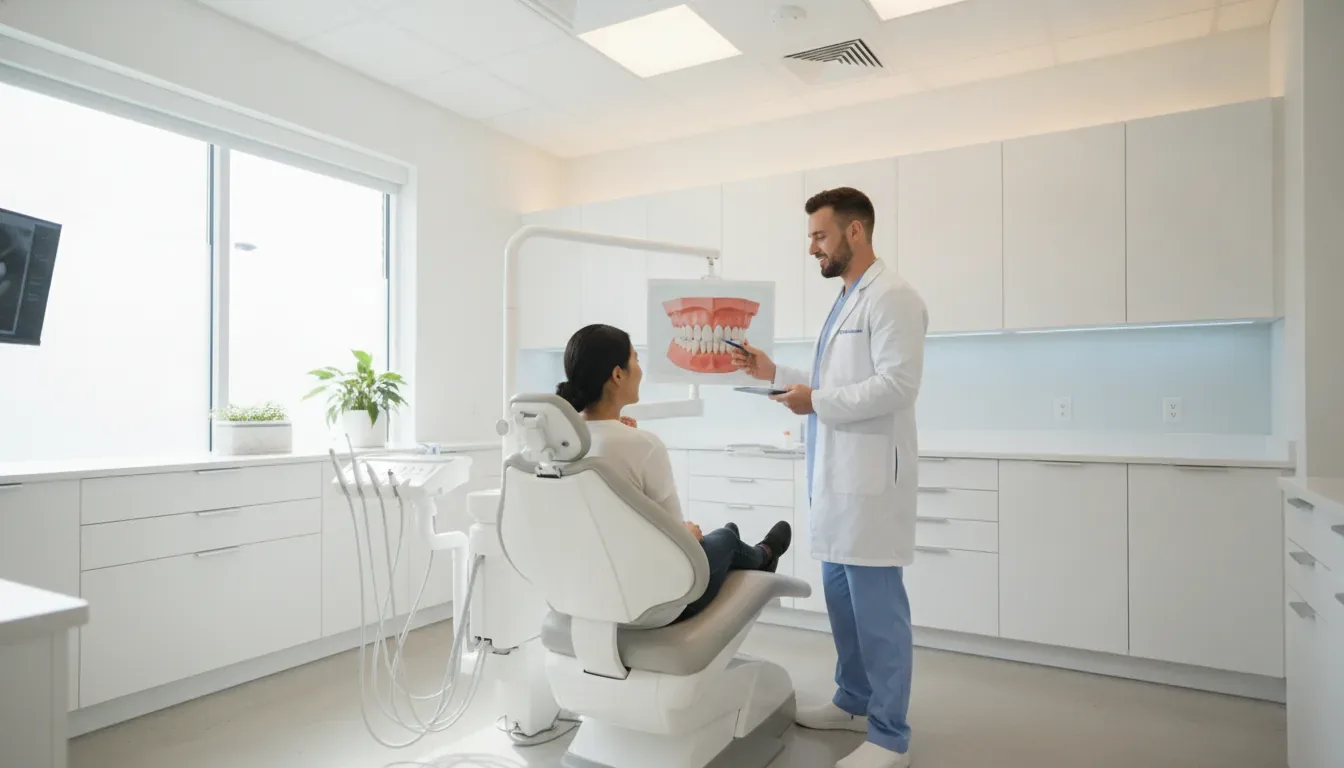
- The trays are custom. Valley View Dental makes Opalescence custom trays to your mouth, so the gel sits flat where it should, which is exactly the air-pocket problem a drugstore strip runs into.
- The practice runs on a real team. Valley View Dental has 10 or more dentists and 4 in-house specialists across Romeoville, Naperville and Montgomery, serving these towns when home products stop working.
A chair visit does more than a box, and the next fair question is what it costs.
What does professional teeth whitening cost, and does insurance cover it
Professional teeth whitening at Valley View Dental has a standard price of $349 (VVD fact sheet, Pricing). That is the one sourced figure on this page, and it is the whole-treatment price, not a per-tooth add-on.
Does dental insurance cover it? Whitening is cosmetic, so coverage varies by plan, and you should check your own plan for what it will and will not pay. Valley View Dental is in-network with most major PPO plans.
Drugstore boxes cost less, but this page does not quote their prices, because no sourced figure exists for them here. The fair contrast is strength and how long the result lasts, which the table and the duration list above already give you.
Price is one part of the decision. The other is choosing who does the work.
How do you know if the dentist you found is a good dentist or not
A good dentist examines your teeth before recommending anything, explains your options including the cheaper ones, and puts the cost in writing. Here is how to know: judge the dentist you found by what they do before they sell you a whitening treatment, not by the promises on a poster.
A quick checklist:
- They examine your teeth and take images before recommending teeth whitening.
- They tell you what whitening will not change, including dental crowns, veneers and fillings.
- They give you the cost in writing before starting.
- They name the system and the gel strength they use.
- They tell you when to stop, not only when to buy more.
Those are the signs of a good one. The warning signs point the other way.
How to spot a shady dentist
The clearest warning sign of a shady dentist is a price quoted before anyone has looked in your mouth. The second is a promise that teeth whitening will fix a crown or veneer, when it will not.
How to spot the rest:
- A price quoted before an examination.
- A promise that whitening will change a dental crown or veneer. It will not; only natural teeth whiten (American Dental Association, viewed 15 August 2026).
- No written cost before treatment starts.
- Pressure to decide today, or a deadline that keeps moving.
- No mention of sensitivity, when the ADA records it in up to two-thirds of users.
Those signs protect your money and your teeth. The next part shows who checked this guide.
How teeth whitening works, in short
Now you know how teeth whitening works. All three routes, drugstore strips, dentist-made take-home trays, and in-office visits, use the same chemistry: a peroxide gel that releases oxygen to break apart the colored compounds trapped inside the enamel and dentin. What separates them is gel strength and contact time. Strips give the smallest change and hold for a few months, while in-office whitening at a much stronger concentration can last one to three years with good care. The one thing none of them can change is a crown, veneer, or filling, because whitening only shifts natural tooth.
If your color comes out patchy, your sensitivity does not settle, or a restoration sits in your smile line, home whitening has hit its ceiling. That is where we come in. Valley View Dental uses Opalescence Boost at 40% hydrogen peroxide in the chair, with custom trays and built-in desensitizers, at a standard price of $349. Call (630) 509-7933 or book a consult to whiten evenly, and safely, with a team that checks your teeth first.