Veneers, Crowns or Bonding? How to Tell Which One You Need
You want a nicer smile, and you have found three ways to get there. Veneers, crowns and bonding all fix teeth, but they work very differently and carry very different price tags. It is easy to feel unsure. It is also easy to worry that a dentist will steer you toward the costly option.
This guide gives you the honest version. You will see what each one does, when it is the right fit, and when it is not. Valley View Dental has cared for families across the southwest Chicago suburbs for more than 20 years, and the goal here is simple: help you understand your choice before you ever sit in a chair. Here is the one-look verdict first.
Which one do you need, in one look
Here is the short answer. Bonding fixes small problems fast, veneers reshape the look of healthy front teeth, and a crown protects a tooth that is damaged or weak. Which one you need depends on the tooth and your goal, not on price alone.
Bonding fits small chips, cracks and gaps you want gone in one visit, at the lowest cost of the three. Porcelain veneers suit a full front-smile makeover of shape, color and alignment, and they last a long time, though some enamel is removed so the change is not reversible. A dental crown is made for a tooth that is broken, weak, heavily filled or root-canal treated and needs full-coverage strength.
Set veneers versus crowns versus bonding side by side and the real difference is simple: how much of the tooth each one touches.
Table of Contents
What is the real difference between veneers, crowns and bonding
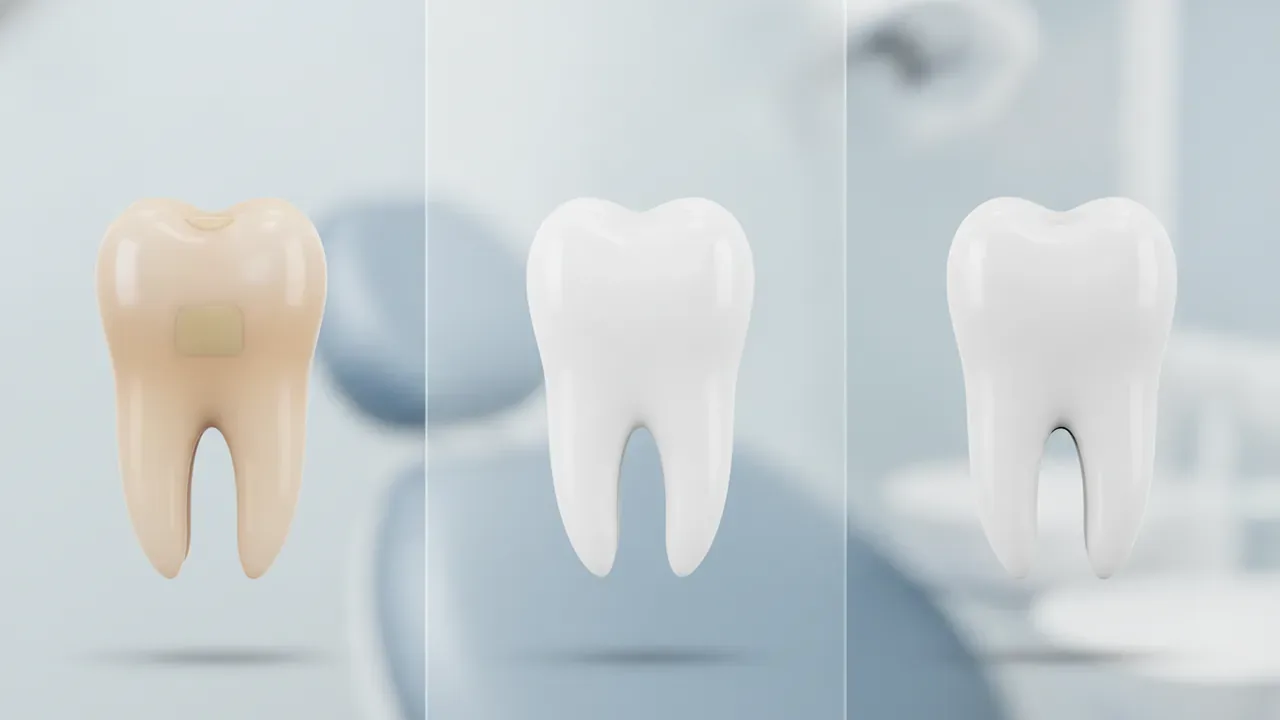
A veneer covers the front surface of a tooth to change how it looks. A crown covers the entire tooth and reinforces it, while dental bonding adds tooth-colored composite resin to one spot and usually removes no enamel. That single idea, how much of the tooth is covered, separates the three.
If you have heard the word caps, that is just the everyday name for crowns. A veneer is a thin shell on the front of the tooth only. A dental crown wraps the whole tooth and adds strength, which is why it suits a damaged tooth. Dental bonding is the lightest touch: composite resin shaped onto a small area, with the enamel usually left in place.
The American Dental Association says a veneer covers only the front surface of a tooth, and that it differs from a crown, which covers the entire tooth. Cleveland Clinic describes a crown the same way: it covers the whole tooth and reinforces it. Set side by side, the trade-offs get clear.

How do veneers, crowns and bonding compare side by side
Here is how the three stack up. Cost stays honest here. Valley View Dental does not publish a cash price, so every cost cell routes to a custom quote at a free consult.
| Option | Good for | Tooth removed / reversible | How long it lasts | Visits | Cost |
|---|---|---|---|---|---|
| Porcelain veneers | A whole front-smile makeover of shape, color and alignment on healthy teeth | Removes some enamel; not reversible | 10 to 15 years with care | Usually 2 or more | Higher; custom quote at a free consult |
| Dental crown | A broken, weak or root-canal-treated tooth that needs full coverage | More of the tooth is reshaped | Long-lasting, about 15 years [FACT-GAP: dated crown-longevity citation, ADA / Cleveland Clinic / peer-reviewed] | Same-day possible with CEREC | Custom quote at a free consult |
| Dental bonding | Small chips, cracks, gaps and quick fixes | Usually no enamel removed; reversible | 3 to 10 years | One visit, 30 to 60 minutes per tooth | Lowest; an affordable option; custom quote at a free consult |
Lifespan figures for veneers and bonding: Cleveland Clinic. Coverage and reversibility: American Dental Association and Cleveland Clinic. Prices are not published, so each cost routes to a free consult.
Numbers aside, each one wins in a different situation.
When is a veneer the right choice
A veneer is the right call when your front teeth are healthy but you want to change their color, shape or small gaps. Porcelain veneers are made for a cosmetic upgrade, not a repair. If several front teeth are healthy and you want an even, brighter line, this is the option built for that.
There is an honest limit to name. To place a veneer, the dentist removes some enamel, so the change is not reversible. The American Dental Association is clear on this point. A veneer is also thin, so it suits looks, not heavy structural repair. Composite veneers are another route, though porcelain holds its color and resists wear longer than composite. But if the tooth itself is damaged, a veneer is the wrong tool.
When do you need a crown instead
A crown is the right choice when a tooth is broken, weak or root-canal treated and needs full-coverage strength. Crowns, the caps people often mention, are about protection more than looks. A large old filling, a cracked cusp, or a tooth treated with a root canal all point toward a crown.
The key difference is simple. A dental crown covers and reinforces the whole tooth, while a veneer only faces the front. That full coverage is why a crown holds up on a tooth that has lost enamel and structure, and why it is long-lasting with good care. At Valley View Dental, CEREC technology can mill a crown in the office, so many crowns are done in a single visit. When the fix is small, though, you may not need either.
When is bonding enough
Dental bonding is enough when the problem is small: a chip, a crack or a little gap you want gone in one visit. The dentist shapes tooth-colored composite resin onto the tooth, then polishes it to match your other teeth. No lab, no wait, usually one appointment.
Bonding is also the most affordable of the three, and it is the common answer when people ask for a cheaper option than veneers. Valley View Dental does not publish a cash price, so you get a custom quote at a free consult, but bonding sits at the low end. The trade-off is time: bonding lasts about 3 to 10 years and resists stains less than porcelain, so it may need touch-ups. Each option also carries a trade-off worth knowing before you choose.
What are the risks and trade-offs of each option
Every option has a trade-off. Veneers remove some enamel, crowns reshape more of the tooth, and bonding needs touch-ups sooner. Knowing the downside is how you judge the verdict for yourself.
Porcelain veneers involve removing some enamel, so the result is not reversible, and a veneer can chip, wear or loosen over the years. The American Dental Association notes these points. A dental crown asks for more of the tooth to be reshaped so the crown can seat over it. Dental bonding has the shortest lifespan of the three, about 3 to 10 years by Cleveland Clinic, and its composite resin stains and chips more easily than porcelain. None of this rules an option in or out on its own. Which is why the real decision happens with a dentist looking at your teeth.
How does a dentist decide which one is right for your case
A good dentist starts with the health of the tooth and what you want, not the priciest option. The choice is driven by two things: whether the tooth is healthy or damaged, and the goal you walk in with. A healthy tooth you want to reshape points to a veneer or bonding. A damaged tooth points to a crown.
That is also how you protect yourself from being oversold. At Valley View Dental, the team explains your options first and welcomes a free second opinion on any big treatment plan [FACT-GAP: verify free second opinion policy and exact wording before publish]. The practice has served families for more than 20 years, with a full team under one roof, so most cases are handled in-house without a referral. Ask questions, compare, and take the plan that fits your tooth and your goal.
Frequently Asked Questions
How much do veneers cost in Illinois?
The cost of veneers in Illinois varies by how many teeth you treat and the material you choose. Valley View Dental does not publish a cash price, so you receive a custom quote at a free consult, and financing through Cherry is available. That way the number reflects your actual plan, not a guess.
What disqualifies you for veneers?
Unhealthy gums, active decay, too little enamel, or heavy grinding can make veneers a poor fit until those issues are handled. A dentist checks the health of your teeth and gums first. In many of these cases, treating the problem or choosing a crown or bonding is the route to discuss.
What is a cheaper option than veneers?
Dental bonding is the common lower-cost option for small fixes, and it is usually done in one visit. It works well for minor chips, cracks and gaps. For a full-smile change, veneers may still be the closer fit, which is worth weighing at a consult.
How long do veneers, crowns and bonding last?
Veneers last about 10 to 15 years, and bonding about 3 to 10 years, both with good care, per Cleveland Clinic. Crowns are long-lasting. Habits like grinding and biting hard objects shorten all three, so nightguards and daily care matter.
Veneers, crowns or bonding: the honest verdict
Now you can tell which one you need. Bonding fixes small chips, cracks, and gaps in a single visit, at the lowest cost of the three. Veneers reshape the look of healthy front teeth for a full smile makeover, though some enamel goes and the change is not reversible. A crown wraps and strengthens a tooth that is broken, weak, or root-canal treated. The deciding question is never price alone. It is whether the tooth is healthy or damaged, and what you want to change.
That is where we come in. At Valley View Dental, the team explains your options first, looks at the actual health of your tooth, and builds the plan around your goal, not the priciest fix. With a full team under one roof, most cases are handled in-house with no referral. Call (630) 509-7933 or book a free consult to see which one fits your tooth, and get your cost in writing before you decide.