Vaping has not been proven to cause mouth cancer in people, but it is not risk-free. The aerosol from e-cigarettes carries carcinogens, and it irritates and damages the soft tissue of your mouth.
That is the short version of “can you get mouth cancer from vaping,” and the honest answer holds two true things at once. Long-term human studies do not exist yet, because e-cigarettes are still too new to have them. The evidence we do have, though, points to real harm.
Recent findings have grown more pointed. A 2025 summary from MedicalNewsToday still calls the evidence too limited to confirm a direct link. A 2026 review from the University of New South Wales, published in the journal Carcinogenesis, concluded that nicotine vapes are likely to cause cancers of the lung and oral cavity.
If you vape, or your teen does, that mix of not proven and not harmless is exactly what makes this frightening. This guide covers what the evidence actually says, how vaping affects your mouth, the warning signs worth watching for, and when it is worth seeing a dentist.
ON THIS PAGE
What does the evidence actually say
The research is not settled. It shows real warning signs, but e-cigarettes are too new to prove they cause mouth cancer in people.
- Here is why both sides of the headlines can be honest at the same time. Long-term human studies simply do not exist yet. A 2022 NIH review put it plainly: we are still about a decade too early to measure vaping’s cancer risk in people. Cancer Research UK takes the cautious read, saying there is “no good evidence that vaping causes cancer.”
- The signals on the other side are getting stronger. The 2026 University of New South Wales review in Carcinogenesis concluded that nicotine vapes are likely to cause lung and oral cavity cancers. Michigan Medicine, updated in June 2026, describes how vaping exposes the lining of the mouth and throat to the kind of damage tied to head and neck cancer.
- Two more findings feed the concern. A 2021 case report in the American Academy of Pediatrics journal, titled Vaping the Venom, documented oral cavity cancer in a young adult and warned of a possible cancer-causing effect. And a 2023 study found that damage to genes linked to oral cancer was more than twice as likely in people who vape.
- The American Cancer Society is careful too. It says e-cigarettes are not proven to cause cancer, and also that this does not make them harmless. What the evidence does agree on is narrower and worth holding onto: the aerosol carries carcinogens, and vaping harms the cells of the mouth. That day-to-day harm is where the picture gets clearer.
How does vaping harm your mouth
Vaping aerosol carries cancer-causing chemicals and irritates the soft tissue of your mouth. So yes, vaping can ruin your mouth in ways that show up long before anyone mentions cancer.
The aerosol is more than water vapor. It contains carcinogens such as formaldehyde and heated propylene glycol, along with traces of heavy metals.
At the cell level, that exposure does real damage. Studies link vaping to DNA damage in the cells lining your mouth: DNA strand breaks, genotoxicity, and oxidative stress, the kinds of changes that can set off cancer over time.
The everyday harms are better proven than the cancer link. Vaping is tied to dry mouth, mouth ulcers, and ongoing irritation and pain. It is also tied to gum disease, also called periodontal disease, with more plaque on the gums, deeper gum pockets, and bone loss around the teeth, plus more tooth decay, or dental caries.
Dentists also see specific patterns on the gums and soft tissue of people who vape. These include nicotine stomatitis, sometimes called smoker’s palate, along with hairy tongue and angular cheilitis, the cracking at the corners of the mouth. The nicotine in most vapes is addictive as well, which is part of what keeps the exposure going day after day. These oral effects are documented by CareQuest Institute and MedicalNewsToday. Which raises the question most people really want answered: does the amount matter?
Does the amount matter – One puff, once in a while, or vaping vs a cigarette
Your risk grows the more and the longer you vape, and no amount is known to be harmless.
“Is 1 puff of vape a day bad?” is a fair question, and the honest answer is that even light, once-in-a-while use is not risk-free. The aerosol still carries carcinogens each time, and the nicotine is still addictive. It is less about how much you can get away with, and more that there is no harmless dose to aim for.
Is one puff of a vape equal to one cigarette? There is no clean one-to-one answer. Devices, liquids, and how deeply people inhale vary so widely from one e-cigarette to the next that a simple equal sign is misleading, so be wary of any source that hands you a tidy ratio.
For teenagers, there is a sharper concern. Nicotine is addictive, and the pull of that addiction takes hold fast in a young brain. Beyond addiction, nicotine can harm brain development in teens and young adults, according to the CDC and the American Cancer Society.
Secondhand exposure, or passive vaping, is not treated as harmless either, though the long-term evidence there is still thin. So the amount does matter, but not in a way that gives you a clear line to stay under. If you are worried, the useful move is to know the warning signs to watch for.
What are the warning signs of mouth cancer to watch for
Mouth cancer often shows up first as a sore that does not heal, or a red or white patch inside the mouth. Mouth cancer, also called oral cancer, is easiest to catch early when you know what to look for.
People often search for the bad signs from vaping, and this is the list that actually matters. These are the signs of mouth cancer worth watching for, drawn from the American Cancer Society, last revised in March 2026:
- A sore on the lip or in the mouth that does not heal
- Pain in the mouth that does not go away
- A lump or thickening in the lips, mouth, or cheek
- A white patch, sometimes called leukoplakia, or a red patch on the gums, tongue, tonsil, or lining of the mouth
- A sore throat, or a feeling that something is caught in your throat
- Trouble chewing, swallowing, or moving the jaw or tongue
- Numbness of the tongue, lip, or another area
- Loose teeth, pain around the teeth, or dentures that no longer fit
- A lump or mass in the neck, or ongoing ear pain
- Voice changes, or unexplained weight loss

One detail matters more than any single sign: how long it sticks around. The American Cancer Society advises that if any of these last more than a few weeks, see a doctor or dentist so the cause can be found and treated. Most of these have ordinary explanations. The ones that linger are the ones to get checked, which is where a dentist comes in.
When should you see a dentist, and what is an oral cancer screening
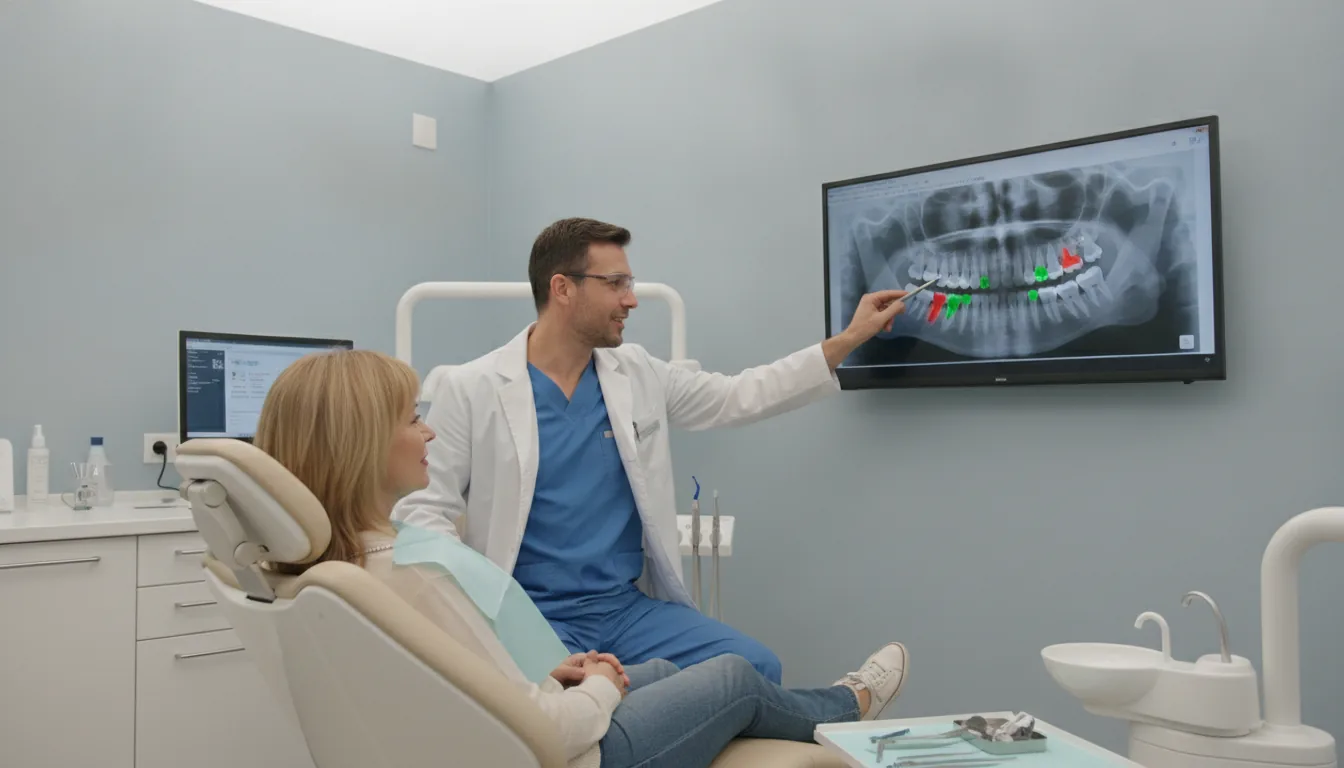
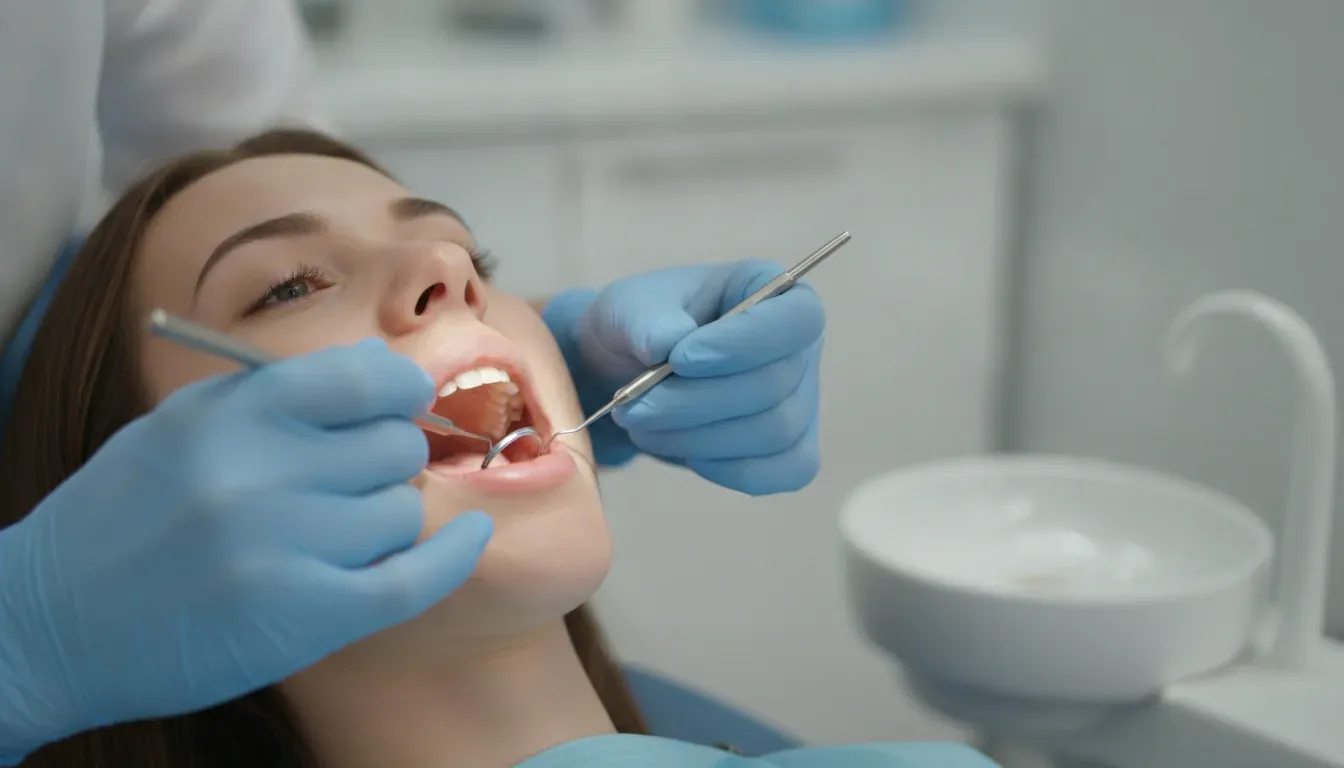
An oral cancer screening is a quick check of your mouth, lips, tongue, and throat that your dentist can do at a regular visit. During the check, the dentist looks and feels for the sores, patches, and lumps that can be early signs, including the spots that are hard to see on your own.
So when should you see a dentist? There are two clear moments. First, if any warning sign lasts more than a few weeks, following the American Cancer Society rule above. Second, at your regular checkup, where a screening can happen as part of the visit, with no separate appointment needed.
Valley View Dental includes oral cancer screenings in its general and family dentistry, alongside the rest of your preventive care, at its Romeoville, Naperville, and Montgomery offices. If you vape, or you have noticed something in your mouth that will not settle, this is worth having a dentist look at rather than watching it at home.
Book an oral cancer screening: call (630) 509-7933.
Common questions about vaping and mouth cancer
Does vaping have any benefits?
The one recognized use is helping an adult smoker move off cigarettes, and even then it is not risk-free. For a non-smoker or a teen, vaping offers no health benefit and only adds risk. This is Cancer Research UK’s position.
Can passive vaping cause cancer?
The honest answer is that we do not know yet. Long-term evidence on passive vaping is limited, but secondhand aerosol still contains nicotine and other chemicals, so it is not treated as harmless (CDC and the American Cancer Society, via MedicalNewsToday). Treat it as an open, evolving question.
Has anyone actually gotten cancer from vaping?
Yes, there are documented cases. A 2021 case report in the American Academy of Pediatrics journal described oral cavity cancer in a young adult who vaped. Some people ask about throat cancer specifically, where the picture is the same: concerning, but not proven. Single cases do not show that vaping was the cause, though they are part of why researchers are worried.
What happens to your body if you vape every day?
Daily vaping raises your exposure to nicotine and carcinogens with every use. Over time it is linked to gum disease, dry mouth, and sores or lesions in the mouth (CareQuest Institute and MedicalNewsToday). The more regular the habit, the more that exposure adds up.