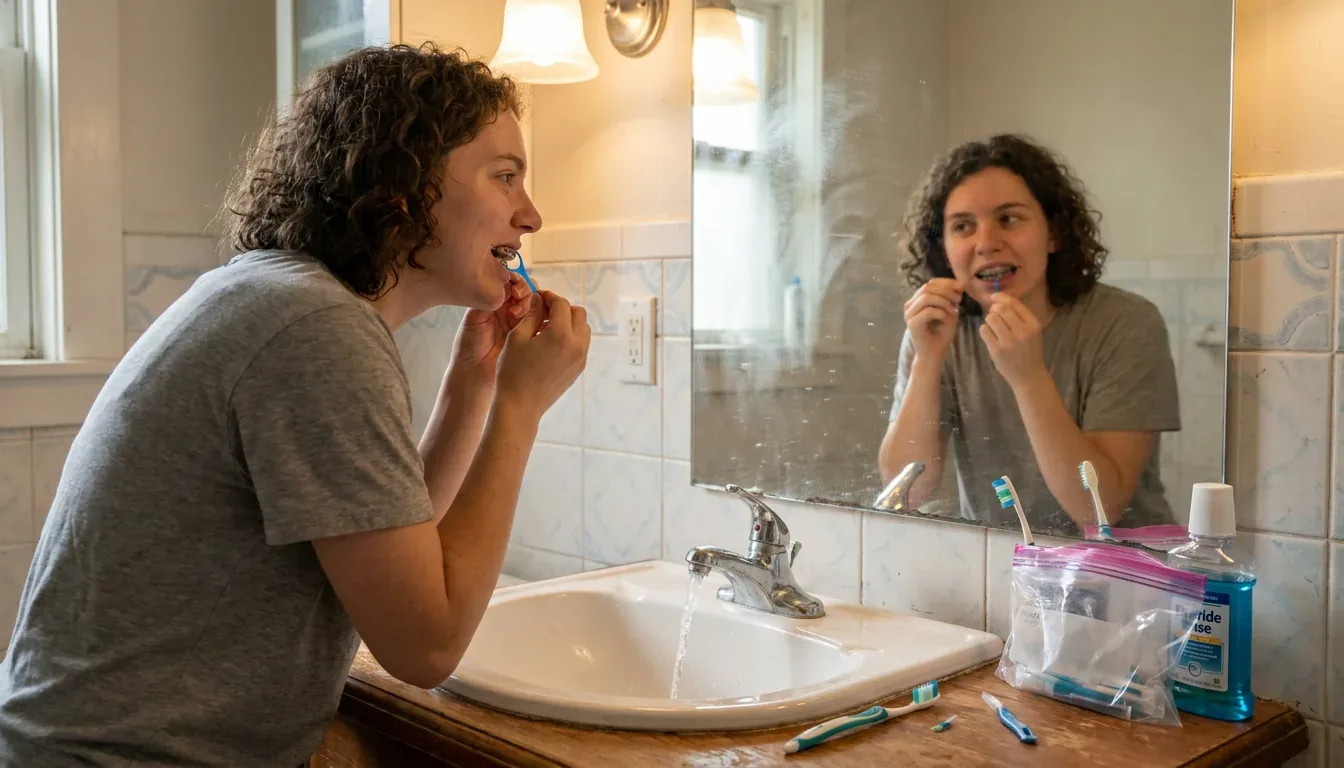
Braces have brackets and wires that trap food and plaque where a normal brushing stroke misses. So cleaning them takes a different routine, not harder scrubbing.
This guide is for the person in braces and the parent checking their work. You’ll learn how to clean teeth with braces, one step at a time. You’ll also see how to check your work and when to call.
Here is the short version you can use to clean braces at home tonight.
How do you clean braces at home
To clean braces at home, use a 5-step routine after every meal and before bed: rinse, brush, clean under the wire, floss, and finish with a fluoride rinse. The American Association of Orthodontists (AAO) braces guide says to brush for two minutes each time. It also says to floss a minimum of once a day.
- Rinse with water to loosen trapped food.
- Brush for two minutes with a soft-bristled toothbrush, angled 45 degrees to the gum line. Brush above and below each bracket.
- Run an interdental brush under the wire and between the brackets.
- Floss once a day, using a floss threader to get under the wire.
- Finish with a fluoride mouth rinse.
Last, check your work. The goal is to properly clean every bracket, even the ones you can’t see.
Those five steps need only a small kit of tools.
On this page
What do you need to clean braces at home
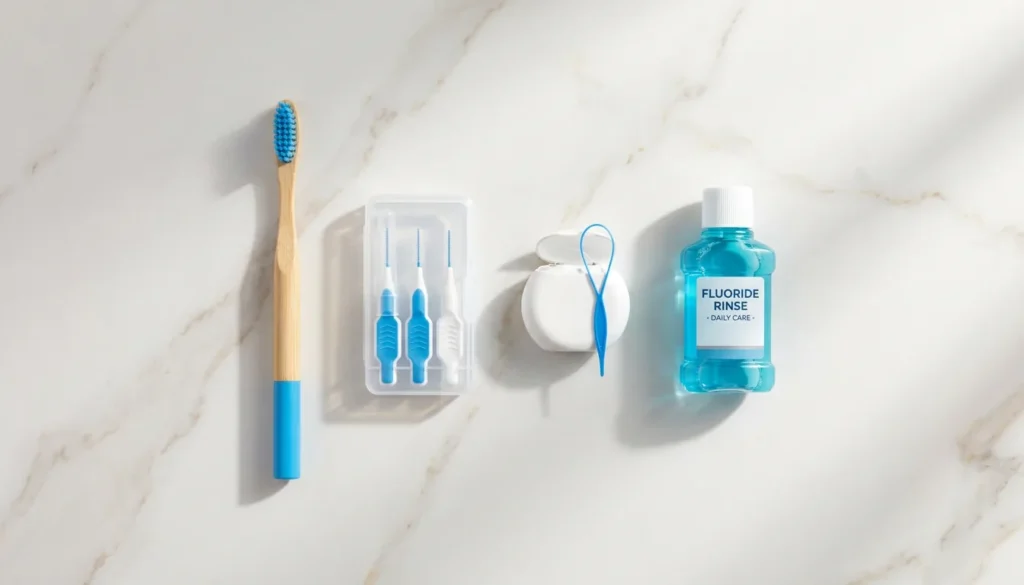
A basic braces cleaning kit has four items: a soft-bristled toothbrush, interdental brushes, floss with threaders, and a fluoride mouth rinse. Everything else is optional.
Here is what each needed item does:
- A soft-bristled toothbrush. A manual brush or an electric toothbrush both work.
- Interdental brushes for braces, also called proxy brushes. These small brushes slide under the wire and between the brackets. Pick a size that fits the gap, and never force one in.
- Floss threaders, or threader floss with a built-in threader. Either one gets floss under the wire.
- A fluoride mouth rinse for the last step.
The American Association of Orthodontists names three braces tools. They are interproximal brushes, water irrigators and fluoride rinse. Interproximal is another word for interdental.
Replace your toothbrush or brush head at the first sign of wear. The AAO says to do it at least every three months.
These braces cleaning tools are nice to have:
- A water flosser, if hand flossing is hard for you
- An electric toothbrush with an orthodontic brush head
- Orthodontic wax, to cover a wire end that pokes
- Dental picks or soft rubber picks for quick cleanups
- A travel kit for school or work
The American Dental Association (ADA) names water flossers as an option for people with braces. They suit people who have trouble flossing by hand. The ADA does not say a water flosser replaces floss.
How do you brush your teeth with braces, step by step
Brushing with braces means holding the brush at 45 degrees to the gum line. That angle reaches the edge above and below each bracket, where plaque collects.
The question “How do I brush my teeth properly?” comes down to five steps. To brush your teeth with braces, work around the brackets and wires.
- Rinse with water first to loosen food around the brackets.
Common mistake: brushing straight over packed food. - Angle a soft-bristled toothbrush at 45 degrees to the gum line. Use gentle circles.
Common mistake: brushing flat across the front of the brackets only. - Brush down on top of each bracket, then up underneath, then across the front.
Common mistake: skipping the underside of the bracket, where plaque hides. - Brush the outer, inner and chewing surfaces of every tooth.
Common mistake: stopping at the front teeth you can see. - Keep the pressure gentle, and keep going for two minutes.
Common mistake: scrubbing hard instead of changing the angle.
The American Association of Orthodontists sets the timing. Brush for two minutes after every meal or snack, and before bed.
Start brushing on the first day of braces. The first time, go slowly with a soft brush and gentle strokes.
Even a good brushing can’t reach between your teeth, under the wire.
How do you floss with braces
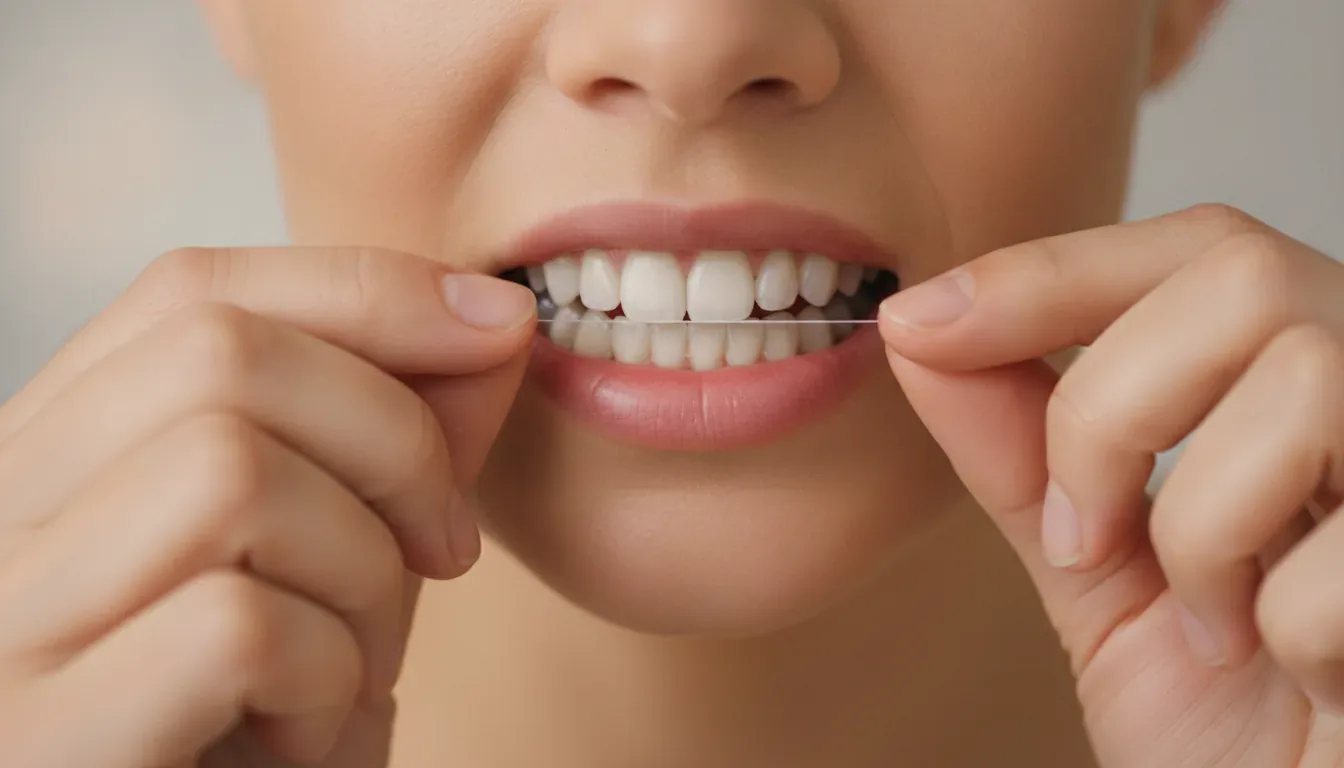
Flossing with braces uses a floss threader to pull the floss under the main wire. That lets you clean the sides of each tooth, where the brush can’t reach.
The main wire is called the archwire. The American Association of Orthodontists says to floss with braces at least once a day. Before bed is a common time to do it.
- Thread the floss under the archwire with the floss threader.
Common mistake: forcing it, which can snap the floss on a bracket. - Wrap the floss in a “C” shape around the side of each tooth. Move it up and down gently.
Common mistake: sawing straight down into the gum. - Pull the floss out and re-thread it for the next gap.
Common mistake: skipping the back teeth.
Some nights, threading won’t happen. On those nights, run an interdental brush under the wire instead. It’s better than nothing, but it does not replace your daily floss.
A water flosser is another option if flossing by hand is hard. The American Dental Association does not present it as a replacement for floss.
Flossing at home is one thing, but meals at school or work are harder.
How do you clean braces after eating, at school or at work
When you can’t brush after a meal, a firm water rinse and a quick interdental brush clear most loose food. Treat it as a stopgap until you can brush.
Orthodontic practices often suggest a small travel kit. Keep a travel toothbrush, toothpaste, floss and an interdental brush together in one case. For school, the kit can live in a backpack.
Here’s how to clean braces after eating, away from home:
- Rinse hard with water and spit, to wash out loose food.
- Run an interdental brush between the brackets and under the wire.
- Check a mirror for food caught behind the wire.
- Do the full routine as soon as you can brush.
If the stopgap becomes the habit, plaque starts to build up.
How do I get plaque off my teeth with braces
Plaque is a soft, sticky film that brushing, interdental brushes and floss can still remove. Once it hardens into tartar, only a professional cleaning removes it.
Plaque looks like a pale yellow film on your teeth. Around the brackets, it is easy to miss. To get plaque off around the brackets, do these four things:
- Brush above and below each bracket at 45 degrees.
- Run an interdental brush under the wire.
- Floss once a day.
- Finish with a fluoride mouth rinse.
The AAO says your orthodontist may suggest one more step. Dip an interdental brush in a capful of fluoride rinse. That carries fluoride between your teeth.
Sugar matters too. The American Dental Association (ADA) links too many sugary foods to plaque build-up around brackets. That build-up can leave stains that do not brush out, or damage your teeth.
The next question is how to tell, tonight, that the plaque is really gone.
How do you know your braces are actually clean
Clean braces have shiny bracket edges after brushing, with no pale yellow film around the brackets. Your gums are pink, firm and not bleeding, and your teeth feel smooth to your tongue.
Start with a mirror and look for food caught behind the wires. Then run three quick checks after you brush:
- Look at the edge of each bracket. You want no pale yellow or white film there.
- Look at the gum line. Gums should be pink and firm, not puffy or bleeding.
- Run your tongue over your teeth, and notice your breath. Teeth should feel smooth, and bad breath should not hang around.
Watch for warning signs, too. Swollen, purple, tender or bleeding gums can point to gingivitis, the first sign of gum disease. The AAO lists bad breath as one result of plaque left around braces.
Passing all three checks means your braces are actually clean. If one fails, clean that spot again. Over time, the check shows you how to clean braces properly.
For a child or teen, a parent can run this check.
How can parents help a child or teen keep braces clean
Parents have two jobs that matter most. Help younger children floss under the wire, and run the three-sign check a few times a week.
Younger children may not be able to thread floss under the wire yet. Orthodontic practices note that a parent may need to floss for them. Use a floss threader and the same three flossing steps.
With a teen, you don’t need to watch every brushing. Check the result with the three signs instead.
For school days, pack a travel toothbrush and an interdental brush in the backpack. That makes it easier to keep braces clean between meals.

This effort matters because of what happens when cleaning slips.
What happens if you don’t keep your teeth clean with braces
Plaque left around braces can cause cavities, swollen gums, bad breath and lasting white marks on your enamel, according to the American Association of Orthodontists (AAO).
White spots form when plaque weakens the enamel. You may not notice them until your braces come off. The AAO’s name for these white marks is decalcification.
Swollen gums can mean gingivitis, which is gum inflammation from plaque between the teeth.
A daily fluoride rinse can strengthen enamel and help prevent white marks, the AAO says. So keep your teeth clean with braces every day, and end with that rinse.
Some of these signs need more than home care.
When is home care not enough, and when should you see a dentist
Home care can’t fix a loose bracket or wire, a wire poking your cheek, or hardened tartar. It also can’t fix gums that stay swollen or bleed even with good cleaning.
Here’s what to do in each case:
- If a bracket or the archwire comes loose, let your orthodontist know right away. That is the advice of the American Association of Orthodontists.
- If a wire pokes your cheek, press orthodontic wax over the end until you’re seen. A poking wire left alone can cause sores on your cheek, tongue or gum.
- Tartar needs a professional cleaning to come off.
- Sore gums that don’t improve with good cleaning are a reason to see a dentist. This can be gingivitis, so get them checked.
Also tell your orthodontist about unusual discomfort or a wire that has moved.
Not everything needs a visit. A bit of stuck food is a home fix. So is mild gum tenderness that settles as your cleaning gets better.
A routine cleaning visit can catch these problems early.
Can you still do teeth cleaning with braces
Yes, you still need professional teeth cleaning with braces, at least every six months. That is the minimum the American Association of Orthodontists sets during orthodontic treatment.
Go more often if your dentist or orthodontist recommends it. At the visit, a dental hygienist removes tartar that brushing and flossing miss. That is the part home care cannot do.
Valley View Dental has an in-house orthodontist, Dr. Chirag Parikh, and a hygiene team in the same practice. So braces checks and cleanings happen under one roof. The practice offers cleanings and checkups for all ages in Romeoville, Naperville and Montgomery.
Braces cleaning questions
Why do teeth turn yellow with braces?
Teeth can turn yellow with braces when plaque builds up around the brackets. Plaque itself is a pale yellow film. The American Dental Association says sugary foods can also lead to build-up that stains your teeth. Brush at 45 degrees, clean under the wire, and use the three-sign check.
Can you brush your teeth with braces with an electric toothbrush?
Yes, you can brush your teeth with braces with an electric toothbrush. A soft-bristled manual or electric brush both work. The 45-degree angle and the full two minutes matter more than the type of brush. Replace the brush head at the first sign of wear, or at least every three months.
Can I brush my teeth on the first day of braces?
Yes, you can brush on the first day of braces. Keep brushing from day one, and use a soft-bristled toothbrush with gentle strokes. Follow the same routine: rinse, brush at 45 degrees, and clean under the wire. Floss once a day, as usual.
How to clean braces retainer?
Clean a retainer every day, and follow the care steps that came with it. Retainers can be removable or fixed, and the steps depend on which kind you have. If you’re not sure which steps fit yours, ask your orthodontist.
Do you still need to floss if you use a water flosser?
Yes, you still need to floss if you use a water flosser. The American Dental Association calls a water flosser an option if hand flossing is hard. It does not present one as a replacement. The American Association of Orthodontists says to floss a minimum of once a day. A water flosser can be an extra step.