You were told you need a dental implant. Then came the referrals. One office for the surgery, another for the crown, maybe a third for a second opinion. Somewhere in there, a quote landed that felt far too big. If you are unsure what happens next, or who to trust with it, that is fair.
This guide walks the dental implant process one stage at a time. You get what each visit does, how long the healing runs, what shapes the cost, and how to tell a careful implant dentist from a pushy one.
What is the dental implant process, in short
The dental implant process is a sequence of visits that replaces a missing tooth root with a titanium post, then a crown. It restores one tooth or several over a few months. The stages run in order: consult and imaging, place the post, heal, then fit the crown. Most of that time is healing, not surgery.
The American Dental Association describes dental implants as artificial tooth roots placed in the jaw. The rest of the procedure builds on that one part, so it helps to start with what a dental implant is.
Table of Contents
What is a dental implant
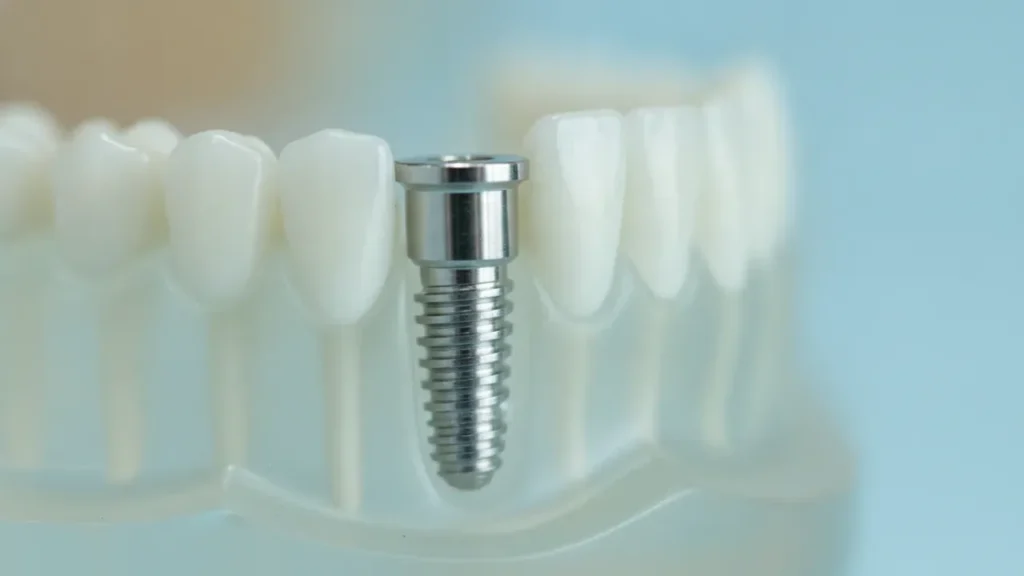
A dental implant is a small titanium post that acts as an artificial tooth root. It holds a crown, a dental bridge, or a denture in place of a missing tooth.
The post goes into the jawbone, where the bone grows around it and grips it. That grip is what makes dental implants steady enough to bite and chew with. The American Dental Association describes an implant as a replacement tooth root placed in the jaw.
Valley View Dental describes implants as replacing missing teeth from root to crown, with long-lasting stability. They look and function like natural teeth. Cared for well, they are built to last.
What differs between people is the set of steps needed to place one.
What are the steps in the dental implant process
The dental implant process usually runs five to seven stages across a few visits. Each stage has a clear purpose you can follow.
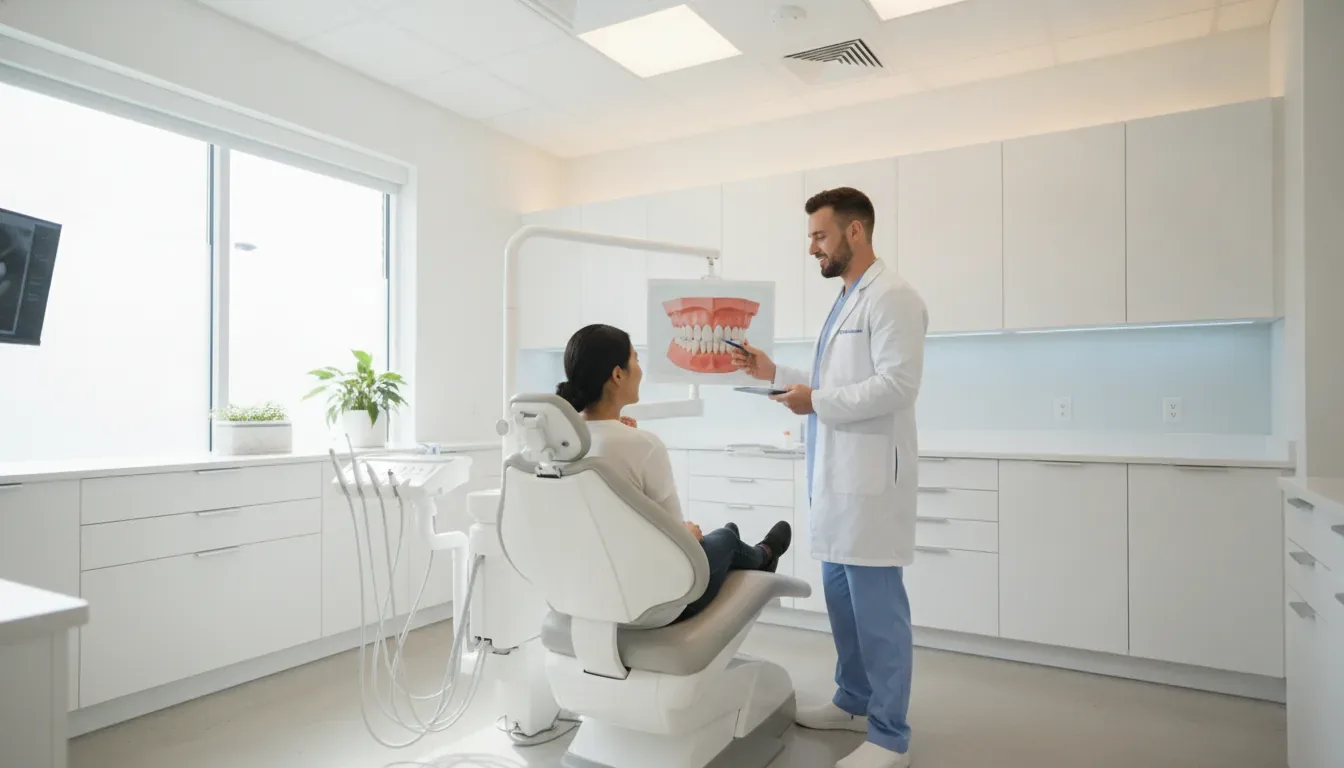
- Consultation and imaging. Your dentist examines your teeth, gums, and jaw, then takes 3D panoramic imaging and digital X-rays to plan the placement. Valley View Dental plans implant cases from this imaging before any surgery.
- Tooth extraction, if one is needed. A damaged tooth still in the socket comes out first.
- Bone graft or sinus lift, only if the jaw needs it. If the jawbone is too thin or too short to hold the post, a graft builds it up first. A sinus lift adds support in the upper back jaw.
- Implant placement. The area is numbed with local anesthesia, and the titanium post is placed in the jawbone.
- Healing, called osseointegration. The bone grows around the post and locks it in place.
- The abutment. A small connector is attached to the top of the post once the post has fused.
- The crown. Your final crown is made to match your other teeth, then fitted onto the abutment. Valley View Dental makes CEREC same-day crowns in the office.
Each part of the procedure has to hold before the next one starts. Valley View Dental notes that implants take precision to place, and that careful work helps the post fuse with your jawbone without complications.
That healing wait is the part most people underestimate, so here is how long it runs.
How long does the dental implant process take
The dental implant process is mostly healing, not surgery. Plan for a few months from your first visit to your final crown, and longer if you need a bone graft.
The long stretch is osseointegration, when the bone fuses to the titanium post. Delta Dental and the American Dental Association put that healing time at roughly two to six months. A bone graft adds its own healing time before the post can go in.
The final crown is made and fitted only after the post has fused. Valley View Dental makes CEREC same-day crowns, so the crown stage can move quickly, but the implant itself still needs its healing months. Bone heals on its own schedule.
Whether that timeline applies to you depends on whether you are a candidate for implants at all.
Who is a candidate for dental implants
A good implant candidate has enough healthy jawbone and gums, plus general health that supports healing. A consult and imaging confirm whether implants are right for you.
Bone is the first check. The post needs enough jawbone to hold it. Gum health matters just as much, because the gums seal around the implant. If the bone is thin, a bone graft can often build it back up.
There is no right age for implants beyond one rule: the jaw has to have finished growing. Adults of any age can qualify. The American Dental Association points to bone and general health rather than birthdays.
Some habits and conditions slow healing. Smoking and uncontrolled diabetes can both affect osseointegration and change whether implants fit your case right now. Your dentist should tell you that plainly rather than work around it.
What those visits feel like is the part most people ask about next.
What can you expect during and after treatment
During implant placement, the area is numbed with local anesthesia, so you feel pressure rather than sharp pain. Most people manage the days after with over-the-counter pain relief and soft foods.
Expect some swelling and soreness for a few days. The American Dental Association lists both as normal after implant surgery. Ice, rest, and the pain relief your dentist recommends handle most of it.
Recovery from dental implants follows a familiar pattern. Aftercare is short: soft foods while the site settles, gentle cleaning around the area, and a follow-up visit so your dentist can check that the post is fusing as it should. Valley View Dental says it gives guidance and support through the procedure and the recovery period, so ask what your first week should look like before you leave.
Ask about comfort too. Care at Valley View Dental is described as gentle and judgment-free, and no question about the procedure is too small.
With the visits and the recovery mapped, the money question is usually next.
What do dental implants cost, and what are the alternatives
The cost of a dental implant depends on whether you need one tooth or several, and on whether you need a bone graft first. Valley View Dental gives you a custom quote at a free consult, and Cherry financing brings a single tooth implant to a payment from $99 a month on approved credit.
Payments shown are estimates on approved credit via Cherry. Subject to terms.
Full mouth implants are quoted case by case, because the number of posts and the type of restoration change the cost. National chains publish flat figures. Your own quote depends on your jaw and your plan, not on a national average.
On insurance, most major PPO plans are accepted, and your plan is checked at the consult.
Implants are not the only route. A dental bridge uses the teeth on either side of the gap to carry a replacement tooth. A denture replaces several teeth at once and comes out for cleaning. Which one fits depends on how many teeth are missing, the state of your jawbone, and your budget.
Cost is only half the question. Who does the work is the other half.
How do you choose a good dentist for implants, and spot a bad one
A trustworthy implant dentist explains the whole treatment plan and the alternatives before any work starts, and shows you the imaging behind it. You should leave understanding your options, not pressured into them.
What a careful dentist does:
- Examines you and images your jaw before quoting anything.
- Names the alternatives, a dental bridge or a denture, instead of one option.
- Writes down the stages, the healing time, and the cost.
- Answers questions without a rush. Valley View Dental says its dentists take the time to explain the entire process and answer your questions.
- Tells you how many implants they have placed, and who handles each stage.
What to watch for:
- Pressure to decide today, or a discount that expires while you are in the chair.
- A quote with no exam and no imaging behind it.
- One treatment offered, with no comparison to a bridge or a denture.
- No clear answer on who places the implant and who makes the crown.
That last one matters more than it sounds. Many implant cases get split across offices, one for the surgery and one for the restoration. Valley View Dental keeps implant care under one roof, with an in-house oral surgeon, Dr. Anthony Lotesto, and an in-house prosthodontist, Dr. Tarik Patel, so you are not sent out to a chain of specialists. In-house specialists also mean one team holds the whole plan, from the first scan to the final crown. The practice has served the area for more than 20 years.
Asking for a second opinion on a large plan is reasonable, whoever you see.
The questions people still ask come up next.
Frequently Asked Questions
Is a dental implant worth the money?
A dental implant is worth the money for many people, because it functions like a natural tooth and is built to last with good care. The American Dental Association describes implants as a long-lasting replacement for a missing tooth. A consult confirms whether one fits your case.
What is the downside of dental implants?
The downside of dental implants is the up-front cost, the healing months, and the need for enough healthy bone. Not everyone qualifies straight away, and a bone graft adds time before the post can go in.
How much will insurance pay for dental implants?
PPO insurance may cover part of an implant, and the share varies by plan. Most major PPO plans are accepted at Valley View Dental, and your plan is checked at the consult.
How much is an implant out of pocket?
Your out-of-pocket cost depends on your plan, the number of teeth, and whether you need a graft.
Can I get dental implants for free?
No, dental implants are not free. Cherry financing can bring a single tooth implant to a payment from $99 a month on approved credit, and the consult itself is free. Payments shown are estimates on approved credit via Cherry. Subject to terms.
Is a dental implant painful?
A dental implant is placed with the area numbed, so you feel pressure rather than sharp pain. Expect soreness for a few days afterward, managed with over-the-counter relief.
How much do full mouth implants cost?
Full mouth implants are quoted case by case, because the number of posts and the restoration type both move the cost.
Who reviewed this guide, and where its clinical facts come from, is below.
The dental implant process, in short
Now you can see the dental implant process one stage at a time. It runs in order: consult and imaging, an extraction or bone graft if you need one, placing the titanium post, then the healing months while the bone fuses around it, and finally the abutment and crown. Most of that timeline is healing, not surgery, and plan for a few months from your first visit to your final crown. Bone heals on its own schedule, which is the part most people underestimate.
Who does the work matters as much as the steps. Many implant cases get split across offices, one for the surgery and another for the crown, which is where the referrals and mismatched quotes pile up. That is where we come in. At Valley View Dental, an in-house oral surgeon, Dr. Anthony Lotesto, and an in-house prosthodontist, Dr. Tarik Patel, keep the whole plan under one roof, from the first scan to the final crown. Call (630) 509-7933 or book a free consult for a custom quote and a clear walk-through of your options before you commit.
Payments shown are estimates on approved credit via Cherry. Subject to terms.