Wisdom tooth pain comes from your back teeth trying to erupt with little room to fit. Some wisdom teeth settle as they come in. Others bring pain that is a sign you need to be seen by a dentist. That difference matters, so this guide helps you tell one kind from the other.
Most pain starts when a wisdom tooth pushes in at the back of the mouth, per Cleveland Clinic. With no room, it can press on nearby teeth, trap food, or sit half under the gum. Eruption pain can fade over a few days. Pain from infection, impaction, or decay does not, and a dentist needs to look. The quick version is right below.
What does wisdom tooth pain usually mean, and when is it urgent
Quick answer: Most wisdom tooth pain comes from a tooth erupting or sitting partly trapped under the gum. It often eases on its own. Knowing when it is urgent is the point. Pain with a fever, spreading facial or neck swelling, pus, or trouble swallowing or opening your jaw needs same-day care. That pattern can point to pericoronitis, an infection of the gum around the tooth, and a dentist should check it fast.
First, what actually causes it.
Table of Contents
What causes wisdom tooth pain
Wisdom teeth are the last molars to erupt, usually about ages 17 to 21 (Medical News Today). They often arrive with little room, and that lack of room starts most wisdom tooth pain.
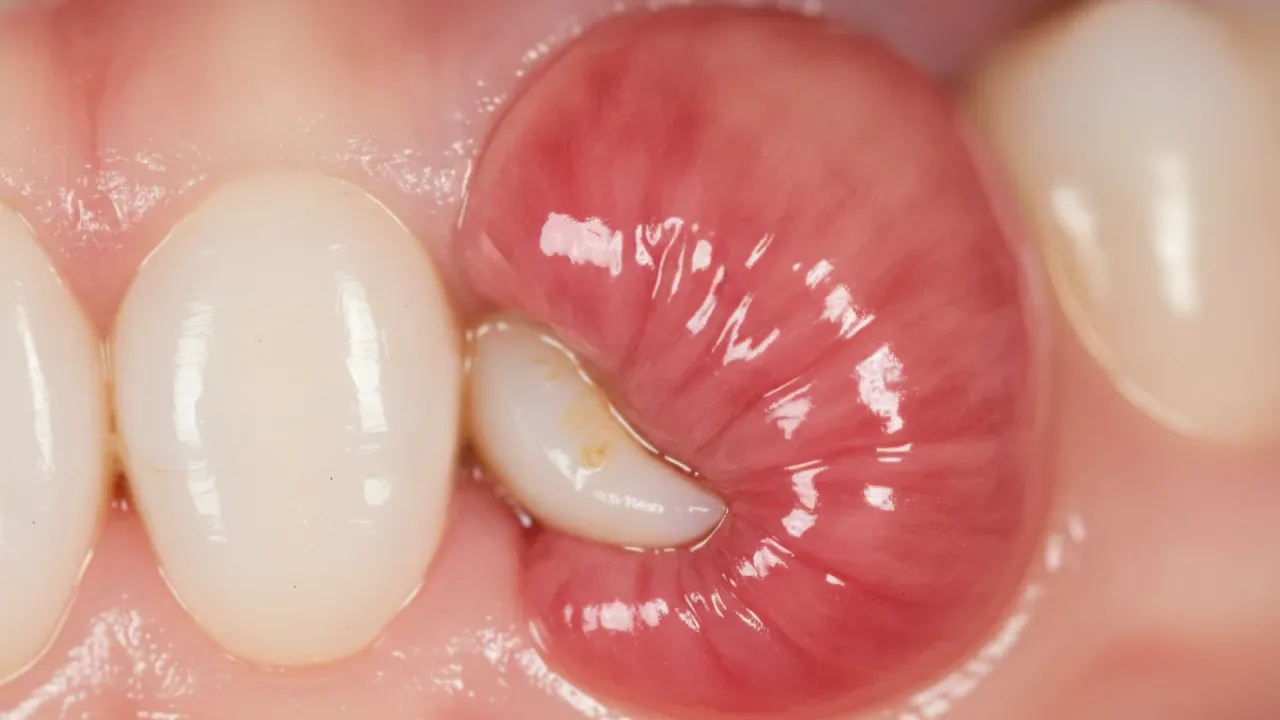
A few problems cause it. The common one is impaction. A wisdom tooth that cannot fully erupt traps food and bacteria, which can lead to infection, decay, or cysts (Cleveland Clinic; Medical News Today). Another is pericoronitis. A partly erupted tooth leaves a flap of gum, bacteria collect under it, and the gum turns sore and swollen (Cleveland Clinic). Tooth decay is also common, because a wisdom tooth sits far back and is hard to clean. And a tooth pushing on its neighbour can ache as it shifts.
The cause shapes what happens next. That leads to the question most people ask: will it go away on its own?
Will wisdom tooth pain go away on its own
Some wisdom tooth pain comes from a tooth pushing through the gum, and it can settle in a few days. Pain that keeps coming back or gets worse is the kind that will not resolve on its own.
The two paths are easy to tell apart. Eruption pain often eases as the tooth settles into place. That is the calm kind. Pain from impaction, decay, or pericoronitis tends to return until it is treated. Pericoronitis usually clears within a week or two once a dentist treats it (Cleveland Clinic), not by itself. So recurring wisdom tooth pain is a signal to get it looked at. Next comes the other half: when it points to removal rather than settling.
When does wisdom tooth pain mean you need surgery
A wisdom tooth that is impacted, repeatedly infected, or badly decayed is the kind a dentist may recommend removing. Eruption pain settles; these do not.
Knowing when removal is needed comes down to a clear set of reasons: severe pain, infection, cysts, tooth decay that cannot be restored, or damage to a neighbouring tooth (Medical News Today). An impacted wisdom tooth that will not clear is a common trigger. So is pericoronitis that keeps coming back, which can lead to wisdom teeth removal (Cleveland Clinic).
If your case is complex, the reassuring part is who handles it. At Valley View Dental, surgical wisdom teeth removal is done in-house by a board-certified oral surgeon, so you are not sent elsewhere. Removal is one option, not the first step. While you decide, there are ways to ease the pain right now.
How can you ease wisdom tooth pain at home right now
A warm saltwater rinse, three to four times a day, can calm the inflamed gum around a wisdom tooth (Cleveland Clinic). It is the simplest relief to start with.
A few remedies help soothe wisdom tooth pain while you arrange care:
- Rinse with a warm saltwater rinse three to four times a day to settle sore gum tissue (Cleveland Clinic).
- Hold a cold compress or ice pack against your cheek to bring down swelling (Medical News Today).
- Over-the-counter pain relievers such as acetaminophen or ibuprofen can help. Follow the label, and ask a pharmacist or dentist if you are unsure.
- Clove oil is an old home remedy that shows some promise as a topical pain reliever (Medical News Today).
One thing to hold onto: these remedies buy time, they do not treat the cause. If the pain keeps returning, a dentist still needs to look. Next, what to avoid so you do not make it worse.
What should you not do for wisdom tooth pain
Do not place aspirin directly on the gum or tooth. It can burn the tissue, and it will not fix the cause of wisdom tooth pain. Take pain relievers as the label directs instead.
A few more things you should skip:
- Do not ignore a fever or spreading facial swelling. That can mean the infection is growing, so get seen the same day (Cleveland Clinic).
- Do not dig at the tooth or the gum flap with picks or your fingers. You can push bacteria deeper.
- Do not overdo numbing gel. If you use a benzocaine product, follow the instructions and ask a professional about any reaction (Medical News Today).
Avoiding these keeps a manageable problem from turning into a worse one. If you do come in, this is what the visit looks like.
What will the dentist do to diagnose and treat it
Your dentist examines the wisdom tooth and uses X-ray or 3D panoramic imaging. That shows whether the tooth is impacted, infected, or decayed, and what it needs.
Treatment depends on what the images show. For pericoronitis, the range runs from a cleaning to antibiotics, removing the gum flap, or wisdom tooth removal (Cleveland Clinic). Milder cases often need less. When removal is the answer, surgical wisdom teeth removal at Valley View Dental is done in-house by a board-certified oral surgeon, Dr. Anthony Lotesto, OMFS. The extraction is done with local anesthesia.
Seeing a real surgeon under the same roof is the point for a complex case. But some pain should not wait for a scheduled visit. This is when it is an emergency.
When is wisdom tooth pain a dental emergency
Wisdom tooth pain with a fever, spreading facial or neck swelling, pus, or trouble swallowing or opening your jaw needs same-day care, not a wait-and-see. These are the signs of an infection that is moving.
When you know when to act, you protect more than the tooth. An untreated infection can form an abscess and spread (Cleveland Clinic). That is why these red flags mean today, not next week. Valley View Dental keeps same-day emergency care for exactly this.
Book a same-day visit: If your pain is severe, or comes with fever or spreading swelling, get seen today. Call (630) 509-7933.
Frequently Asked Questions
Does wisdom tooth pain always mean removal?
No. Wisdom tooth pain does not always mean removal. Eruption pain and mild pericoronitis can settle or be treated without taking the tooth out (Cleveland Clinic). Removal is for impacted, repeatedly infected, or badly decayed teeth.
When should swelling go down after wisdom teeth removal?
Swelling after wisdom teeth removal can last up to about two weeks and eases over that time (Medical News Today). If swelling grows instead of easing, call your dentist.
How do I get my wisdom tooth to stop hurting right now?
Start with a warm saltwater rinse and a cold compress, and take over-the-counter pain relievers as the label directs. These soothe wisdom tooth pain but do not treat the cause, so book a visit if it keeps returning.
Is wisdom tooth pain an emergency?
Wisdom tooth pain becomes an emergency when it comes with a fever, spreading facial or neck swelling, pus, or trouble swallowing. Those signs need same-day care.
Can a dentist remove a wisdom tooth, or do I need an oral surgeon?
It depends on the tooth. A dentist handles simple extractions, while impacted or complex wisdom teeth are removed by an oral surgeon. At Valley View Dental, a board-certified oral surgeon does this in-house, so you are not sent elsewhere.
Conclusion
Wisdom tooth pain, in short
Now you can tell the two kinds of wisdom tooth pain apart. Eruption pain settles in a few days as the tooth finds its place. Pain from impaction, decay, or pericoronitis keeps coming back, and that is the kind a dentist needs to see. A warm saltwater rinse, a cold compress, and over-the-counter pain relievers can ease the ache while you arrange care, but none of them fix the cause.
Watch for the red flags. Fever, spreading facial or neck swelling, pus, or trouble swallowing means same-day care, not wait-and-see. At Valley View Dental, surgical wisdom teeth removal is handled in-house by a board-certified oral surgeon, so a complex case never sends you elsewhere. If your wisdom tooth pain is severe, or comes with fever or swelling, get seen today. Call (630) 509-7933.