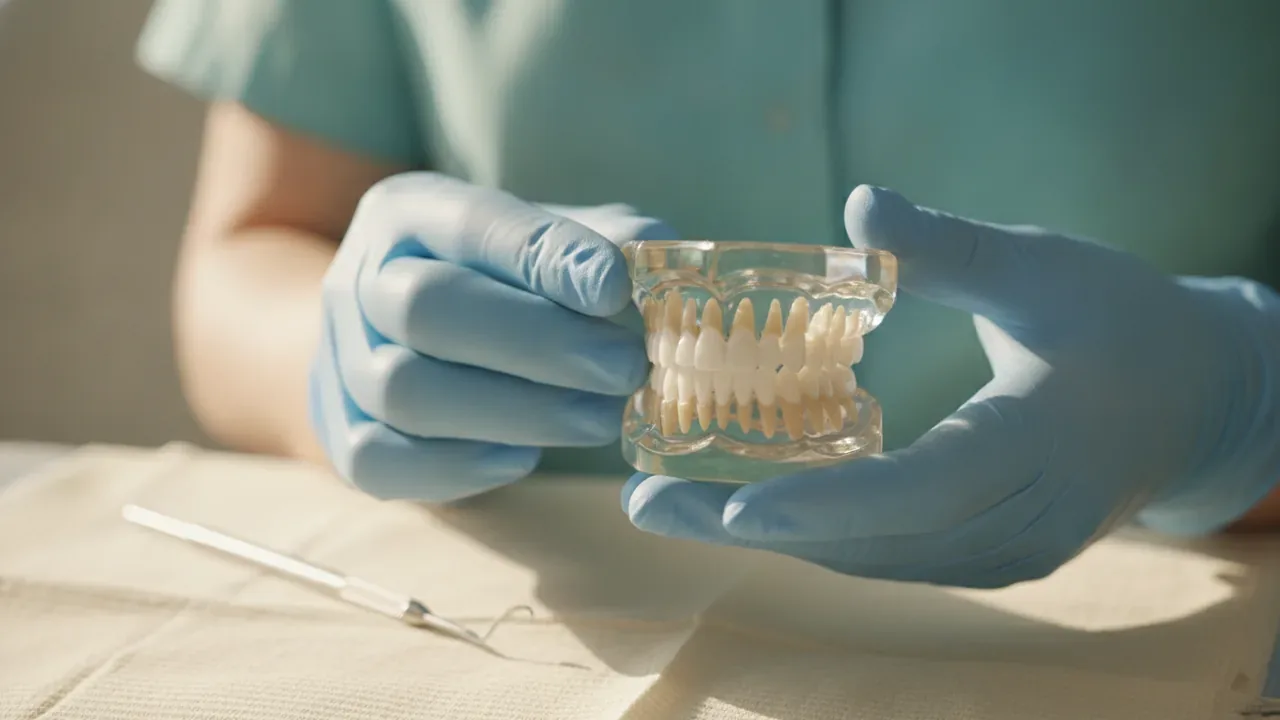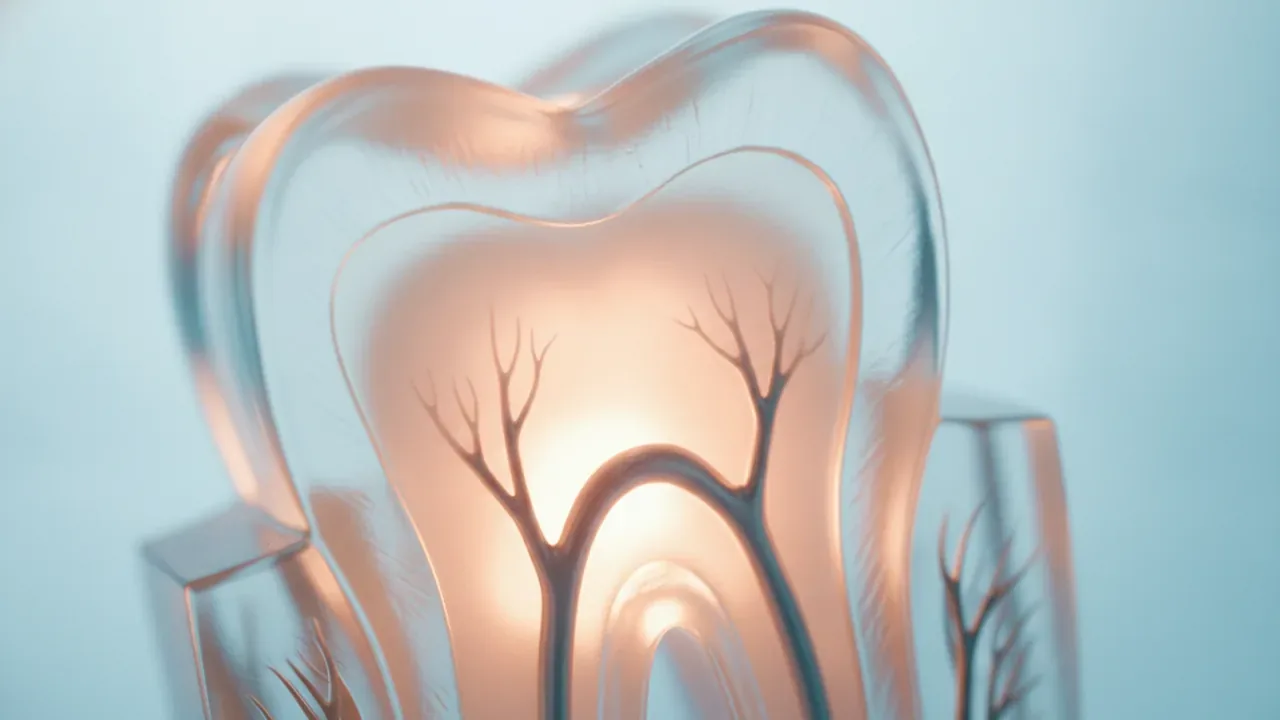
A root canal is a treatment that saves a badly infected tooth, and it eases the pain that brought you here. If a dentist has told you that you need one, a little worry is normal. Maybe you have been sent from one office to another. Maybe a surprise quote left you uneasy. This guide explains what a root canal really is, why it calms the pain, and what happens at each step. It is written in plain language and reviewed by an endodontist, so you can decide what to do next with a clear head.
Table of Contents
What is a root canal
A root canal is a treatment that removes the infected or inflamed pulp inside a tooth, then cleans, fills, and seals it so you keep the natural tooth. That is the whole purpose of the procedure: save the tooth rather than pull it.
The pulp is the soft core of the tooth. It holds the blood vessels, nerves, and connective tissue. When deep decay or a crack lets bacteria reach the pulp, it becomes inflamed or infected. A root canal clears out that pulp, disinfects the empty canals, and fills them with a rubber-like material called gutta-percha. The dentist then rebuilds the tooth with a filling or a crown so you can chew on it again.
Source: American Association of Endodontists (AAE), accessed 2026.
Why does a root canal stop the pain
Tooth pain comes from the inflamed or infected pulp inside the tooth, so removing that pulp removes the source of the pain. The nerves that were firing are taken out along with the infected tissue, and the throbbing settles.
Here is why the pain starts. Deep decay, a crack, a chip, or a faulty crown can let bacteria into the pulp. The pulp swells inside a hard tooth that cannot expand, and that pressure is what you feel. Left alone, the infection can spread and lead to an abscess, which is a pocket of pus at the root. A root canal stops that chain by clearing the infection at its source.
Source: American Association of Endodontists (AAE), accessed 2026.
How does a root canal work, step by step
A root canal usually takes about 60 to 90 minutes, and it follows the same few steps every time. Knowing the order tends to make the visit feel less daunting.
- The dentist numbs the area with a local anesthetic.
- A thin sheet called a dental dam is placed to keep the tooth clean and dry.
- A small opening is made in the top of the tooth, and the infected pulp is removed.
- The canals are cleaned, disinfected, then filled with gutta-percha and sealed.
- The tooth is rebuilt with a filling or a crown, sometimes at a later visit.
At Valley View Dental, crowns can be milled in-house with CEREC technology, so the final crown is often done in one visit rather than two. Your dentist will tell you what your tooth needs.
Sources: American Association of Endodontists (AAE) and Cleveland Clinic, accessed 2026.
How do you know if you need a root canal
You may need a root canal when infection reaches the pulp, and certain signs are the tip-off. Watch for these:
- Lasting pain when you chew or touch the tooth
- A pimple or boil on the gum that may ooze pus
- Swollen or tender gums, a swollen jaw, or a darkened tooth
- A tooth that has come loose
One honest caveat: not every infected tooth hurts. Some go quiet even as an abscess forms, so signs alone are not the whole story. If any of these show up, or if something just feels off, see a dentist promptly. Valley View Dental keeps same-day appointments open for exactly this reason.
Source: Cleveland Clinic, accessed 2026.
What does a root canal feel like, and how long is recovery
A root canal is done under a local anesthetic, so it feels much like getting a routine filling. You may notice pressure and movement, but the area is numb during the work.
Afterward, some soreness for a few days is normal, and most people are back to their routine in less than a week. Simple aftercare helps: eat soft foods at first, avoid chewing on the treated tooth until it is fully restored, and keep brushing and flossing as usual. If a temporary filling is in place, your crown or final filling comes at a short follow-up visit.
Sources: American Association of Endodontists (AAE) and Cleveland Clinic, accessed 2026.
What are the alternatives to a root canal
The main alternative to a root canal is removing the tooth, and then replacing it with a dental implant or a dental bridge. That is the honest short answer when a tooth cannot be saved.
It helps to weigh the two paths. A root canal keeps your natural tooth, which a tooth extraction cannot. A saved tooth also tends to be long-lasting: with proper care, a treated tooth can last many years, often a lifetime. If the tooth is too damaged to save, extraction followed by a dental implant or a dental bridge restores the gap. You do not have to choose alone. A dentist can look at the tooth and tell you which option fits.
Sources: American Association of Endodontists (AAE) and Cleveland Clinic, accessed 2026.
What does a root canal cost, and does insurance help
A root canal’s cost depends on the tooth and whether you need a crown, so the honest answer is a custom quote at a free consult. We do not post a flat number here, because the real figure changes tooth by tooth and only means something once a dentist has seen yours.
Here is what we can tell you plainly. Valley View Dental accepts most major PPO plans, which often cover part of the treatment. If you are replacing a tooth instead of saving it, a single-tooth dental implant is available from $99/mo.* And a free consult gives you a written estimate before you commit to anything.
*Payments shown are estimates on approved credit via Cherry. Subject to terms.
Source: Valley View Dental Fact Sheet (insurance and financing), 2026.
Can an in-house endodontist handle a complex case
Valley View Dental has an endodontist in the building, Dr. Fuwad Al-Sabek, so complex root canals are done here, not referred out. If you have been sent from office to office, that is the difference you are looking for.
The whole team works under one roof. That means a specialist can step in for a tricky tooth without sending you across town. Valley View Dental has served Romeoville, Naperville, and Montgomery for more than 20 years, and patients rate the practice 4.9 stars across its three offices.
Root canal questions people ask
Is a root canal painful?
A root canal is done under a local anesthetic and feels much like a routine filling. Some soreness for a few days afterward is normal. (Source: AAE)
What is the purpose of a root canal?
The purpose is to remove infected or inflamed pulp and save the natural tooth. (Source: AAE)
How do you know if you need a root canal?
Common signs include lasting pain when chewing, a pimple on the gum, swelling, or a darkened tooth. (Source: Cleveland Clinic)
How long does a root canal take?
Usually about 60 to 90 minutes, and sometimes it is spread over two visits. (Source: Cleveland Clinic)
How long does a treated tooth last?
The canals are sealed with gutta-percha and topped with a crown, and with proper care the tooth often lasts many years, sometimes a lifetime. (Sources: AAE and Cleveland Clinic)
What is an alternative to a root canal?
The main alternative is removing the tooth, then replacing it with an implant or a bridge. (Source: Cleveland Clinic)
What a root canal really is, in short
Now you know what a root canal is: a treatment that clears the infected pulp from inside a tooth, then cleans, fills, and seals it so you keep the natural tooth. That is the whole point, saving the tooth rather than pulling it. Removing the inflamed pulp is also what stops the pain, because the nerves that were firing come out with the infected tissue. The visit itself takes about 60 to 90 minutes, feels much like a routine filling under local anesthetic, and most people are back to normal within a week.
If a tooth has been hurting, you do not have to guess. At Valley View Dental, an in-house endodontist, Dr. Fuwad Al-Sabek, handles even complex cases under one roof, so you are not sent from office to office. Book a free consult and get a straight answer about your root canal options, with a written estimate before you commit to anything. Call (630) 509-7933.