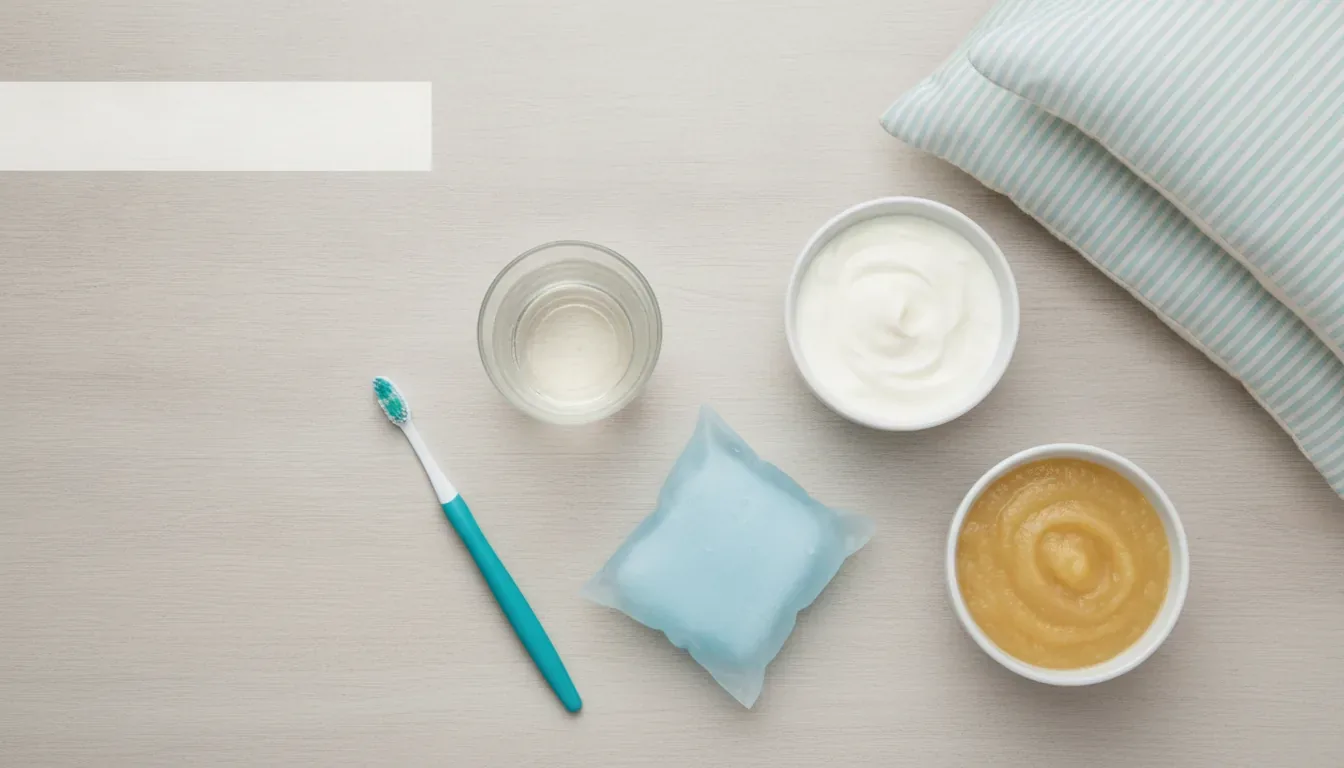
You have just had a tooth out, and you are not sure what you are allowed to do. This page covers eating, brushing and sleeping after a tooth extraction, in the order the first night happens.
If you are scared of doing something that wrecks your healing, that is a reasonable place to be. Searching does not help much, because the published advice does not agree with itself. On the single question of when you can brush after wisdom teeth removal, one page says as soon as possible, another says wait 24 hours, and a third says three days.
Table of Contents
What can you eat, when can you brush, and how should you sleep after a tooth extraction
After a tooth extraction, three things change for a few days. You eat a soft diet. You brush the rest of your teeth and stay off the socket. You sleep with your head raised. Every one of those rules exists to protect the blood clot sitting in the socket where the tooth was.
AAOMS puts specifics on two of the three. You may resume brushing your teeth the day after surgery, avoiding the surgical site, and through the first 24 to 48 hours you use extra care to avoid traumatizing the extraction site. On food, the first few days after surgery call for a soft diet: soups, yogurt, smoothies, mashed potatoes and eggs.
Sleeping is the one without a citation. Oral surgeons commonly advise keeping your head raised, but no AAOMS or ADA page states a position, an angle or a number of nights.
The same guidance applies after a wisdom teeth removal, which is where most of these questions come from. All of it protects one thing sitting in the socket, and that is the blood clot.
Why does the blood clot decide every rule that follows
A blood clot forms in the socket where the tooth was, and it covers the bone and nerve underneath while new tissue grows. Every rule for the next few days exists to keep that clot in place.
AAOMS states the consequence directly: if the clot dissolves or becomes dislodged, a painful condition called dry socket may develop. The same body notes that aggressive sucking through a straw can loosen blood clots and cause complications such as dry sockets. That is the reason behind the straw rule, the no-spitting rule and the stay-off-the-site rule.
There is an end date to the strict part. AAOMS puts it at about a week, when the surgical site begins to regenerate new tissue to close itself.
Once you understand the clot, you can judge your own situation instead of hunting for a list that covers it. It also tells you what to prevent: anything that pulls, presses or scrubs at the extraction site. Brushing is the first of those, and it is where most people get stuck after a wisdom teeth removal.
When can you brush your teeth after a tooth extraction
You can usually brush the rest of your teeth the day after surgery, staying away from the surgical site, and your own surgeon’s written instruction is the one that wins if it says something different.
That first half comes from AAOMS. You may resume brushing the day after surgery, but not directly over the surgical site, and AAOMS asks for extra care around the extraction site through the first 24 to 48 hours.
The second half is the part most pages leave out. Published timelines disagree with each other. On the same question, canyonofs.com says brush as soon as possible, alexandriaoms.com says the night of surgery, millplaindentalcenter.com says wait 24 hours, and cliniqueevoro.com says three days before normal brushing. Read two pages and you get two answers, which is why so many people end up asking strangers in a forum.
Underneath the disagreement, the credible sources land in the same place on two points. Stay off the socket, and no forceful spitting or rinsing in the first 24 hours. That part is settled.
For the timing itself, the instruction that applies to you is the written aftercare your own oral surgeon gave you. It is the only one that knows what was done inside your mouth: how many teeth came out, how deep they sat, whether there are stitches. A general article about wisdom teeth removal, this one included, cannot know that.
That leaves the practical question of how to do it without touching the socket.
How do you brush without disturbing the socket
A soft-bristled toothbrush, held away from the socket and moved in short, light strokes, lets you clean the rest of your mouth without touching the healing site.
In practice, after a wisdom teeth removal:
- Use a soft-bristled toothbrush, with extra care as you get near the extraction site (AAOMS).
- Brush the rest of your teeth as normal, and do not brush directly over the surgical site (AAOMS).
- Keep the strokes short and light near the back of the mouth, rather than sweeping across the area.
- Do not spit when you finish. Let the water and toothpaste fall out of your mouth into the sink.
That last step matters more than it sounds. Forceful spitting creates the same suction AAOMS warns about with straws, and suction is what loosens a clot.
Toothpaste type is not the problem here. Gentleness and staying off the site are.
Once your teeth are clean, rinsing is the next step, and it is the one people get wrong.
When can you start rinsing, and what rinse is gentle enough
Warm salt water, made with half a teaspoon of salt dissolved in a glass of warm water, is the rinse to use once the first day has passed, moved around gently rather than swished.
That recipe comes from AAOMS, which asks you to rinse gently several times a day. The timing rule sits next to it: skip vigorous rinsing and brushing for at least 24 hours after the extraction, because that is when the blood clot is least secure.
Gently is the word doing the work. Tip your head slowly from side to side and let the water move. Then let it fall out of your mouth. Swishing and spitting both push pressure across the socket, so leave both alone. Rinsing this way is one of the simpler ways to prevent trouble in the week after a wisdom teeth removal.
Alcohol mouthwash is usually left alone in the early days.
With your teeth clean and the rinsing sorted, the other half of the first few days is eating.
What can you eat after a tooth extraction, and when
A soft diet, meaning food you can swallow with almost no chewing, is what the first few days call for: soups, yogurt, smoothies, mashed potatoes and eggs.
That list comes from AAOMS. Its separate page on what to eat adds applesauce, broth soups and ice cream, and describes anything swallowed with minimal chewing as the standard to aim for. Nothing on either list needs a special trip to the store.
When can you go back to normal food? There is no authority-backed day number. AAOMS describes a soft diet for the first few days and does not name a day for solids. The day-staged tables across search results, day 1 liquids, days 2 to 3 soft warm food, days 4 to 7 solids, are written by dental practices rather than by an authority body. They are a reasonable pattern, not a rule.
How fast your mouth recovers decides it more than any calendar does. As chewing on that side stops hurting and the site closes, you widen the diet. Push it early and you are chewing next to a clot that is still doing a job.
What you avoid matters as much as what you choose, and that is where the mistakes after a wisdom teeth removal tend to happen.
What should you not eat or drink while the socket heals
Straws create suction that can pull the clot out of the socket, so drink from a cup instead for the first few days.
AAOMS says it three times across three pages. Aggressive sucking through a straw can loosen blood clots and cause complications such as dry sockets. Do not use a straw during the first few days after surgery. Avoid straws for the first 24 to 48 hours after extraction. The windows differ, the instruction does not.
The food to hold off on is a short list. AAOMS names hot, spicy, hard, chewy and crunchy foods. Each one either irritates the site or asks your teeth to do work they are not ready for.
Smoking gets its own line. AAOMS asks you to stop smoking completely for at least a few days after surgery, and the ADA notes that cigarette smoking or other tobacco use can delay healing. It is one of the named ways to prevent dry socket.
Soda, coffee and alcohol are the drinks people search for most, and here the published advice starts inventing numbers. No AAOMS or ADA guidance names a day count for any of them. The sourced rules still cover them. Hot drinks fall under avoid hot, carbonated and alcoholic drinks are held back while the socket is fresh, and nothing goes through a straw.
That leaves one behavior, and it arrives on the first night, which is lying down.
How should you sleep after a tooth extraction
Sleeping with your head raised is what oral surgeons commonly advise for the first few nights, and it keeps pressure off the socket while the bleeding settles.
The first night after a wisdom teeth removal is the one people worry about most, so here is the honest position. No AAOMS or ADA page states a sleeping position, an angle or a number of nights, and the pages that do state one contradict each other. Two oral surgery practices say keep your head above your heart for the first 24 hours. Another says the first three nights. A national dental chain says a 45 degree angle for three to five nights. Healthline tells readers to sleep on their side, which contradicts the AI summary sitting at the top of the same results page.
What is documented is the reason for raising your head at all. AAOMS says you may experience light bleeding in the first few days. An extra pillow helps prevent blood pooling at the site while you lie still.
Gauze is the other first-night question. AAOMS says to bite gently on a clean gauze pad, or a moistened tea bag, placed over the extraction site to reduce bleeding. Gauze is not left in the mouth while you are asleep, because you cannot manage it once you are out.
One more thing for the first night. Take the pain relief your surgeon recommended, timed so it is working by the time you lie down. Waking in the middle of the night and starting from zero is harder than staying ahead of it.
None of this changes the underlying job, which is protecting the blood clot. Raising your head is meant to help with something specific, and that is swelling.
How do you decrease swelling while you rest
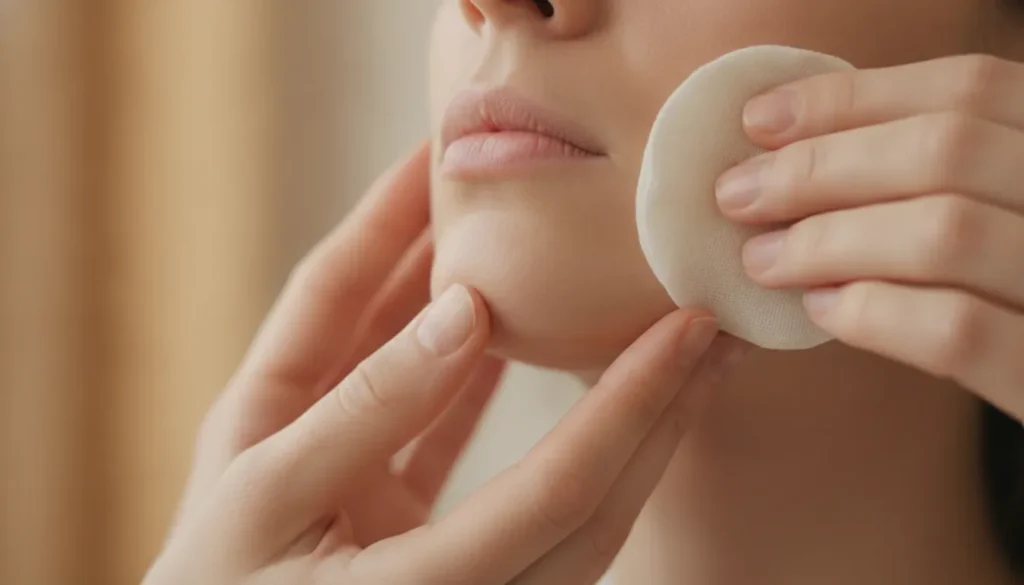
An ice pack, held against the outside of the cheek and used on and off, is what reduces swelling over the first 48 to 72 hours.
AAOMS sets that window at 48 to 72 hours of intermittent use and puts the cold compress on the outside of the cheek rather than inside the mouth. Short spells work better than leaving it on.
Swelling itself is not a sign that something went wrong. AAOMS describes swelling, pain and discomfort as common in the first few days after surgery, then easing gradually over the following weeks, with each person healing at a different rate.
Two habits decrease it and help you heal faster: cold early, and rest. AAOMS asks you to avoid strenuous activity, exercise and sports that can interfere with healing. Going back to the gym does not relieve swelling, it prolongs it. Keeping your head raised at night belongs on the same list.
Nothing here will minimize swelling to nothing, and nothing will prevent it entirely. What all of it does is stop the first few days after a wisdom teeth removal from getting worse than they need to be.
Swelling is normal. The complication people are afraid of is not, and it is called dry socket.
What is dry socket, and how do you prevent it
Dry socket, known clinically as alveolar osteitis, happens when the blood clot is dislodged or breaks down in the site of the extraction, and it produces severe pain within a few days of the extraction.
AAOMS lists what it feels like:
- Pain radiating from the socket outward, toward the eye, ear, neck or temple.
- Visible bone in the socket.
- Bad breath, or a foul smell or taste in the mouth.
Wisdom teeth removal is the most common site for dry socket, according to AAOMS, which is why these questions cluster around wisdom teeth rather than other extractions.
Four things prevent it, and all four are already in this guide:
- Avoid smoking before and during recovery.
- Skip straws for the first 24 to 48 hours after the extraction.
- Skip vigorous rinsing and brushing for at least 24 hours.
- Follow the postoperative instructions your own surgeon gave you.
The ADA describes the same condition in the same terms. It is a painful problem that happens when the clot over your socket is displaced, leaving bone and nerves exposed. Both bodies give the same next step, which is to tell your dentist.
How common is it? Neither AAOMS nor ADA MouthHealthy publishes a figure.
That brings the page to the question underneath all of it, which is the signs that mean you pick up the phone.
When should you call the dentist
Severe or persistent pain, along with heavy bleeding or swelling that keeps getting worse, means you call your dental office rather than waiting it out.
AAOMS puts it the same way. Severe or persistent pain, excessive bleeding, swelling or other symptoms of concern are reasons to contact your oral and maxillofacial surgeon. If the pain matches the dry socket description above, AAOMS and the ADA agree on the next move: contact your surgeon, or notify your dentist.
The plain triggers, drawn from that guidance:
- Pain that gets worse after day two or three instead of easing.
- Bleeding that does not settle with gentle pressure on gauze.
- Swelling that keeps growing rather than peaking and going down.
- A foul taste or smell, or pain spreading toward your ear or temple.
- Anything that does not match the written instructions you were sent home with.
Valley View Dental has an oral surgeon in house at its three offices, so a call gets you to someone who can look at the site. The number is (630) 509-7933.
Common questions after a tooth extraction
What happens if I accidentally spit after wisdom teeth removal?
One accidental spit is unlikely to undo the healing on its own. The concern is repeated forceful spitting, because suction is what loosens a blood clot, and that is the same reason AAOMS rules out straws. Watch for pain that climbs sharply over the next day or two, which is the dry socket signal, and call your dental office if it does.
Can I use any toothpaste after wisdom teeth removal?
No AAOMS or ADA page addresses toothpaste type. The sourced rule that does apply is gentleness: a soft-bristled brush, short strokes, nothing directly over the surgical site, and no spitting when you finish.
How soon can I drink water after tooth extraction?
Water is usually the first thing back, and no AAOMS or ADA page names a waiting period for it. What they do name is the delivery. AAOMS asks you to drink liquid from a cup rather than through a straw, because sucking can loosen the blood clot. Sip rather than gulp, and keep the water off the socket where you can.
When is dry socket no longer a risk?
No source gives an end date. AAOMS describes the severe pain of dry socket arriving within a few days of the extraction and puts the straw restriction at the first 24 to 48 hours. The risk falls as the socket closes, and AAOMS puts the start of new tissue at about a week.
Why is day 3 the worst after tooth extraction?
No authority source states that day 3 is the worst. AAOMS describes swelling, pain and discomfort as common in the first few days after surgery, easing gradually in the weeks that follow, with each person healing at a different rate. Plenty of people do report a peak around the second or third day, which sits inside the AAOMS ice window of 48 to 72 hours, but the day itself is not documented.
Why no dairy after wisdom teeth removal?
The premise does not hold against the authority guidance. AAOMS recommends yogurt in its postoperative food list and names ice cream in its separate guidance on what to eat. If dairy sits badly with you after surgery, that is a personal reaction rather than a rule from your surgeon.
Can you brush your teeth before wisdom teeth removal?
Brushing before surgery is standard preparation advice from dental practices, though no AAOMS or ADA page states it. The way to prepare is to follow the written pre-operative instructions your own surgeon gave you, because those account for the procedure you have booked.
What helps wisdom teeth heal faster?
Protecting the blood clot is what helps you recover faster, and AAOMS names the parts: a soft diet for the first few days, no straws, no smoking for at least a few days, no strenuous activity, and an ice pack used on and off through the first 48 to 72 hours. There is no shortcut beyond leaving the socket alone and letting it close.