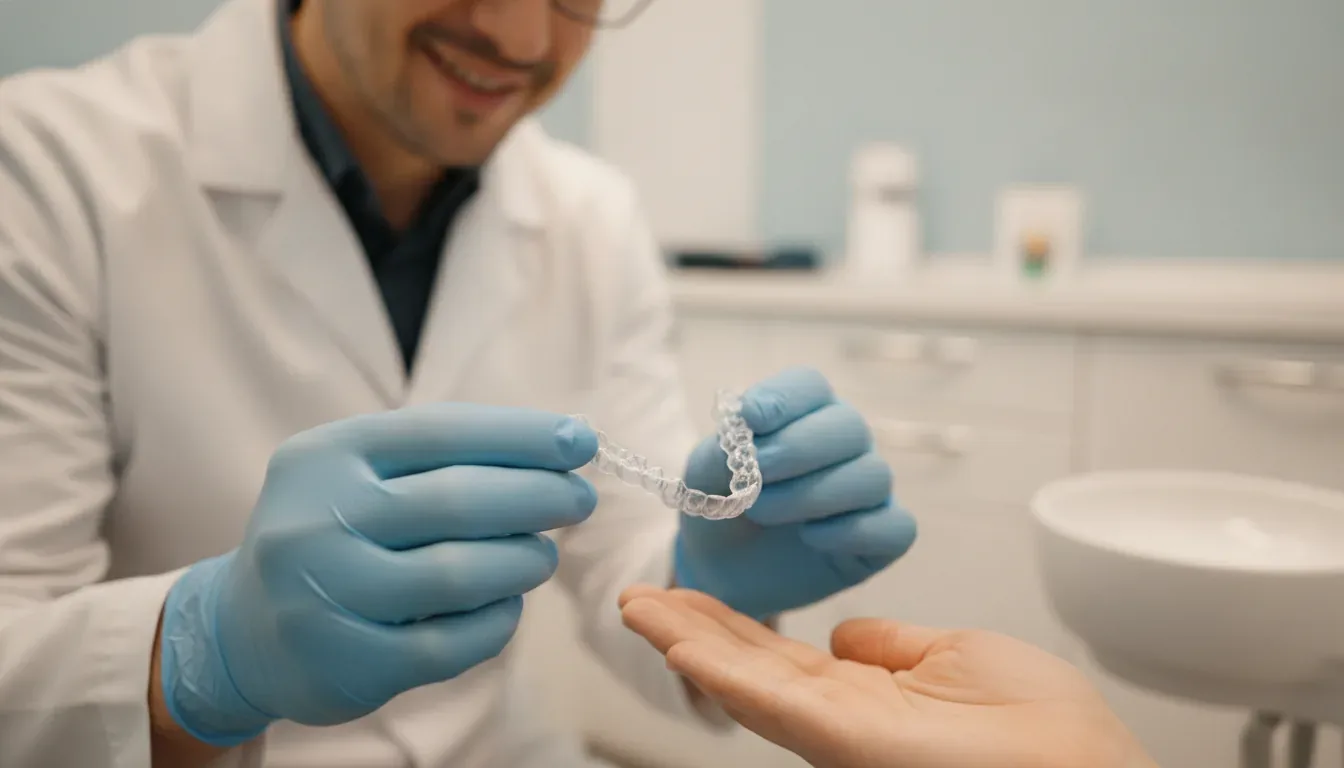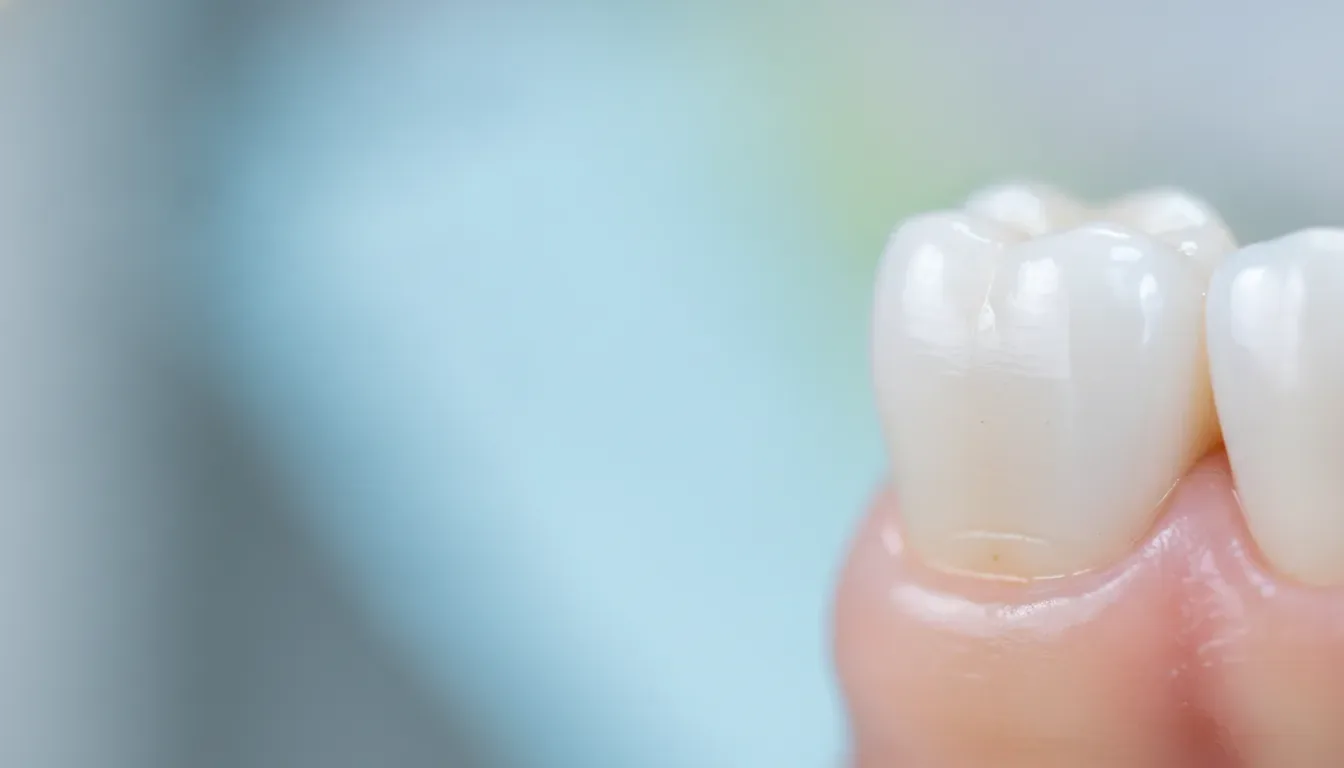
You are missing a tooth, or a dentist has just told you that you need an implant. You want to know whether the advice is real, or whether you are being sold work you do not need. This guide covers what a dental implant actually is, who dental implants suit, and when one is the wrong choice.
What are dental implants
A dental implant is a small titanium post placed surgically in the jawbone, taking the place of a natural tooth root. It replaces the root portion of a missing tooth, and a replacement tooth sits on top of it (Mayo Clinic, updated October 2024).
The U.S. Food and Drug Administration calls dental implants medical devices surgically implanted into the jaw to restore your ability to chew or your appearance (FDA, page updated October 2021). Each implant is made of three separate parts.
What this guide covers
What is a dental implant made of
A dental implant has three parts: the implant post, the abutment, and the crown. The implant post is the screw that sits in the jawbone. The abutment is the connector that screws onto the post. The crown is the visible replacement tooth, and implant crowns are shaped to match the teeth beside them.
The U.S. Food and Drug Administration describes the system as a dental implant body and dental implant abutment, and it may also include an abutment fixation screw (FDA, page updated October 2021). Cleveland Clinic and Delta Dental use the same three-part description.
Implant posts are usually made of titanium. Zirconia is used as an alternative where a metal allergy is a concern (Delta Dental). Those are the materials used in dentistry. They are not a statement of what any one practice keeps in stock.
The three parts matter to you for one reason. Each part can fail or be replaced on its own, so the crown on top and the post underneath do not share a lifespan.
Once the post is in place, the jawbone grows around it and fuses with it. That fusing is called osseointegration. Where the post can sit is not the same in every mouth, which is why implants are grouped into types.
What are the types of dental implants
Dental implants are grouped two ways: by where the post sits, and by how many teeth are being replaced. Neither grouping is about materials.
By placement, there are three:
- An endosteal implant sits in the jawbone. It is the most common type (Delta Dental).
- A subperiosteal implant sits under the gum rather than in the jawbone. It is used where there is not enough bone (Delta Dental).
- A mini implant is a narrower post, commonly used to hold a denture in place (Delta Dental).
By the number of teeth being replaced, there are four:
- A single-tooth implant carries one crown.
- An implant-supported bridge carries several crowns across one gap.
- Full-arch implants, sometimes called full-mouth implants, carry a whole set of upper or lower teeth on a small number of posts.
- An implant-supported denture uses posts to hold a removable denture steady.
Which type suits you depends on how much healthy bone you have, where the gap sits, and how many teeth are being replaced. A dentist works that out from an examination, not from a list.
How does getting a dental implant actually work
Getting a dental implant happens in stages across several months, not in one appointment. Healing may take several months or longer, and during that time you typically have a temporary abutment in place (U.S. Food and Drug Administration, page updated October 2021).
The stages run in this order (Cleveland Clinic):
- The implant post is placed in the jawbone.
- The jawbone heals and fuses to the post.
- The abutment is attached to the post.
- The final crown is fitted.
Step two is what the months are for. Dental implants hold because the jawbone grows onto the post and fuses with it, a process called osseointegration, and that fusing takes roughly two to six months.
Final crowns are made to fit your bite before they are fitted. Valley View Dental has a board-certified oral surgeon in house, so the surgical stage happens in the same practice. What that surgical stage feels like is the question most people ask next.
How painful is getting a dental implant
The implant procedure is done under local anaesthetic, so you do not feel the implant post being placed. What you feel comes afterwards, in the days while the site heals.
Cleveland Clinic reports slight discomfort and swelling after surgery. Both ease as healing progresses. Over-the-counter relief and rest are the usual answer for that period, and your dentist will tell you what to expect for your own case.
The FDA lists the reported risks of implant surgery: damage to surrounding natural teeth, injury to surrounding tissues, implant body failure, post-surgical numbness, infection and delayed healing (FDA, page updated October 2021). Those are the honest terms on which dental implants are placed.
Comfort is not what decides whether you should have an implant. Suitability is.
Who is a good candidate for a dental implant
A good implant candidate has two things: enough healthy jawbone to hold the post, and healthy gums around it. Cleveland Clinic puts the minimum age for dental implants at about 18, once jaw growth is complete, and states no upper age limit.
Gum disease and bone loss are the two findings that most often change the answer. An examination and an X-ray show which of the two is the limiting factor in your case, and what can be treated first.
That is why the decision starts with a look at your own mouth rather than a quote. At Valley View Dental the assessment is done in house by the practice’s own specialists. The same two tests that qualify people also rule people out.
Who should not get a dental implant
A dental implant is not the right treatment while you have active or untreated gum disease, severe bone loss, extensive tooth decay, poor oral hygiene, a bone disorder, or unmanaged diabetes (Cleveland Clinic, updated June 2026). Most of those conditions are treatable first, so they delay an implant rather than rule it out for life.
Smoking and vaping can disrupt the healing process (Cleveland Clinic).
Titanium implants are not recommended for people with metal allergies or certain autoimmune conditions. Zirconia is the stated alternative in those cases (Delta Dental).
Treating gum disease and rebuilding jawbone can move you back into the candidate group. Which of those steps comes first, and what it involves, is decided at an examination.
Even when you do qualify, the drawbacks are worth weighing before you agree to anything.
What is the downside of dental implants
Dental implants cost more up front than the alternatives, they take months from start to finish, and they are surgery that can fail. A dental bridge or dentures cost less up front and need no surgery.
The U.S. Food and Drug Administration lists the reported risks: damage to surrounding natural teeth, injury to surrounding tissues, implant body failure, post-surgical numbness, infection and delayed healing (FDA, page updated October 2021). Healing may take several months or longer.
The FDA also gives you one question to take into the room. Ask your dental provider what brand and model of dental implant system is being used, and keep that information for your records (FDA, page updated October 2021). It costs you nothing to ask, and no commercial page in this space will hand it to you.
For some people, another treatment is the better fit.
What can be done instead of a dental implant
A dental implant has two established alternatives: a dental bridge, which uses the teeth on either side of a gap to carry a replacement tooth, and dentures, which sit on the gums and come out for cleaning. Johns Hopkins Medicine describes implants as an alternative to removable dentures or bridges, used for cosmetic or functional reasons.
A dental bridge is built from crowns joined together, so it needs healthy teeth on both sides of the gap. A full denture replaces a whole arch. A partial denture fills gaps in a mouth that still has healthy teeth of its own.
The numbers give you a way to compare them:
| Option | Typical lifespan | Source |
|---|---|---|
| Implant crown or dental bridge | Around 15 years | Cleveland Clinic |
| Dentures | At least seven years | Cleveland Clinic |
| Implant post | See the lifespan section below | Cleveland Clinic |
One difference sits outside the table. A dental implant helps keep the jawbone from shrinking (FDA, page updated October 2021). A bridge and a denture do not do that.
Crowns, bridges, implants and dentures are all offered at Valley View Dental, so which type of replacement is right for you does not depend on what the practice happens to provide. The usual reason people still choose an implant over the other two is how long it lasts.
How long do dental implants last
A dental implant post is built to last. Cleveland Clinic states that with brushing, flossing and regular dental visits, implants can often last a lifetime. The crown on top is a separate part with a shorter life, and Cleveland Clinic puts implant crowns and dental bridges at around 15 years.
Dentures last at least seven years by the same source. Implant longevity depends on oral hygiene and regular dental visits, which is why that condition belongs attached to every figure above rather than quoted on its own.
What you do at home changes the number. That is also what shifts the cost question. An implant is not judged on its price on the day, but on what it costs you over the years it stays in place.
What do dental implants cost
The cost of a dental implant is driven by three things: how many teeth are being replaced, the type of post, abutment and crown used, and whether your jaw needs groundwork such as gum treatment or a bone graft first. A single tooth and a full-mouth restoration, which needs more posts and more crowns, do not sit in the same range.
The consultation itself is free, and it ends with a custom quote for your case.
Most major PPO plans accepted. What your plan pays toward an implant varies by plan, so bring your details to the consultation and ask before treatment starts.
Those are the money questions. A few common ones are left.
Common questions about dental implants
Can I have all my teeth pulled and get implants?
Full-arch implants are a standard arrangement in dentistry, where a small number of posts carry a full set of replacement teeth (Delta Dental, Johns Hopkins Medicine). An implant-supported denture is a further route that uses posts to steady a removable denture, and conventional dentures remain an option as well. Whether any of them suits you depends on the bone and gums in your own mouth, and it is decided at an examination.
Can I bite an apple with implants?
Once an implant has healed, it is used like a natural tooth. Johns Hopkins Medicine describes implants as replicating the appearance and function of natural teeth. Healing time varies, so ask your own dentist before you test a new implant on hard food.
What are dental implants made of?
Implant posts are usually titanium, with zirconia as the metal-free alternative where a metal allergy is a concern (Delta Dental). Both types of post are used in dentistry, and the crowns fitted on top are a separate choice from the post material.
How much will insurance pay for dental implants?
Most major PPO plans accepted. Coverage for implants varies by plan and by the treatment involved, so the only reliable answer comes from checking your own plan details at the consultation.
Can people with autoimmune disease get dental implants?
Titanium implants are not recommended for people with certain autoimmune conditions or metal allergies, and zirconia is the stated alternative (Delta Dental). Which type is appropriate for you is a question for an examination, not for a web page.